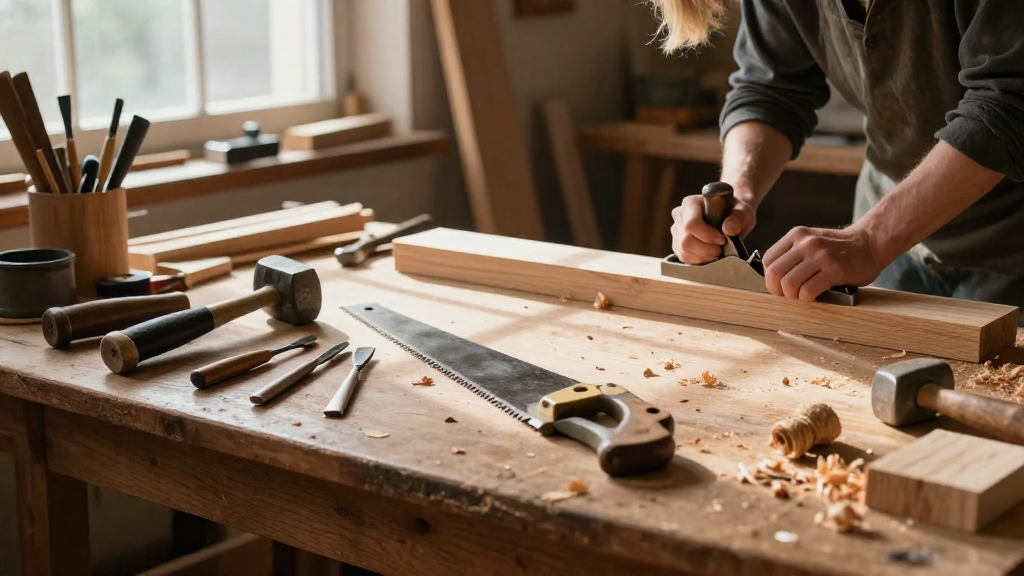
Are you interested in beginner woodworking with hand tools?
Starting your journey into woodworking can seem daunting, but with only hand tools, you can accomplish amazing projects without needing expensive or complex machinery. This article will guide you through various beginner projects that you can tackle using just hand tools.
What Are Hand Tools in Woodworking?
Hand tools in woodworking include any tool that can be operated without a power source. Common examples include:
- Saws (hand saws, coping saws, etc.)
- Chisels
- Planes
- Hammers
- Squares
- Measuring tapes
- Clamps
- Files and rasps
These tools allow for precise control and a deep connection with the material, making them ideal for beginners interested in woodworking with hand tools.
Why Choose Hand Tools for Beginner Woodworking?
Opting for beginner woodworking with hand tools comes with several significant benefits:
- Cost-Effective: Hand tools are usually less expensive than power tools, making them more accessible for newcomers.
- Skill Development: Using hand tools helps build fundamental woodworking skills, enhancing your overall craftsmanship.
- Simplicity: Fewer parts and lower complexity mean you can focus on learning without being overwhelmed.
- Portability: Hand tools are easy to store and transport, so you can work on projects anywhere.
What Beginner Woodworking Projects Can You Start?
Here are some exciting beginner woodworking projects that you can create with hand tools:
1. Simple Wooden Box
Creating a simple wooden box is an excellent project for any beginner. Here’s how to get started:
Materials Needed:
- Wood boards (pine is a great option for beginners)
- Wood glue
- Nails (optional)
Tools Required:
- Hand saw
- Chisel
- Square
- Plane
- Clamps
Steps:
- Cut the Boards: Measure and cut four equal-sized pieces for the sides, a piece for the bottom, and a lid.
- Prepare the Edges: Use the chisel to smooth the edges if necessary.
- Assemble the Box: Glue the sides and bottom together, and then clamp them until dry.
- Attach the Lid: You can create a hinge using a simple strip of wood or attach the lid directly.
2. Wooden Bench
A wooden bench is both functional and a great way to practice your skills.
Materials Needed:
- 2×4 lumber or reclaimed wood
- Wood screws
Tools Required:
- Hand saw
- Square
- Chisel
- Hand plane
- Hammer
Steps:
- Plan the Dimensions: Decide how big you want your bench to be.
- Cut the Legs: Cut four equal lengths for the legs and two for the top supports.
- Construct the Frame: Use the square and screws to build a sturdy frame.
- Attach the Top: Cut and attach the bench’s surface using screws or wooden dowels.
3. Picture Frame
Crafting a picture frame is another simple yet rewarding project.
Materials Needed:
- Wood slats (width of your choice)
Tools Required:
- Hand saw
- Miter box (for precise angle cuts)
- Chisel
- Wood glue
- Clamps
Steps:
- Decide on Frame Size: Determine the size of the picture you want to frame.
- Cut the Slats: Use the miter box and hand saw to cut the slats at 45-degree angles.
- Assemble: Glue the mitered edges of the frame together and clamp until dry.
- Finish: Sand and finish as desired.
4. Serving Tray
A serving tray is practical and a fun project to embark on with hand tools.
Materials Needed:
- 1×6 boards for the base
- 1×2 boards for the edges
- Handles (optional)
Tools Required:
- Hand saw
- Chisel
- Plane
- Drill (for screws, if added)
Steps:
- Cut the Base: Create a rectangle from the 1×6 boards.
- Cut Edges: Cut the 1×2 to create the sides of the tray.
- Assemble: Attach the edges to the base using glue and screws.
- Personalize: Add handles or embellishments as desired.
How Can You Finish Your Projects?
Finishing your projects is essential to protect the wood and enhance appearance. Here are some popular finishing options:
- Sanding: Start with a coarse sandpaper and gradually move to finer grit for a smooth finish.
- Staining: Apply a color stain to enhance the wood’s natural grain.
- Sealing: Use a wood finish or sealant to protect against moisture and wear.
- Oil Finishes: Natural oils like tung oil or linseed oil can provide a beautiful finish while conditioning the wood.
What Resources Can You Utilize?
When beginning your woodworking with hand tools, consider:
- Online Tutorials: Websites, YouTube channels, and forums offer valuable guidance.
- Books: There are many excellent woodworking books focused specifically on hand tools.
- Community Workshops: Look for local woodworking classes or meetups to learn from experienced craftsmen.
Conclusion: Are You Ready to Start?
Embracing beginner woodworking with hand tools can be a fulfilling experience and lead to beautiful creations.
By tackling projects like a simple wooden box, wooden bench, picture frame, or serving tray, you’ll not only develop your skills but also create functional items for your home.
Remember that the journey is all about practice and patience. Start with these projects and grow your confidence in using hand tools. The world of woodworking awaits, and with every cut and joint, you’ll be building more than just furniture—you’ll be building your craft.
So, grab your hand tools and get started on this exciting journey today!