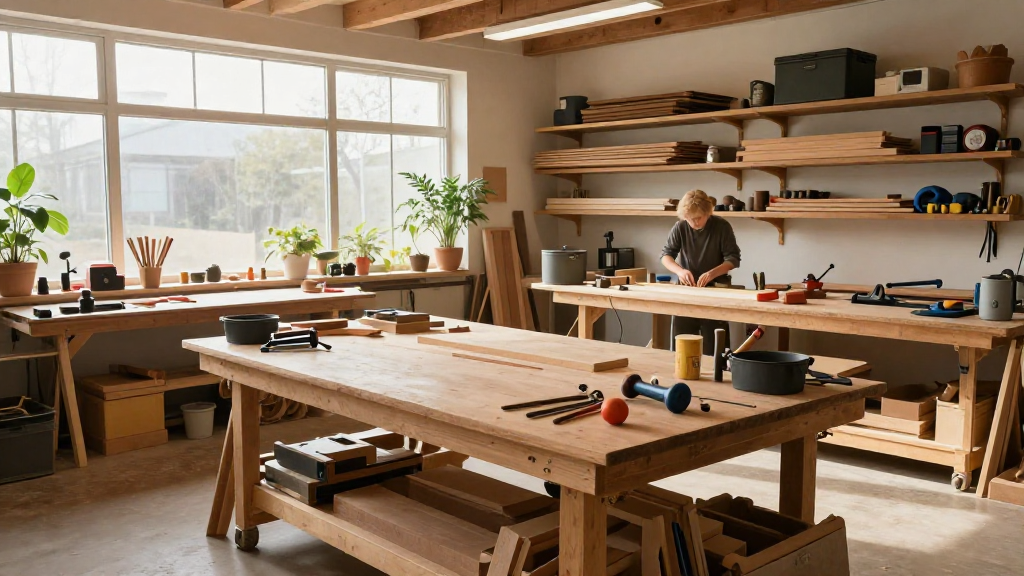
Creating an efficient woodworking workshop requires careful consideration of layout and organization.
In this article, we will delve into essential woodworking workshop layout tips that ensure a productive and safe working environment.
What Are the Key Considerations for Workshop Layout?
When designing your workshop, keep these key considerations in mind:
-
Available Space
– Measure the entire area where you plan to set up your workshop.
– Consider how much space each tool and workstation will occupy. -
Workflow
– Plan a logical workflow that allows you to move smoothly from one task to the next.
– Generally, start with the materials, then proceed to cutting, assembly, and finishing areas. -
Tool Placement
– Position frequently-used tools near your workbench.
– Group tools by function to minimize movement and save time. -
Safety
– Ensure that your workspace has enough room to avoid accidents.
– Keep emergency exits and fire extinguishers accessible and unobstructed. -
Lighting and Ventilation
– Good lighting helps prevent mistakes; consider both overhead and task lighting.
– Proper ventilation is critical for safety, especially when using finishes or adhesives.
How Can You Optimize Your Workbench Setup?
Your workbench is the centerpiece of any woodworking workshop, making it essential to arrange it effectively.
Here are some tips to optimize your workbench setup:
- Height Consideration
-
Choose a height that is comfortable for you, allowing you to work for extended periods without strain.
-
Work Surface
-
Ensure your workbench is sturdy and flat to handle various tasks from cutting to assembly.
-
Storage
-
Incorporate drawers or shelves under the workbench to keep tools organized and within reach.
-
Clamping Systems
- Install a sturdy clamping system on your workbench to secure your materials while you work.
What Makes an Efficient Tool and Storage Layout?
Tool organization is crucial for efficiency and quick access.
Here are some essential woodworking workshop layout tips related to tool and storage organization:
-
Use Wall Space
– Install pegboards or wall-mounted racks for frequently-used tools.
– Utilize shelves to store tools and materials off the floor. -
Designate Zones
– Group similar tools and equipment together.
– Create distinct areas for cutting, assembling, sanding, and finishing. -
Tool Safety
– Store sharp tools and blades in a safe and secure location.
– Make sure to label shelves and bins for quick identification.
How Important Is Accessibility?
Accessibility is a significant factor when considering your woodworking workshop layout.
Here’s how to ensure easy accessibility:
- Paths
-
Maintain clear paths to each workstation, ideally at least three feet wide.
-
Frequent Use Items
-
Place the most frequently used tools and materials at waist level to minimize bending and stretching.
-
Emergency Access
- Ensure that safety equipment, such as fire extinguishers and first aid kits, is easily accessible.
Should You Consider Ergonomics in Your Layout?
Yes, incorporating ergonomics is vital for comfort and efficiency in your woodworking workshop.
Here are some ergonomic tips to enhance your workshop experience:
- Tool Height
-
Adjust the height of tools and benches for maximum comfort to reduce fatigue.
-
Arrange for Comfort
-
Position tools in a way that requires less bending, stretching, or twisting.
-
Seating Arrangements
- If you’re working on detailed tasks, consider a comfortable stool that provides support.
How Do You Manage Dust and Waste?
Managing dust and waste is an essential aspect of maintaining an efficient woodworking workshop.
Implement these tips for better cleanliness:
-
Dust Collection Systems
– Invest in a dust collection system to minimize airborne particles and maintain a clean workspace. -
Regular Cleanup
– Create a habit of cleaning up dust and scraps regularly. -
Waste Bins
– Label bins for different types of waste, making disposal quick and efficient.
How Can Technology Enhance Your Workshop Layout?
With advancements in technology, integrating it into your woodworking workshop layout can enhance efficiency.
Consider these tech options:
- 3D Planning Tools
-
Use software to visualize your workshop layout before setting up.
-
Mobile Apps
-
Various mobile apps can help you keep an inventory of tools and materials.
-
Tools with Digital Features
- Invest in modern tools with digital displays and precision features for accurate measurements.
Summing Up Essential Woodworking Workshop Layout Tips
A well-organized workshop is key to efficient woodworking.
By implementing these essential woodworking workshop layout tips, you can create a functional and enjoyable woodworking environment.
Remember:
-
Plan Your Layout: Carefully consider space, workflow, and tool placement.
-
Optimize Storage: Use vertical space and designate specific zones for tools.
-
Prioritize Accessibility: Maintain clear paths and keep frequently-used tools within reach.
-
Incorporate Ergonomics: Arrange your workspace to minimize strain and enhance comfort.
-
Manage Cleanliness: Invest in dust collection and regular cleaning habits.
-
Use Technology: Leverage modern tools and software to improve your workflow.
With these strategies, you’ll create a woodworking workshop that maximizes efficiency and enhances your creativity.
By following these essential woodworking workshop layout tips, you’ll find that your skills improve and your projects become more enjoyable. Happy woodworking!