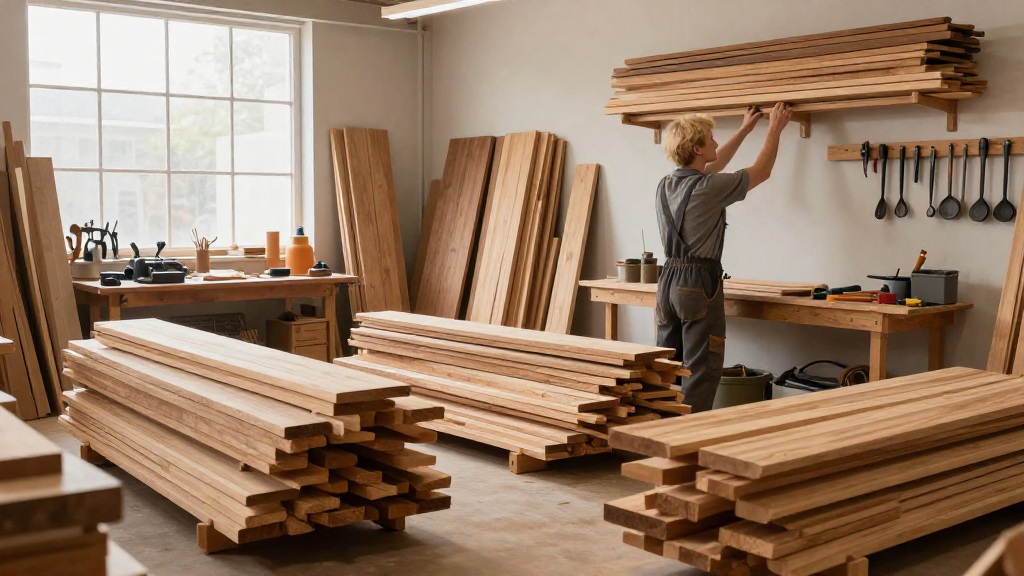
If you’re wondering how to store lumber in a workshop, you’re not alone. Proper lumber storage not only helps maintain the quality of your wood but also maximizes space and keeps your workshop organized.
Why is Proper Lumber Storage Important?
Storing lumber correctly is crucial for several reasons:
- Preventing Warping and Cracking: Wood can expand and contract with changes in humidity and temperature.
- Easier Access: An organized workshop allows you to quickly find and retrieve materials.
- Safety: Properly stored lumber reduces the risk of accidents or injuries.
Now that you understand the importance of storing lumber properly, let’s explore the best practices.
What Are the Best Methods to Store Lumber?
When considering how to store lumber in a workshop, there are a few effective methods to keep in mind:
1. Vertical Storage Solutions
Storing lumber vertically is one of the most efficient methods.
- Pros:
- Saves floor space.
-
Allows for easy visibility of different wood types.
-
How to Implement:
- Install wood racks against the wall.
- Use PVC pipes for smaller pieces.
- Ensure each piece is separated to allow air circulation.
2. Horizontal Storage: Is It Practical?
Horizontal storage involves placing lumber flat.
- Pros:
-
Useful for larger pieces that need support.
-
Cons:
- Takes up more floor space.
-
Risk of warping if stacked improperly.
-
How to Implement:
- Create a flat shelf specifically designed for lumber.
- Make sure to keep heavier boards towards the bottom.
3. Use of Racks and Shelves: What to Consider?
Racks and shelves can be customized to fit your workshop’s layout.
- Pros:
-
Specialty racks can provide dedicated space for different sizes and types of lumber.
-
How to Implement:
- Purchase commercial lumber racks, or build your own using plywood and 2x4s.
- Consider adjustable shelves to accommodate various lumber lengths.
4. Climate Control: Is It Necessary?
Understanding the climate in which your workshop operates is essential when figuring out how to store lumber in a workshop effectively.
- Why it Matters:
-
High humidity can lead to mold, while low humidity can cause cracks.
-
How to Implement:
- Use a dehumidifier in damp conditions or an air conditioner in extremely dry conditions.
- Store lumber in a well-ventilated area away from direct sunlight.
How to Organize Lumber by Type?
Once you’ve established a storage method, organizing your lumber is the next step!
1. Categorization: Why Is It Useful?
Organizing lumber by type allows for more efficient use of space and easy access.
- How to Implement:
- Create dedicated sections in your workshop for different types of wood, such as:
- Hardwoods
- Softwoods
- Plywood
2. Labeling: How Can It Help?
Labeling each section will save time when you’re searching for a specific type of wood.
- How to Implement:
- Use stickers or tags to indicate wood types.
- Consider color-coded labels for quick visibility.
What Tools Can Assist in Lumber Storage?
Utilizing the right tools can make all the difference in how you store lumber in your workshop.
1. Wooden Crates: Are They Beneficial?
Wooden crates provide an excellent means of storage.
- Benefits:
- They can be easily stacked.
- They allow for air circulation when stored off the ground.
2. Bungee Cords and Straps: How Can They Be Useful?
Bungee cords and straps can help keep your lumber organized when placed horizontally.
- Benefits:
- They prevent lumber from sliding out during movement.
3. Carts: What are Their Advantages?
Carts can assist in mobility and organization within your workshop.
- Benefits:
- Easy transportation of heavy materials.
- Keeps lumber accessible when needed.
How to Maintain Your Lumber Storage?
Once you’ve determined how to store lumber in a workshop, it’s important to maintain it effectively.
1. Regular Checks: What Should You Look For?
Conduct regular checks on your stored lumber to ensure quality.
- What to Look For:
- Signs of warping or cracking.
- Presence of mold or insects.
2. Routine Cleaning: Why Is It Necessary?
Keeping your workshop clean can prevent issues like mold and keep pests away.
- How to Implement:
- Sweep or vacuum dust and debris.
- Wipe down shelves and storage areas regularly.
3. Rotate Stock: How Is It Done?
Using the “first in, first out” (FIFO) approach will help manage your inventory.
- How to Implement:
- When you add new materials, make sure to reorganize so that older stock is used first.
Final Thoughts
Understanding how to store lumber in a workshop can significantly enhance your woodworking experience.
By implementing vertical storage, using racks, controlling the climate, and organizing effectively, you will create a safer and more efficient workspace.
Remember, the key to successful lumber storage is not just about choosing the right method, but also about maintaining a system that works for you.
With the right practices in place, you can enjoy the beauty and functionality of well-maintained lumber while ensuring your workshop remains organized and efficient.
Now, go ahead and optimize your workspace!