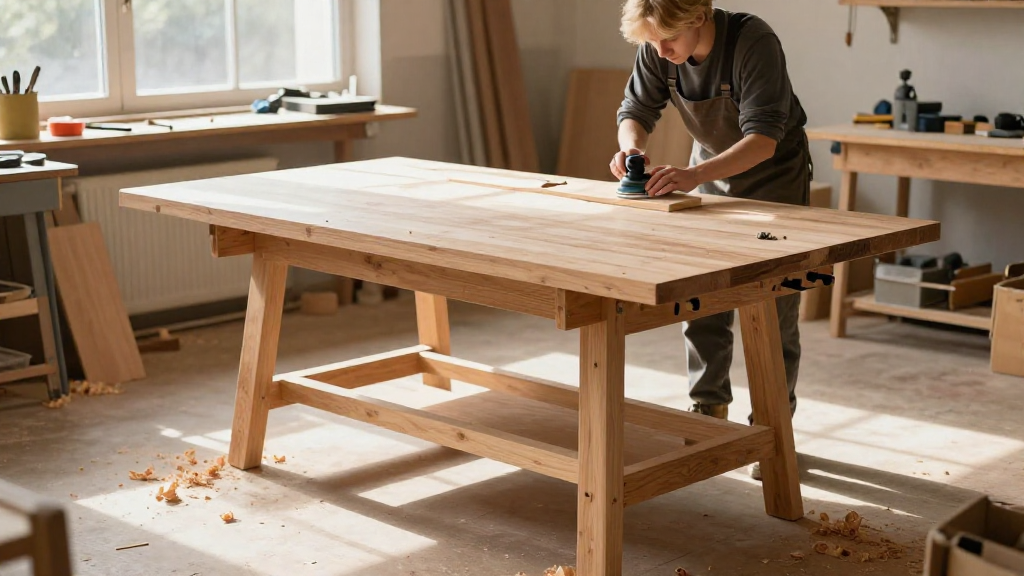
Are you looking for a clean and efficient way to sand your projects? In this article, we’ll explore how to build a downdraft sanding table that keeps your workspace dust-free.
What is a Downdraft Sanding Table?
A downdraft sanding table is a specialized tool designed for sanding wood and other materials.
It incorporates a fan and filter system that pulls dust and debris away from the surface you are working on.
By using this type of table, you not only achieve a cleaner finish on your projects but also promote better health and safety by reducing airborne particles.
Why Build Your Own Downdraft Table?
Building your own downdraft sanding table has many benefits:
- Customization: You can design it to suit your specific workspace needs.
- Cost-Effective: Building your own table is often cheaper than buying a pre-made model.
- Quality Control: You can select high-quality materials for a more durable product.
- Satisfaction: There is a sense of achievement in creating your own tools.
What Materials Do You Need?
To start your project on how to build a downdraft sanding table, gather the following materials:
- Plywood or MDF (for the table surface)
- 2×4 lumber (for the frame)
- Fan (make sure it has adequate CFM – Cubic Feet per Minute)
- Filter material (to trap dust)
- Screws and glue
- Rubber grommets (to accommodate the fan)
- Saw (jig saw or table saw)
- Drill
- Measuring tape
- Sandpaper
How to Measure and Cut the Wood?
-
Determine Size: Decide on the dimensions of your downdraft table based on your workspace. A common size is 3 feet by 5 feet, but this can vary.
-
Measure and Mark: Using a measuring tape, carefully mark the dimensions on your plywood or MDF.
-
Cut the Surface: Using a jigsaw or table saw, cut the plywood or MDF to size. Always wear safety goggles when cutting.
-
Frame Construction: Cut the 2×4 lumber to create a frame that will support the table surface. Ensure the frame is sturdy to handle weight and vibration during sanding.
How Do You Assemble the Downdraft Table?
With your materials prepped, it’s time to assemble your downdraft sanding table.
-
Build the Frame:
– Assemble the 2×4 pieces into a rectangular frame using screws and wood glue.
– Make sure the frame is square by measuring diagonally. -
Attach the Tabletop:
– Secure the plywood or MDF on top of the frame using screws.
– Consider using adhesive as an additional support. -
Create the Downdraft Ventilation:
– Cut holes in the tabletop for the downdraft ventilation.
– Space these holes evenly and ensure they are large enough for dust to pass through. -
Install the Fan:
– Choose a location under the tabletop to install your fan.
– Cut an opening for the fan and secure it with screws.
– Use rubber grommets to prevent vibration noise. -
Fit the Filter:
– Attach filter material around the fan to capture the dust.
– Ensure it fits snugly and doesn’t leave gaps.
How to Maintain a Dust-Free Environment?
After constructing your downdraft sanding table, maintaining its efficiency is important for dust-free sanding.
-
Regular Cleaning:
– Empty the dust collection container frequently.
– Clean or replace the filter as needed to ensure proper airflow. -
Check the Fan:
– Periodically inspect the fan for dust buildup.
– Clean the blades and housing to maintain optimal performance. -
Use Proper Sanding Techniques:
– Sand slowly and methodically to minimize dust creation.
– Keep your workspace organized to prevent debris from spreading.
Why Is a Dust-Free Environment Important?
Creating a dust-free environment while sanding is essential for various reasons:
- Health and Safety: Dust inhalation can lead to respiratory issues. A downdraft sanding table helps mitigate these risks.
- Better Finish: Reducing dust means smoother finishes on your projects. There’s less risk of particles settling on wet finishes, leading to a cleaner look.
- Equipment Longevity: Keeping your workspace clean can also prolong the life of your tools and equipment.
FAQs About Building a Downdraft Sanding Table
Can I make a downdraft table for smaller projects?
Yes, you can adjust the dimensions of the table to suit smaller sanding tasks while maintaining the same basic features.
What type of fan works best?
A shop vacuum or a high-velocity fan with a sufficient CFM rating will work best for creating effective downdraft.
Can I use a downdraft table for other materials?
Yes, downdraft tables can be used for various materials, including metal and plastic. Just ensure the right filtering system is in place.
Final Thoughts on How to Build a Downdraft Sanding Table
Building a downdraft sanding table is a rewarding project that adds functionality to your workshop.
By following the steps outlined in this article on how to build a downdraft sanding table, you can create an efficient workstation that enhances your sanding process.
With the right materials, proper techniques, and regular maintenance, you will enjoy a cleaner, dust-free sanding experience that showcases your craftsmanship. So grab your tools, and get started on this essential project today!