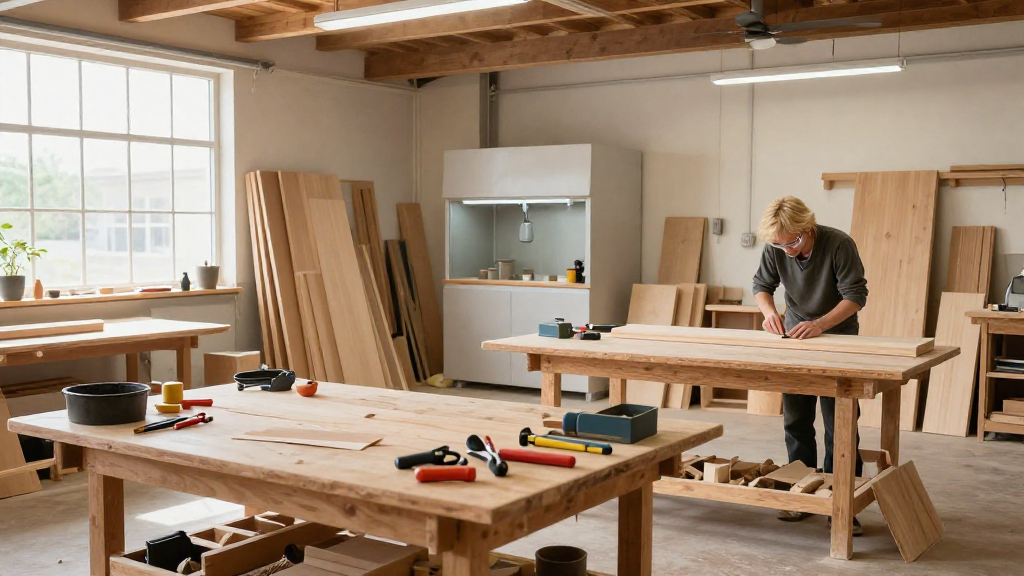
Creating zones in woodworking shop is an essential strategy for maximizing productivity and efficiency.
When you establish dedicated areas for specific tasks in your woodworking shop, you can streamline workflows and reduce the time spent searching for tools or materials.
What Are Functional Zones in a Workshop?
Functional zones are clearly defined areas within your workshop that cater to different activities.
By dividing your workshop into various zones, you can ensure that all tools and materials are organized according to their purpose.
Here are some common zones you might consider creating in your woodworking shop:
-
Cutting Zone: This area is typically where you’ll use large machinery like table saws and workshop saws. Safety is paramount here, so ensure it’s spacious and clear.
-
Assembly Zone: A large table where you can put together parts and pieces. This area should be free of clutter and equipped with necessary tools.
-
Finishing Zone: This space is designated for sanding, painting, and other finishing tasks. It should be well-ventilated to ensure safety during chemical use.
-
Tool Storage Zone: Ample storage for hand tools, power tools, and accessories is essential in any workshop. Proper organization will save time and improve efficiency.
-
Material Storage Zone: Having a specific spot for lumber, hardware, and other materials will keep your space organized and reduce waste.
Why Should You Create Zones in Your Workshop?
Creating zones in woodworking shop is about more than just organization; it enhances overall workflow and safety.
Here are some key benefits to consider:
-
Increased Productivity: With designated areas for tasks, you won’t waste time searching for tools or materials.
-
Improved Safety: Each zone can be designed with specific safety measures based on the tools and processes located there.
-
Enhanced Focus: When tasks are organized into functional zones, it’s easier to concentrate on the job at hand without distractions.
-
Streamlined Workflow: Arranging tools and materials in a logical sequence helps to create an efficient flow from one project stage to another.
How Should You Arrange Zones in Your Workshop?
Now that you understand the importance of creating zones in woodworking shop, it’s time to focus on how to effectively arrange them.
Here’s a step-by-step guide to help you layout functional zones:
-
Assess Your Space:
– Measure your workshop.
– Identify existing features like windows, doors, and electrical outlets. -
Define Your Workflow:
– Outline the common tasks you perform.
– Decide which tasks require proximity to each other. -
Select Zone Locations:
– Place the cutting zone at the back, as it often generates dust and debris.
– Position the assembly zone closer to the cutting zone for easy access to freshly cut materials. -
Consider Tool Movement:
– Minimize movement between zones.
– Arrange tools in each zone so they are easily accessible when needed. -
Implement Proper Storage Solutions:
– Use shelving, pegboards, and cabinets for organized tool storage.
– Clearly label each storage item for easy identification. -
Create a Comfortable Workflow:
– Ensure there’s enough space in each zone for you to move freely.
– Consider ergonomic issues; each area should allow you to work comfortably.
What Tools and Materials Are Essential for Each Zone?
When you’re creating zones in woodworking shop, it’s essential to equip each functional area with the appropriate tools and materials.
- Cutting Zone:
- Table saw, miter saw, band saw.
-
Safety gear including goggles, ear protection, and a dust mask.
-
Assembly Zone:
- Workbench, clamps, screws, and wood glue.
-
Measuring tools like a tape measure and square.
-
Finishing Zone:
- Sanders, brushes, sprayers, and a variety of finishes.
-
Adequate ventilation and safety supplies.
-
Tool Storage Zone:
- Tool chest, pegboards, and drawer organizers.
-
Labels and bins for hardware and small items.
-
Material Storage Zone:
- Racks for lumber, bins for hardware, and shelves for small materials.
- Labels to maintain an organized inventory.
How Can You Maximize the Efficiency of Your Zones?
Simply creating zones in woodworking shop isn’t enough; they need to be efficient and functional. Here are tips to maximize that efficiency:
- Maintain Cleanliness:
- Regularly clean each zone to prevent accidents.
-
Implement a “clean as you go” policy.
-
Regularly Update Layout:
-
As your projects evolve, so might your needs. Be open to periodic adjustments.
-
Utilize Vertical Space:
-
Install shelves and cabinets high up to free up floor space.
-
Incorporate Mobility:
-
Use mobile tool carts to move frequently used items between zones.
-
Train and Communicate:
- If others use your workshop, ensure they understand the layout and respect established zones.
Conclusion: The Importance of Creating Zones in Your Workshop
Creating zones in woodworking shop ultimately leads to a more functional, efficient, and safe working environment.
When you dedicate spaces for specific tasks, you not only enhance productivity but also improve overall enjoyment while working on projects.
Implementing a well-organized layout requires careful planning, but the benefits far outweigh the initial effort.
Adopting these strategies will transform your woodworking shop into a haven for creativity, allowing you to focus on what you love most: crafting exquisite pieces of art from wood.
By following the guidelines outlined in this article, you can ensure that your workshop truly meets your needs.
So take the plunge and start creating functional zones in your workshop layout today!