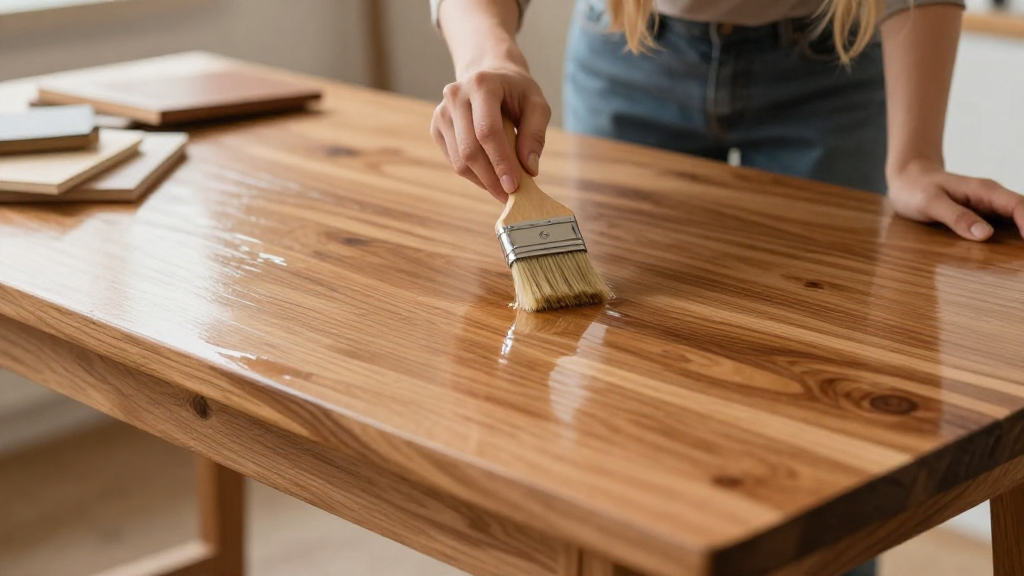
If you’re asking yourself, what is water-based wood finish, you’re not alone.
Many DIY enthusiasts and professional woodworkers alike are increasingly considering water-based finishes over traditional solvent-based options.
In this article, we will explore the pros and cons of water-based wood finishes, providing you with the information needed to make an informed choice.
What is Water-Based Wood Finish?
Water-based wood finish refers to a type of wood treatment product that utilizes water as its primary solvent.
These finishes are designed to protect and enhance the appearance of various wood surfaces.
Typically, water-based finishes include:
- Varnishes
- Lacquers
- Polyurethanes
Because they are less toxic and generally easier to work with than solvent-based products, they have gained popularity among users.
Why Choose Water-Based Finishes?
What Are The Benefits Of Water-Based Wood Finishes?
-
Low VOC Content:
– Water-based finishes usually have a lower volatile organic compound (VOC) level compared to their solvent-based counterparts.
– This makes them a safer option for indoor projects, minimizing air quality issues. -
Fast Drying:
– One of the significant perks of water-based wood finishes is their rapid drying time.
– Many products are dry to the touch within 30 minutes to 1 hour, significantly reducing project time. -
Easy Clean-Up:
– Since water-based finishes are primarily composed of water, clean-up is straightforward.
– Tools and spills can usually be cleaned up with soap and water. -
Less Odor:
– Unlike solvent-based finishes, water-based options often have a milder smell.
– This aspect is especially important for users working in enclosed spaces or those sensitive to strong odors. -
Excellent Clarity:
– Water-based finishes tend to dry clear and won’t yellow over time, making them ideal for light-colored woods.
– They provide a natural appearance while still offering protection.
When Should You Use Water-Based Wood Finishes?
- Indoor Furniture Projects: Ideal for furniture that will be used indoors where air quality is a concern.
- Artwork: Many artists who work with wood prefer water-based finishes for their clarity.
- Wood Floors: They work exceptionally well on wood floors as they are durable and easy to maintain.
Are There Any Downsides?
What Are The Disadvantages Of Water-Based Wood Finishes?
-
Less Durability:
– While improving over the years, water-based finishes still may not be as durable as their solvent-based counterparts in high-wear areas.
– For instance, highly trafficked floors may benefit more from oil-based products. -
Longer Cure Times:
– Although they dry quickly to the touch, water-based finishes can take longer to fully cure.
– Depending on humidity and temperature, this could extend to several days. -
Temperature Sensitivity:
– Water-based finishes can be sensitive to temperature and humidity levels during application.
– Significant variations can affect their performance and application. -
Requires More Coats:
– Many users report needing to apply multiple coats of water-based finishes for adequate protection and appearance.
– While this may extend the project duration, it is often necessary for the best results. -
Adhesion Problems:
– Water-based finishes can have adhesion issues if the wood surface isn’t adequately prepared.
– This necessitates thorough sanding and cleaning before application.
How Do You Apply Water-Based Finishes?
What Is The Application Process Like?
Applying water-based wood finishes isn’t particularly complicated, but proper steps must be taken for the best results.
-
Preparation:
– Start by sanding your wood surface until it’s smooth.
– Wipe away any dust and debris using a damp cloth. -
Testing:
– Before applying to the entire surface, conduct a spot test to ensure desired results.
– Apply a small amount of the finish to a sample area and let it dry. -
Application:
– Use a high-quality brush or roller designed for water-based products.
– Apply thin, even coats, and avoid over-brushing. -
Drying:
– Allow the finish to dry according to the manufacturer’s instructions.
– Remember that drying times can be affected by temperature and humidity. -
Additional Coats:
– Sand lightly between coats to ensure good adhesion.
– Typically, 2-3 coats may be necessary for the best finish.
Should You Choose Water-Based Over Oil-Based?
Which Finish Is Right For You?
Choosing between water-based and oil-based finishes may depend on your specific project needs.
- Water-Based Finish:
-
Opt for water-based if you’re looking for a quick-drying, low-odor, and low-VOC option.
-
Oil-Based Finish:
- Consider oil-based finishes for their superior durability in high-traffic areas and richer color enhancement.
Conclusion: What is Water-Based Wood Finish?
So, what is water-based wood finish?
In summary, it is a versatile and eco-friendly option for protecting and enhancing wood surfaces.
While there are certain downsides to consider, the advantages often outweigh them, especially for indoor projects.
Ultimately, the choice between water-based and oil-based finishes will depend on your individual needs, project requirements, and personal preferences.
Now that you are more informed about the pros and cons of water-based wood finishes, you can confidently select the right finishing option for your woodworking endeavors. Happy finishing!