Taking a sewing machine to quilting classes is much easier when your case protects the machine and rolls smoothly from the car to the classroom. The right design can also keep rulers, thread, pedals, fabric, and tools organized in one manageable load.
We selected 10 rolling cases with useful differences in capacity, padding, wheel layouts, storage, and portability. Use the guide below to narrow your choices based on your machine’s dimensions, class supplies, and travel routine.
Best 10 Sewing Machine Rolling Cases for Quilting Classes Picks for 2026
Best All-Around Protection
Rolling Sewing Machine Case with Wheels

- Removable padded base and reinforced panels
- Four wheels plus shoulder strap
- Multiple pockets for class supplies
Best For: Quilters seeking protection, storage, and easy rolling
Best Reinforced Design
Rolling Sewing Machine Case with Detachable Trolley

- 2mm plastic boards with thick padding
- Foldable trolley supports up to 30kg
- Dedicated scissor storage and large pockets
Best For: Traveling sewists wanting strong structure and flexibility
Best for Accessory Organization
LUXJA Rolling Sewing Machine Case

- Eleven compartments for sewing supplies
- Padded insert and heavy-duty polyester
- Detachable dolly and shoulder strap
Best For: Quilters carrying many notions to class
Best Two-Wheel Travel Option
Rolling Sewing Machine Carrying Case

- Two smooth-rolling in-line skate wheels
- Hard base and padded sidewalls
- Six pockets plus thread spool holders
Best For: Travelers and class attendees preferring a two-wheel case
Best Portable Pick
Teamoy Rolling Sewing Machine Case

- Protective nylon with removable wooden base
- Two wheels, padded handle, and shoulder strap
- Pockets and pouches for class supplies
Best For: Standard machines and flexible carrying
Best Spacious Organizer
Everything Mary XXL Rolling Sewing Case

- Large compartment for machines and supplies
- Four 360-degree spinner wheels
- Reinforced polyester with pockets and straps
Best For: Large quilting and craft loads
Best for Professional Machines
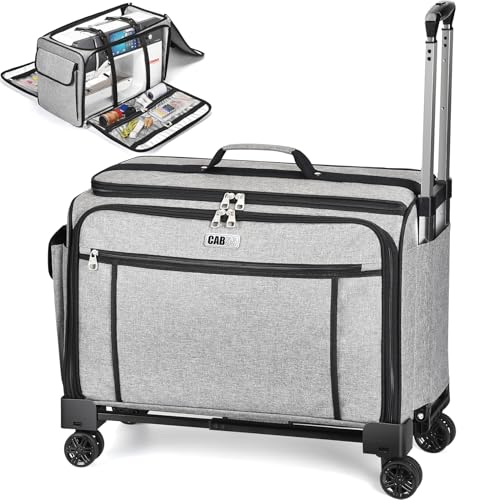
- 23-inch capacity for oversized machines
- Rigid support board and thick padding
- Hybrid four-wheel system with large pockets
Best For: Professional sewing and embroidery equipment
Spacious Class Companion
XL Rolling Sewing Machine Case

- Roomy interior for machines and project supplies
- Four 360° spinner wheels with telescopic handle
- Collapses flat and includes multiple pockets
Best For: Quilters needing ample storage for classes and retreats
Protective Organizer
Amythe Rolling Sewing Machine Bag

- 900D water-resistant Oxford fabric and thick padding
- Three straps help secure the machine
- Detachable five-wheel base and organized pockets
Best For: Sewists wanting flexible transport and padded protection
Heavy-Duty Hauler
23-Inch Extra-Large Rolling Case

- Extra-large capacity with internal support board
- Shock-absorbing padding and expansive accessory pockets
- Lockable hybrid trolley wheels; folds flat
Best For: Professional crafters with oversized machines
Best All-Around Protection – Rolling Sewing Machine Case with Wheels
For sewing machine rolling cases for quilting classes, this model combines a padded, structured interior with four-wheel mobility and useful accessory storage. Its removable bottom pad, reinforced panels, and fastening straps help support and protect a standard machine while traveling.
Best For: Quilters who want four-wheel maneuverability, broad machine compatibility, and room for sewing supplies.
Pros:
- Removable bottom padding, hard front and back boards, and two fastening straps add support during transport.
- Four wheels, sturdy handles, and a detachable padded shoulder strap offer several carrying options.
- Multiple pockets include a large front organizer, two side pockets, and a back pocket.
- Water-resistant nylon exterior is designed to be easy to clean.
Cons:
- The listed interior dimensions may not accommodate larger or unusually shaped machines.
- The product is sold as a bag only, without a sewing machine or accessories.
With a 15.8-inch interior length and a 12-inch interior height, this purple case is a practical choice for many Singer, Brother, and Janome machines. Check your machine measurements before ordering, especially if you plan to fill the accessory pockets for class.
Best Reinforced Design – Rolling Sewing Machine Case with Detachable Trolley
This option stands out among sewing machine rolling cases for quilting classes because it pairs thick padding and built-in 2mm plastic boards with a detachable, foldable trolley. The water-resistant nylon shell and organized pockets make it suited to regular trips between home and class.
Best For: Sewists who prioritize rigid protection, a detachable cart, and organized storage for tools and notions.
Pros:
- Built-in hard plastic sheets and thick padding help guard against drops, bumps, and spills.
- Detachable, foldable trolley has smooth-rolling wheels and a reinforced base rated to support up to 30kg.
- Dedicated thick scissor compartment and multiple large pockets help organize accessories.
- Padded shoulder strap and handles allow use with or without the trolley.
Cons:
- The main compartment is 17 inches long and 8 inches wide, so machine depth should be checked carefully.
- The trolley adds a separate component that may require storage when detached.
The 17 x 8 x 12.5-inch interior is intended for most standard Singer, Brother, and Janome machines. Its flexible trolley setup is useful when you want wheels for longer walks but a conventional bag for stairs or tighter spaces.
Best for Accessory Organization – LUXJA Rolling Sewing Machine Case
For quilting classes that require plenty of notions, this LUXJA case emphasizes organization as much as portability. The padded polyester bag includes an eleven-compartment layout, a removable bottom insert, a detachable dolly, and a shoulder strap for different travel situations.
Best For: Class attendees who carry needles, thread, manuals, scissors, and other small sewing accessories alongside their machine.
Pros:
- Top lid includes a clear zipper pocket, six elastic loops, and two small pouches.
- Large front compartment adds six mesh pockets and a zipper pocket, with two more front pockets and two side pockets.
- Thick padding and a removable padded bottom insert help reduce impact.
- Detachable dolly, handles, and anti-slip shoulder strap provide versatile carrying options.
Cons:
- The bag is 7.75 inches wide, so confirm your machine’s depth before purchasing.
- The detachable dolly means the bag and rolling base may need to be managed separately.
Measuring 16.25 x 7.75 x 13 inches, this black rolling case is designed for most standard Brother, Singer, and Janome machines. Its strongest advantage is the extensive pocket layout, making it a good fit when class supplies are nearly as important as the machine.
Best Two-Wheel Travel Option – Rolling Sewing Machine Carrying Case
This two-wheel case is a practical choice among sewing machine rolling cases for quilting classes when you want a lightweight, travel-oriented design. It combines a padded interior, durable PE hard base, aluminum frame, and multiple pockets while remaining suitable for carrying by handle or shoulder strap.
Best For: Quilters who prefer a two-wheel trolley for class trips, meetups, storage, or travel.
Pros:
- Two in-line skate wheels and an aluminum frame provide a smooth rolling setup.
- Removable wooden base board and thick padded sidewalls help stabilize and protect the machine.
- Main compartment accommodates machines up to 17 x 10.2 x 13.3 inches.
- Six custom pockets, thread spool holders, and see-through storage help organize notions.
Cons:
- Two wheels may require more tilting than a four-wheel case.
- The listed outer dimensions and 2.91 kg weight may be less convenient in tight spaces or on stairs.
- Its soft polyester shell offers less rigid coverage than a hard case.
The foldable frame and carry options make this gray case adaptable for classes and travel, while the stated 13.25-inch height is designed to meet carry-on size requirements for most international flights. Verify airline rules and your machine dimensions before relying on it for air travel.
Best Portable Pick – Teamoy Rolling Sewing Machine Case
For quilters looking for sewing machine rolling cases for quilting classes, the Teamoy offers a compact design with wheels, a padded handle, and a shoulder strap. Its nylon construction, removable wooden bottom pad, and multiple pockets help make routine class travel more organized.
Best For: Standard-size sewing machines and quilters who want a portable case with flexible carrying options.
Pros:
- Heavy-duty, scratch-resistant nylon with a removable wooden support pad
- Two wheels, padded handle, and adjustable shoulder strap support different carrying styles
- Seven compartments, including removable transparent pouches and exterior pockets
- Compatible with Brother, Singer, Janome, and most standard machines
Cons:
- Its interior dimensions are intended for standard machines, not oversized professional models
- Uses two wheels rather than a four-wheel spinner setup
The Teamoy is a practical choice when portability and accessory organization matter more than maximum capacity. Confirm your machine dimensions before purchasing.
Best Spacious Organizer – Everything Mary XXL Rolling Sewing Case
Among sewing machine rolling cases for quilting classes, the Everything Mary XXL stands out for its large capacity and four-wheel spinner design. The spacious interior is built to carry a machine alongside fabric, thread, tools, and other craft supplies.
Best For: Creators who need room for a sewing machine and a substantial collection of quilting or craft materials.
Pros:
- XXL interior measures 21.50 by 13 by 15 inches
- Four 360-degree spinner wheels support balanced maneuvering
- Reinforced polyester construction is described as smudge-resistant and durable
- Interior straps, reinforced zippers, and multiple pockets help secure supplies
Cons:
- Its large exterior footprint may be less convenient in crowded classrooms
- At 5.38 kg, it is heavier than a compact tote
This case is geared toward maximum storage rather than minimalism. It makes sense for quilting classes or travel where bringing materials beyond the machine is a priority.
Best for Professional Machines – CAB55 XXL Rolling Sewing Case
For quilters with larger equipment, the CAB55 is one of the more specialized sewing machine rolling cases for quilting classes. Its 23-inch format, rigid bottom support board, thick padding, and hybrid four-wheel system are designed for professional embroidery and heavy-duty sewing machines.
Best For: Professional crafters, sewing instructors, retreat attendees, and quilters transporting oversized machines.
Pros:
- Extra-large 23 by 13 by 14.5-inch design for professional machines
- Rigid bottom board helps prevent sagging under heavy equipment
- Thick padding and tear-resistant fabric provide added protection
- Large pockets accommodate foot pedals, hoops, and thread collections
Cons:
- Its 9.24-pound weight adds to the load before a machine is packed
- Large dimensions may be excessive for standard sewing machines
- The hybrid wheel layout is designed for stability, not four-wheel spinning in every direction
The CAB55 is the strongest fit when machine size and bottom support are the main concerns. Its foldable design is useful for storage, but shoppers should verify that both the machine and accessories fit comfortably.
Spacious Class Companion – XL Rolling Sewing Machine Case
For quilters comparing sewing machine rolling cases for quilting classes, this XL carrier emphasizes roomy storage and easy maneuverability. Its interior fits most standard sewing and embroidery machines while leaving space for fabric, patterns, thread, tools, and accessories.
Best For: Quilters and crafters who need generous capacity for classes, retreats, and crafting events.
Pros:
- Four 360° spinner wheels and a telescopic handle make it easy to roll.
- Multiple interior and exterior pockets help organize supplies.
- Collapsible design folds flat for convenient storage.
- 19.5 x 10.5 x 14-inch interior accommodates many standard machines and extras.
Cons:
- At 9.4 pounds, it is relatively substantial to carry when fully loaded.
- The spacious exterior dimensions may be more than needed for compact machines.
Choose this model when capacity and organized transport matter more than minimizing the case’s own weight. Its four-wheel design is particularly practical for moving a loaded sewing setup through classes or retreats.
Protective Organizer – Amythe Rolling Sewing Machine Bag
Among sewing machine rolling cases for quilting classes, the Amythe model stands out for protective padding, machine-securing straps, and flexible carry options. Its main compartment fits mini and standard machines up to 16.5 x 9.1 x 11.8 inches, but dimensions should be checked before purchase.
Best For: Sewists who want padded protection, detailed organization, and the option to carry or roll their machine.
Pros:
- 900D Oxford fabric, water-resistant coating, and thick padding help protect equipment.
- Three securing straps help limit movement inside the case.
- Multiple mesh, clear PVC, and utility pockets organize smaller supplies.
- Detachable five-wheel base supports rolling or carrying for classes and workshops.
Cons:
- The compartment is sized for machines up to 16.5 x 9.1 x 11.8 inches, so larger models may not fit.
- The removable base adds a component to manage when carrying the bag.
This is a practical choice for sewists who value cushioning and organization in a relatively compact case. The removable trolley base also adds versatility for different parts of a class or workshop trip.
Heavy-Duty Hauler – 23-Inch Extra-Large Rolling Case
For oversized equipment, this 23-inch case offers a heavy-duty option among sewing machine rolling cases for quilting classes. It combines shock-absorbing padding, an internal support board, large accessory pockets, and a hybrid trolley intended for professional crafters and retreat attendees.
Best For: Quilters, instructors, and professional crafters transporting oversized or heavier sewing and embroidery machines.
Pros:
- Extra-large design accommodates oversized machines and project accessories.
- Thick padding and a high-density support board help protect and stabilize equipment.
- Lockable wheels combine flexible front steering with rear straight-line tracking.
- Folds flat and uses YKK zippers for convenient storage and durable closure.
Cons:
- At 12 pounds, the case is heavier than the other listed options.
- Its 24 x 14 x 15-inch size may be excessive for compact machines or minimal supplies.
- The premium heavy-duty construction may be more than occasional class attendees need.
This case makes the most sense when machine size, stability, and protection are priorities. Its lockable wheels and support structure are useful for transporting a substantial setup, while the foldable design helps offset its large footprint during storage.
How We Picked the Best Sewing Machine Rolling Cases for Quilting Classes
For this roundup, we focused on practical features that matter when transporting a machine to quilting classes: interior protection, case dimensions, storage capacity, handle design, wheel stability, and ease of loading. The selection includes compact totes, extra-large organizers, detachable trolley designs, and models with rigid or reinforced bases.
Because sewing machines vary considerably in size and weight, product names alone are not enough to confirm compatibility. Always compare your machine’s measurements with the listed interior dimensions, allowing room for the power cord, foot control, and protective padding.
Quick Comparison
| Best For | Look For | Why It Matters |
|---|---|---|
| Frequent class travel | Stable wheels and telescoping handle | Reduces strain across parking lots and hallways |
| Large or heavy machines | Extra-large capacity and reinforced base | Improves support and makes packing easier |
| Organized storage | Multiple exterior pockets | Keeps tools, thread, patterns, and accessories accessible |
| Compact transport | Removable trolley or foldable construction | Makes storage at home and in the car simpler |
| Maximum protection | Rigid panels, wooden boards, or substantial padding | Helps shield the machine from bumps and pressure |
Key Buying Factors for Sewing Machine Rolling Cases for Quilting Classes
Fit and Weight Capacity
Measure the machine’s length, width, and height, including any protruding handles or spool pins. A case that is too tight can stress the zipper and make loading difficult, while excessive empty space may allow the machine to shift. Check the stated weight capacity if you own a heavy-duty or embroidery machine.
Base Support and Padding
A removable bottom board, rigid sheet, or reinforced base can help distribute weight and prevent sagging. Look for padded walls and a cushioned machine compartment, especially if the case will be placed in a vehicle trunk or rolled over uneven pavement.
Wheel Configuration
Two-wheel designs are often lighter and easier to pull up small steps. Four-wheel and five-wheel configurations may offer better balance and maneuverability, particularly for oversized cases. Lockable wheels are useful when unpacking or working in crowded classrooms.
Storage and Access
Count the supplies you typically bring to class before choosing a bag. Dedicated pockets can hold scissors, rulers, needles, patterns, and cords, while a larger open compartment may be better for fabric and project materials. Avoid overloading exterior pockets if it makes the case unstable.
Who Should Buy Which Sewing Machine Rolling Cases for Quilting Classes?
Choose a compact rolling tote if you attend short classes with a smaller machine and limited supplies. A model with multiple pockets suits quilters who want tools and accessories separated from the machine compartment. If you carry a larger machine, embroidery unit, or extensive project materials, an XXL case with four wheels and a reinforced base is usually the more practical choice.
Travelers who need easier storage should consider a detachable trolley or foldable design. For frequent use over long distances, prioritize smooth, stable wheels, a comfortable telescoping handle, and strong zippers over decorative details. Whichever of these Sewing Machine Rolling Cases for Quilting Classes you prefer, verify dimensions, padding, and weight support before ordering.