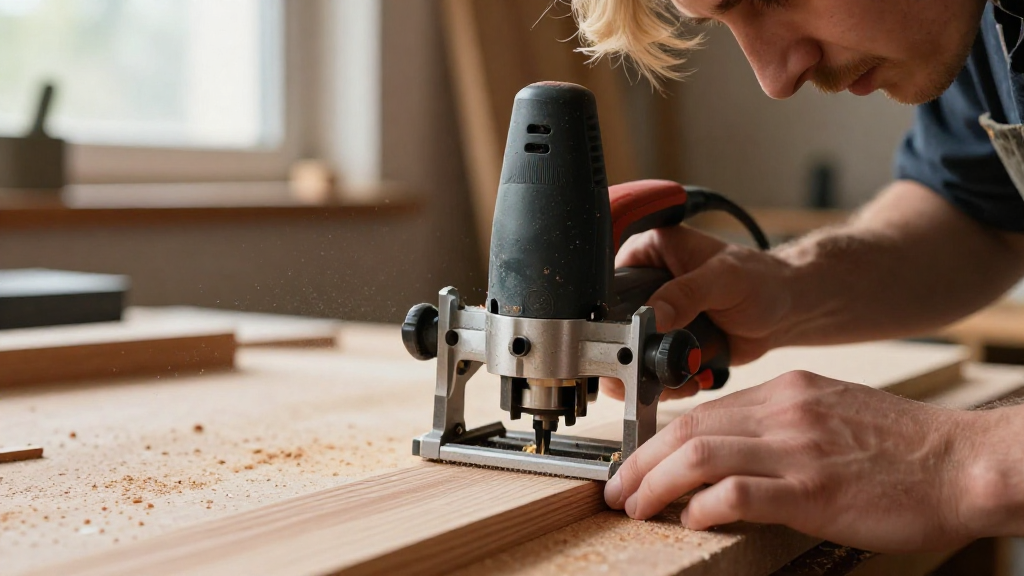
A woodworking router is an essential tool in any woodworker’s arsenal, boasting a range of versatile uses.
What Are the Primary Woodworking Router Uses?
Woodworking routers are power tools that can shape, cut, and hollow out various materials, primarily wood.
With so many woodworking router uses, it’s crucial to understand how to wield this versatile tool effectively.
What Can You Do with a Woodworking Router?
-
Edge Profiling
One of the most common woodworking router uses is edge profiling.
This process involves shaping the edges of wooden pieces, giving them a finished appearance.
Common edge profiles include:
– Bevel
– Roundover
– Cove
– Chamfer
– Ogee -
Creating Joinery
Woodworking routers are perfect for creating precise joints between two wooden pieces.
Some common joinery techniques include:
– Dado Joints: For shelving and panel work.
– Rabbet Joints: Ideal for frames and boxes.
– Mortise and Tenon Joints: A classic woodworking method often used in furniture making. -
Inlays and Decorations
Inlays can add a personal touch to wood projects.
By using different bits, a woodworking router can create intricate inlays that elevate the aesthetic appeal of your work.
Examples include:
– Decorative designs
– Lettering
– Artistic patterns -
Hollowing and Embossing
You can utilize a woodworking router to hollow out areas of wood.
This technique is especially useful for creating:
– Bowls
– Vases
– Carvings -
Surface Flattening
A woodworking router can also be applied to flatten irregular surfaces.
As a result, you can create a level surface for further operations.
Some carpenters use a router sled to accomplish this task efficiently. -
Routing Slots and Grooves
Woodworkers frequently use routers to cut slots and grooves for functional components such as drawer slides and cabinet hinges.
Having the capability to make precise cuts in various depths is essential for creating functional designs.
Why Use a Woodworking Router Over Other Tools?
Using a woodworking router provides several advantages:
- Versatility: It can handle a wide range of tasks beyond simple cutting.
- Precision: The fine control allows woodworkers to create intricate designs.
- Speed: Compared to manual tools, routers significantly speed up the shaping and cutting process.
- Finish Quality: Routes made with a router typically yield smoother finishes compared to other methods.
Are There Different Types of Woodworking Routers?
Yes! There are several types of woodworking routers, each designed for specific tasks.
Understanding these can enhance your overall project quality and efficiency.
-
Fixed-Base Router
A fixed-base router allows the user to set the depth of the cut.
It’s excellent for precision work, particularly when performing edge work or joinery. -
Plunge Router
A plunge router allows users to “plunge” the bit into the wood at various depth settings.
This router type is ideal for creating hollow areas and grooves since it offers greater flexibility. -
Router Table
When using a router in a table setup, you gain additional stability and control.
This setup is especially advantageous for making repetitive cuts, jointing edges, and performing intricate designs.
How to Choose the Right Router Bit for Your Project?
Selecting the right router bit is crucial for achieving the desired outcome in any woodworking project.
Here are some tips for choosing appropriately:
- Material type: Different bits work better with various materials. Make sure to select a bit designed for hard or softwoods as required.
- Bit shape: Consider the profile you want to achieve. For instance, use a roundover bit for rounded edges or a straight bit for flat cuts.
- Diameter: Larger bits can create wider cuts, while smaller bits offer more precision.
- Quality: It’s wise to invest in high-quality router bits, as they tend to provide better performance and durability.
How Do You Maintain a Woodworking Router?
Proper maintenance will extend the life of your woodworking router. Here are some maintenance tips:
-
Keep it Clean
Regularly remove sawdust and debris from the router body and vents.
This practice helps prevent overheating and maintains performance. -
Sharpen and Replace Bits
Dull bits can lead to poor cuts and increase the risk of damaging your workpiece.
Regularly check and sharpen or replace your bits as needed. -
Check the Cords and Plugs
Ensure that all electrical components are in good condition.
Frayed cords or loose plugs can create safety hazards. -
Store Properly
Store your router and bits in a dry, clean place.
Consider a dedicated case or tool chest to keep everything organized.
What Are Some Safety Tips When Using a Woodworking Router?
Safety should always be a top priority when working with routers. Here are essential safety tips to follow:
-
Wear Protection
Use eye protection to guard against flying debris.
It might also be a good idea to wear ear protection, as routers can be loud. -
Secure the Workpiece
Use clamps or a vise to secure your workpiece.
Workpieces that shift can lead to dangerous situations or improper cuts. -
Avoid Loose Clothing
Make sure your clothing fits snugly to avoid getting caught in moving parts. -
Follow the Manufacturer’s Instructions
Every router comes with guidelines on use and safety.
Always consult the manual for specific instructions related to your model.
Conclusion: Why Understanding Woodworking Router Uses is Essential
Understanding woodworking router uses is vital for any woodworker who wants to expand their skills.
With a variety of applications, the router is a versatile tool that can dramatically enhance the quality and efficiency of your woodworking projects.
By familiarizing yourself with the different types of routers, bits, and safety precautions, you can ensure a better woodworking experience.
So, whether you’re a novice or a seasoned pro, a woodworking router will undoubtedly become a staple in your toolbox.