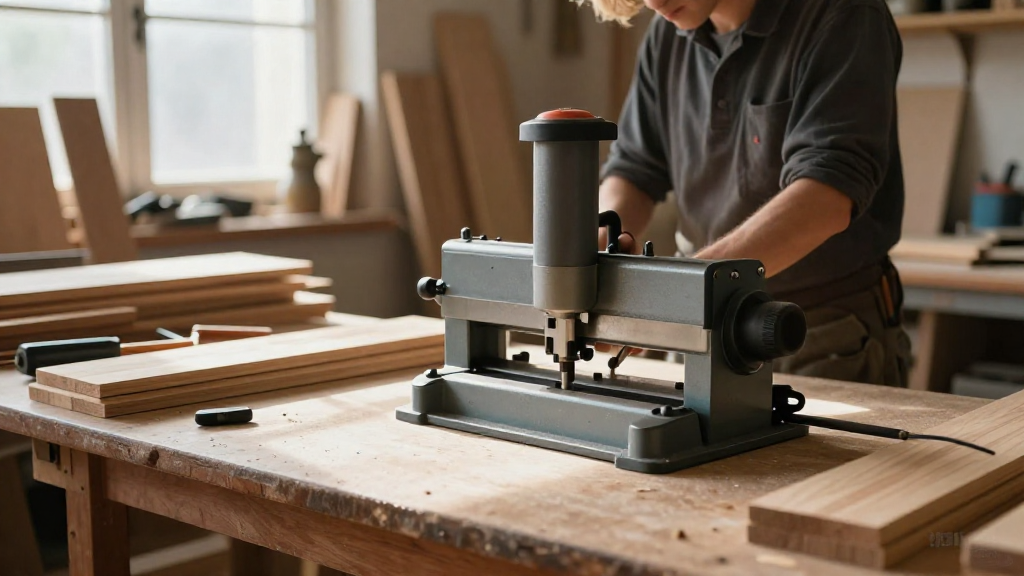
When it comes to woodworking, many enthusiasts and professionals often ask, “what is a jointer used for?”
This essential tool is a must-have for anyone serious about achieving flat, smooth surfaces on their lumber.
What Is a Jointer Used For?
A jointer is a powerful woodworking machine designed primarily to create flat and straight edges on boards.
Whether you’re working with rough lumber or preparing materials for intricate projects, a jointer ensures that your wood is ready for assembly and finishing.
Here are some primary functions of a jointer:
-
Flattening Lumber: It smooths out the surface of rough-cut boards, eliminating any warp or twist.
-
Creating Square Edges: A jointer trims the edges of boards to achieve a perfect 90-degree angle, making it easier to join two pieces of wood together.
-
Preparing for Glue-Up: Properly jointed edges allow for stronger glue bonds, resulting in more durable connections in woodworking projects.
-
Thicknessing Wood: Some jointers come equipped with a built-in thicknessing function, which allows for precise control over the thickness of your board.
Knowing what a jointer is used for helps in understanding the vital role it plays in woodworking.
What Are the Key Components of a Jointer?
Understanding how a jointer works can provide insight into why it’s indispensable.
Here are the primary components of a jointer:
-
Cutter Head: This is where the sharp blades rotate at high speeds to remove material from the wood.
-
Infeed Table: The surface where you place the rough lumber. It determines how the wood is fed into the cutter.
-
Outfeed Table: Positioned after the cutter head, this table supports the wood as it exits the jointer, ensuring a smooth finish.
-
Fence: The adjustable part of the jointer that helps maintain a precise angle for jointing edges.
-
Base: The sturdy foundation that supports the entire machine, providing stability during operation.
Knowing these components can answer the practical question of what a jointer is used for in your woodworking practice.
How Does a Jointer Work?
To truly appreciate the advantages of a jointer, it’s important to understand its operation.
Step-by-Step Operation:
-
Set the Fence and Height: Adjust the fence for required angles and set the table height according to the thickness of the board.
-
Feed the Wood: Place the rough lumber on the infeed table and push it towards the cutter head.
-
Cutting Process: As the board passes through, the rotating blades trim away high spots on the board, resulting in a flat surface.
-
Support the Board: The outfeed table ensures that the board does not drop as it exits the jointer.
-
Inspect Your Work: Check the board for smoothness and flatness before moving to the next step.
By understanding how a jointer operates, you can effectively learn what a jointer is used for and implement it in your projects.
Why Do You Need a Jointer?
While some woodworkers may consider a jointer optional, it provides several critical advantages that can enhance your work.
Here’s why you need one:
-
Time Efficiency: A jointer significantly speeds up the process of flattening and squaring boards, saving you time on projects.
-
Increased Accuracy: With a flat and straight edge, your glue-ups are more precise and accurate.
-
Professional Finish: A jointer gives your boards a polished look, which is essential for high-quality results.
-
Versatility: Whether you’re building furniture, cabinetry, or fine woodworking projects, a jointer meets diverse needs.
Not having a jointer can lead to frustration, especially when working with rough lumber.
Woodworking without a Jointer
If you choose to forgo a jointer, you might think about alternatives such as:
-
Hand Planes: While effective, they demand more skill and can be time-consuming.
-
Table Saws: A table saw can be used to trim edges, but without proper jointing, you may not achieve perfect flatness.
-
Router Jigs: These can create flat surfaces but require careful setup and can be complicated for beginners.
While these methods can work, they often do not produce the same quality and efficiency that a jointer provides.
What Are the Different Types of Jointers?
If you’re considering purchasing a jointer, it’s essential to understand that several types suit various needs:
-
Benchtop Jointers: Compact and portable, ideal for hobbyists and smaller workshops.
-
Floor-Standing Jointers: Larger, heavier machines designed for professional woodworking shops that require a higher capacity.
-
Helical Jointers: Feature spiral cutter heads that provide a smoother finish and quieter operation but may come at a higher cost.
Selecting the right type will greatly depend on your space, budget, and the scale of your woodworking projects.
How to Choose the Right Jointer for Your Needs?
Before diving into a purchase, consider the following factors:
-
Size and Portability: Evaluate your shop space and whether you need a portable option.
-
Power: Look for a model that has sufficient horsepower to handle the types of wood you’ll be jointing.
-
Bed Length: Longer beds can provide better stability and support for larger boards.
-
Budget: Determine how much you’re willing to spend and compare features across different models.
Having a clear idea of what a jointer is used for and matching that with appropriate selection criteria will ensure you make a wise investment.
Conclusion
In summary, understanding what a jointer is used for is essential for anyone looking to elevate their woodworking skills.
This vital tool not only streamlines the process of producing flat, square surfaces but also enhances the quality of your projects significantly.
Whether you’re a novice or an experienced woodworker, incorporating a jointer into your tool collection can greatly improve your efficiency and output quality.
If you’re serious about woodworking, it’s time to consider adding this indispensable device to your workshop!