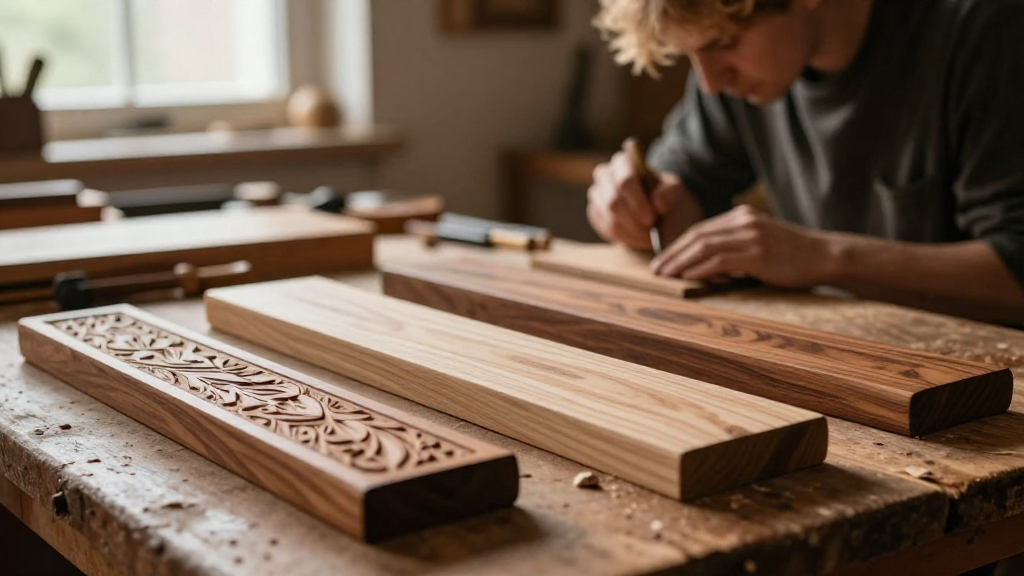
When it comes to woodworking, choosing the best wood for carving can make all the difference in achieving detailed designs.
What Makes Wood Perfect for Carving?
The best wood for carving depends on several factors including grain, workability, and durability.
Selecting the right wood not only affects the appearance of your design but also impacts how easy it is to work with the material.
Here are some key features to consider:
- Grain Pattern: Ideal wood reveals an interesting grain that enhances the design.
- Hardness: The right balance between hardness and softness is crucial. Softer woods are easier to carve, but harder woods can offer greater detail.
- Moisture Content: Low moisture content ensures that your carvings won’t warp over time.
Now, let’s delve into some of the best wood types for carving detailed designs.
Which Woods Are Ideal for Beginners?
If you’re new to carving, you might want to consider softer woods that are easier to handle.
Here are some of the best woods for beginners:
-
Basswood
– Softness: Basswood is soft and easy to carve, making it ideal for intricate designs.
– Texture: Its fine grain allows for smooth finishes and detailed work.
– Availability: Readily available at hardware and craft stores. -
Butternut
– Color: Golden-brown color adds an aesthetic dimension to your carvings.
– Carving Quality: Offers a softer texture that facilitates precise cutting. -
Pine
– Cost-Effective: Pine is inexpensive and widely available.
– Lightweight: Its lightweight nature makes it easy to carve and transport.
Which Woods Are Best for Experienced Carvers?
For more advanced woodworkers, the best wood for carving reveals its true beauty when handled expertly.
These woods offer unique challenges while allowing for intricate designs:
-
Walnut
– Beauty: Deep, rich color adds elegance to any carved piece.
– Hardness: Though harder than basswood, it can provide exquisite details when carefully handled. -
Cherry
– Aging: Cherry wood develops a beautiful patina over time, enhancing the design.
– Workability: Fairly easy to carve, suitable for complex details. -
Maple
– Durability: Hard and tough, maple is excellent for stunning, long-lasting carvings.
– Grain: Tight, intricate grain can be highlighted with careful sanding and finishing.
What About Exotic Woods?
Exotic woods can offer unparalleled aesthetics and functionality, making them the best wood for carving for some experienced artisans.
When considering exotic woods, keep the following in mind:
-
Mahogany
– Stability: Mahogany is known for its resistance to warping, making it a great long-term investment.
– Color Variation: Dark brown tones with lighter streaks can add a distinctive character. -
Teak
– Oils: Naturally oily, teak resists moisture, making it great for outdoor carvings.
– Texture: Coarse grain can support a variety of detailed designs. -
Rosewood
– Density: Known for its density, making it challenging but rewarding to work with.
– Finishing: The wood finishes beautifully, showcasing rich hues and patterns.
How to Prepare Wood for Carving?
Proper preparation of the wood is essential to optimize your carving experience and enhance the beauty of your designs.
Here are steps to ensure you have the best wood for carving:
-
Select the Right Piece
– Look for straight grain without knots or significant defects. -
Cut Down to Size
– Use appropriate tools to cut the wood to a manageable size. -
Dry the Wood
– Ensure your wood is properly dried to avoid any warping or cracking. -
Sand the Surface
– Begin with rough grit sandpaper and finish with a fine grit for a smooth surface.
What Tools Should Be Used for Wood Carving?
Having the right tools can make a significant impact on your carving project.
Here’s a handy list of essential tools that accompany the best wood for carving:
- Whittling Knives: Perfect for detailed cuts.
- Chisels: Useful for removing material and creating depth.
- Gouges: Ideal for curved surfaces and hollow sections.
- Carving Forks: Excellent for stabilizing the wood while you work.
What Finishing Techniques Enhance Carved Wood?
After your design is complete, the finishing process is crucial for protecting your masterpiece made from the best wood for carving.
Here are key finishing techniques:
-
Oil Finishes
– Purpose: Enhances grain and shine.
– Types: Linseed and Danish oils are popular. -
Varnish
– Durability: Provides a hard protective layer.
– Application: Usually requires several coats for a deep finish. -
Wax
– Easy Application: Simple to apply and reapply during maintenance.
– Style: Adds shine while protecting the surface.
Conclusion: What is the Best Wood for Your Carving Project?
Ultimately, the best wood for carving depends on your skill level, your design intentions, and the finishing techniques you plan to employ.
Softwoods like basswood and butternut are excellent for beginners, while seasoned carvers may enjoy the beauty of walnut or cherry.
Exotic woods offer a unique aesthetic but can be challenging to work with.
No matter which type of wood you choose, being thoughtful about your project will ensure you produce stunning carved pieces that stand the test of time.
Invest in the right wood, tools, and finishing techniques to elevate your artistic endeavors.
Happy carving!