The right dress form makes draping more predictable by giving fabric a stable, pinnable surface that better matches your intended silhouette. Adjustable designs can accommodate multiple sizes, while half- and third-scale forms save space and material for early pattern work.
Our selection includes dress forms for draping across different body ranges, construction styles, and budgets, so you can choose a practical match for home sewing, costume design, fashion study, or professional sampling.
Best 10 Dress Forms for Draping Picks for 2026
Best Adjustable Fit
Dritz Sew You Small/Medium Dress Form

- 12 multi-point adjustments for custom fitting
- Adjustable height and 360-degree hem marker
- Pinnable foam-backed surface for draping
Best For: Sewists in approximate US sizes 4–12 needing detailed fit control
Best Lightweight Display Form
FDW Adjustable Female Mannequin Torso

- High-density foam supports direct pinning
- Adjusts from 60 to 67 inches
- Wood tripod and lightweight construction
Best For: Basic draping, boutique display, photography, and home décor
Best for Mid-Size Customization
Dritz Twin-Fit Medium Dress Form

- 13 adjustment points for detailed fitting
- Torso extends up to 2 inches
- Pinnable surface and adjustable hem marker
Best For: Medium-size garments in approximate US sizes 12–18
Best Simple Pinnable Stand

- Pinnable foam torso for basic draping
- Height adjusts from about 55 to 67 inches
- Wood tripod supports display and garments
Best For: Small-size garment display and straightforward pinning
Best for Easy Setup
Dritz My Double Designer Dress Form

- 12 adjustment wheels for bust, waist, and hip fitting
- Pinnable surface with adjustable torso length
- Rolling base and 360-degree hem marker
Best For: Full-size draping and alterations for approximate US sizes 14–20
Best for Scale Practice
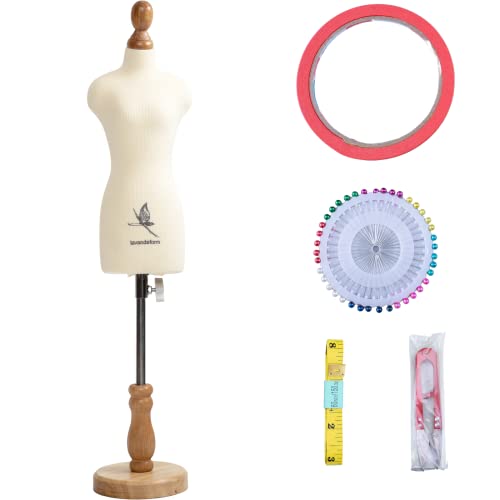
- Compact 1/3-scale torso for design practice
- Fully pinnable fabric-covered polyurethane surface
- Includes base, tools, pins, and measuring tape
Best For: Scaled draping exercises, pattern making, and fashion education
Miniature Draping Practice Pick

- Fully pinnable for miniature draping
- Compact 1:2 scale for design practice
- Includes iron base and assembly hardware
Best For: Half-scale fashion training and small garment display
Portable Full-Size Basic Form
Adjustable Foam Dress Mannequin

- 55–70-inch adjustable overall height
- Pinnable foam body with canvas cover
- Stable upgraded metal stand
Best For: Full-size draping and garment positioning
Flexible Sizing Choice
Adjustable Dress Form with Hem Guide

- 13 dials adjust body and neck
- Sizes 4–14 with broad measurement ranges
- Includes tripod base and 360-degree hem guide
Best For: Multi-size sewing, draping, and tailoring
Best Adjustable Fit – Dritz Sew You Small/Medium Dress Form
For sewists who want dress forms for draping that can closely follow changing body measurements, the Dritz Sew You offers extensive adjustment control in a small/medium size range. Its multiple dials, adjustable height, pinnable surface, and hem marker support fitting, pinning, and draping projects with practical precision.
Best For: Home sewists working with approximate US women’s sizes 4–12 who want detailed torso and length adjustments.
Pros:
- 12 multi-point adjustments plus 9 side and back wheels for customized fitting.
- Adjustable center pole and 360-degree hem marker support accurate draping and measuring.
- Foam-backed surface allows angled pinning, while the stand keeps garments balanced.
- Measurements can be marked on the adjustment wheels for repeatable setups.
Cons:
- Its Small/Medium range does not cover sizes above approximately US 12.
- Maximum height is 62.5 inches, which may not suit every user or garment length.
This is a strong choice when adjustability matters more than a simple display form. The opal green finish also gives it a polished look when it is left in a sewing room.
Best Lightweight Display Form – FDW Adjustable Female Mannequin Torso
The FDW mannequin is a practical option among dress forms for draping when you want a lightweight torso that can also serve as a display piece. Its high-density foam body, fabric cover, adjustable height, and wood tripod provide a straightforward setup for basic pinning and garment presentation.
Best For: Tailoring, boutique displays, photography, and home décor involving a standard female torso.
Pros:
- High-density foam body supports secure pinning.
- Height adjusts from 60 to 67 inches using the included knob.
- Wood tripod and stainless steel tube provide a stable base.
- Lightweight construction makes it easy to move or disassemble.
Cons:
- Standard dimensions offer less body-measurement adjustment than specialized sewing forms.
- The listed torso measurements are approximately 34.6-inch chest, 25.6-inch waist, and 33.8-inch hips.
- Its emphasis on display and photography may make it less versatile for detailed custom fitting.
This form suits users who need an easy-to-move mannequin for light draping, display, or photography rather than extensive measurement matching. Assembly requires no tools and can be completed in minutes.
Best for Mid-Size Customization – Dritz Twin-Fit Medium Dress Form
For dress forms for draping in a medium size range, the Dritz Twin-Fit combines extensive torso adjustment with a pinnable foam-backed surface. Its 13 adjustment points, half-inch-marked dials, extendable torso, and hem marker make it useful for shaping and checking garments across approximate US sizes 12–18.
Best For: Sewists making garments for medium-size measurements who need adjustable torso length and circumference.
Pros:
- 13 multi-point adjustments and 12 auto-set dials provide detailed fit control.
- Torso length extends up to 2 inches for more refined proportions.
- Height-adjustable center pole reaches a maximum of 66 inches.
- Foam-backed surface supports pinning from multiple angles.
Cons:
- It is designed for approximate US sizes 12–18 rather than a broad universal range.
- Its plastic construction may feel less substantial than heavier professional forms.
The Twin-Fit is especially useful when torso length is as important as bust, waist, and hip adjustments. Its silver-gray finish and sturdy stand also keep the workspace looking organized.
Best Simple Pinnable Stand – Bonnlo Female Dress Form
Bonnlo Female Dress Form Pinnable Mannequin Body Torso with Wooden Tripod Base Stand (White, 2-4)
Check Price On AmazonThe Bonnlo female dress form is a simple choice for dress forms for draping when you need a pinnable torso, adjustable stand, and compact size 2–4 body. Its strong foam construction accepts direct pinning, while the wooden tripod and stainless steel tube provide support for clothing display and basic garment work.
Best For: Displaying and lightly draping smaller garments around an approximate US women’s size 2–4 torso.
Pros:
- Strong foam torso allows direct pinning anywhere on the form.
- Height adjusts from approximately 55 to 67 inches.
- Wooden stand and stainless steel tube support heavier garments and materials.
- Lightweight, tool-free assembly makes it easy to move and store.
Cons:
- The torso is limited to a small approximate size 2–4 profile.
- Styrofoam construction may be less refined than a multi-adjustable sewing form.
- It provides fewer body-measurement adjustments for precision fitting.
This Bonnlo model is best viewed as a straightforward pinnable display form rather than a fully adjustable fitting system. It offers useful height flexibility and easy handling for smaller projects.
Best for Easy Setup – Dritz My Double Designer Dress Form
For dress forms for draping, the Dritz My Double Designer is a practical choice when you need broad size adjustment and a stable setup. Its rolling dials, pinnable foam-backed surface, adjustable center pole, and hem marker support fitting and garment construction for US women’s approximate sizes 14–20.
Best For: Sewists creating or altering pants, jackets, gowns, and other garments who want detailed body and length adjustments.
Pros:
- 12 soft-grip rolling wheels adjust the bust, waist, and hips with inch and centimeter markings.
- Adjustable center pole and up to 2 inches of torso length extension support more accurate proportions.
- 360-degree pin hem marker and lockable rolling base help with hemming and workspace mobility.
- Foam-backed surface accepts pins at multiple angles, while the neck finial includes a pin cushion.
Cons:
- Its Medium range is limited to approximately US women’s sizes 14–20.
- The larger, full-featured setup may be more than needed for simple display use.
With extensive adjustability, a wheeled base, and a built-in hem guide, this is the strongest all-around option here for full-size draping and fitting work within its stated size range.
Best for Scale Practice – 1/3 Scale Draping Dress Form
This 1/3-scale form offers a compact way to practice dress forms for draping, pattern making, and sample development. The fully pinnable polyurethane torso is designed for reduced-scale work, with an adjustable support height and several included sewing accessories.
Best For: Fashion students, educators, and designers practicing draping or pattern development without using a full-size mannequin.
Pros:
- Compact 1/3-scale format is suited to draping exercises, demonstrations, and sample garments.
- Fabric-covered, high-density polyurethane torso accepts pins directly.
- Adjustable assembled height ranges from approximately 21.3 to 27.2 inches.
- Includes a wooden base, support assembly, thread snips, measuring tape, pins, and marking tape.
Cons:
- It is explicitly not a full-size dress form.
- The supplied measurements are miniature, including a 29 cm bust and 23 cm waist.
- Marking tape must be applied by the user, and the hardware needs to be tightened securely.
This is a focused learning and prototyping tool rather than a fitting mannequin. Confirming the miniature dimensions before ordering is essential, but its pinnable surface and included accessories make it useful for scaled design work.
Best for Sewing and Display – Adjustable Female Dress Form Torso
For shoppers seeking dress forms for draping that can also support presentation, this female torso combines a pinnable linen cover with a height-adjustable stand. Its half-body design is suited to tops, skirts, gowns, jewelry styling, and boutique or home sewing-room use.
Best For: Home sewists, dressmakers, boutiques, and retailers who need a display-friendly torso for light draping and garment styling.
Pros:
- Linen fabric cover holds pins for sewing, draping, and fitting.
- Stand adjusts from 59 to 85 inches for flexible presentation height.
- Steel pole and gold metal base provide a stable display setup.
- Lightweight design assembles without tools and is easy to move.
Cons:
- The half-body format does not provide a full-length form for pants or complete garment fitting.
- Its stated 32-24.4-33.5-inch bust-waist-hip measurements offer less adjustment detail than the Dritz form.
- The product is also positioned for display, so it may be less specialized for intensive draping.
This model is a versatile compromise for sewing areas that double as display spaces. Choose it for a clean, movable torso and adjustable stand, but consider a more extensively adjustable form for precision body matching.
Miniature Draping Practice Pick – Half Scale Dress Form
For anyone comparing dress forms for draping, this half-scale mannequin is designed for miniature garment work, design training, and compact practice sessions rather than full-size clothing. Its fully pinnable surface and portable construction make it useful when workspace or storage is limited.
Best For: Half-scale draping practice, miniature garment displays, and fashion design training.
Pros:
- Fully pinnable, including angled pinning for draping practice.
- Compact 1:2 scale is light and portable.
- Includes a heavy-duty iron base and straightforward assembly.
- Can also display small garments or counter jewelry.
Cons:
- It is explicitly not an adult full-size dress form.
- Its fixed miniature measurements limit full-size garment work.
This is a practical choice for learning and experimenting at half scale, but shoppers needing standard-size apparel fitting should choose a full-size form instead.
Portable Full-Size Basic Form – Adjustable Foam Dress Mannequin
This full-size option stands out among dress forms for draping when you want a pinnable foam torso with adjustable overall height. Its canvas-covered body is intended to help position fabric and garments during sewing, cutting, and draping practice.
Best For: Full-size sewing, garment draping, tailoring practice, and clothing display.
Pros:
- Height adjusts from 55 to 70 inches.
- Fully pinnable high-density PU foam body.
- Canvas covering is designed to help position garments without sticking to fabric.
- Upgraded metal stand provides a stable base for clothing.
Cons:
- The listed body measurements are fixed around a 34.3-inch bust, 26.2-inch waist, and 35.5-inch hips.
- At 7.35 kg, it is less lightweight than the miniature alternative.
Choose this model if you want a straightforward full-size pinnable torso and adjustable stand; it is less suitable if you need extensive body-size adjustment.
Flexible Sizing Choice – Adjustable Dress Form with Hem Guide
Among dress forms for draping, this adjustable model is geared toward sewists who want to change body dimensions for different projects. Its 13 dials, foam-backed flannel exterior, tripod base, and 360-degree hem guide support fitting, cutting, and draping work.
Best For: Adjustable sewing, multi-size draping, tailoring, and garment display.
Pros:
- 12 body knobs plus a neck knob provide manual size adjustment.
- Small size range covers sizes 4–14, with listed bust, waist, and hip ranges.
- Height adjusts up to 78 inches.
- Stable tripod base and 360-degree hem guide add practical support.
Cons:
- Adjustment requires manual use of the dials.
- The listed measurements are ranges rather than a single fixed body size.
This is the most flexible pick of the three for working across multiple sizes, especially when adjustable measurements and hem positioning matter more than a minimalist setup.
How We Picked These Dress Forms for Draping
We focused on the features that directly affect draping: adjustability, pinnability, height control, stability, hem-marking convenience, and the usefulness of each scale. The list includes adjustable full-size forms for fitting garments on a body-like silhouette, as well as compact half- and third-scale models for teaching, testing, and conserving fabric.
We also considered size coverage and setup practicality. A form that adjusts across several sizes can be more useful than a fixed torso, but only if its adjustment points remain stable while you pin and manipulate fabric.
Quick Comparison
| Type | Best For | What to Check |
|---|---|---|
| Adjustable full-size form | Home sewing and garment fitting | Size range, adjustment dials, stand stability |
| Fixed torso mannequin | Display, basic pinning, and simple projects | Pinnability, proportions, and height adjustment |
| Half-scale form | Pattern practice and limited workspace | Scale accuracy and compatible tools |
| Third-scale form | Concept development and demonstrations | Small working dimensions and adjustability |
Key Buying Factors for Dress Forms for Draping
Size and Body Proportions
Choose a form whose bust, waist, hip, and torso proportions are closest to your project. Adjustable dials are helpful, but they do not always reproduce every body shape accurately. For fitted clothing, prioritize the measurements that matter most to the pattern.
Pinnability and Surface Construction
A fabric-covered, foam-backed form generally gives pins better purchase than a hard plastic torso. Confirm that the surface is designed for repeated pinning and that pins can be inserted at useful angles without damaging the cover.
Stand, Height, and Hem Control
A stable tripod reduces movement during draping. Height adjustment matters for matching the wearer or setting a comfortable working position. A hem gauge or 360-degree hem feature is particularly useful when balancing skirts, dresses, and coats.
Scale and Workspace
Half- and third-scale forms use less fabric and fit smaller work areas, but they require scaled patterns and may not reveal full-size behavior around complex curves. Select one as a learning or planning tool rather than a direct replacement for a full-size form.
Who Should Buy Which Dress Forms for Draping?
Choose an adjustable full-size form if you sew garments across multiple sizes or need to pin muslin directly on a body-like shape. Look for broad size coverage, secure adjustment mechanisms, and a sturdy base.
Choose a fixed or lightly adjustable torso if you mainly need a mannequin for occasional pinning, display, or straightforward alterations. These models can be simpler to set up, but verify their measurements before buying.
Choose a half-scale form if you are learning draping, developing patterns, or working in a compact studio. It is economical for experimentation and especially useful when full-size fabric consumption is a concern.
Choose a third-scale form for miniature demonstrations, concept studies, and highly space-efficient practice. It is best suited to planning rather than final fitting.