The right dress form can make fitting, draping, hemming, and garment display far easier. This roundup compares adjustable sewing forms, pinnable mannequins, torso models, and compact half-scale options.
Use the product sections to compare size ranges, adjustment features, construction, and intended use before choosing a form that matches your projects and available workspace.
Best 10 Dress Forms Picks for 2026
Best for Custom Fitting
Dritz Sew You Adjustable Dress Form
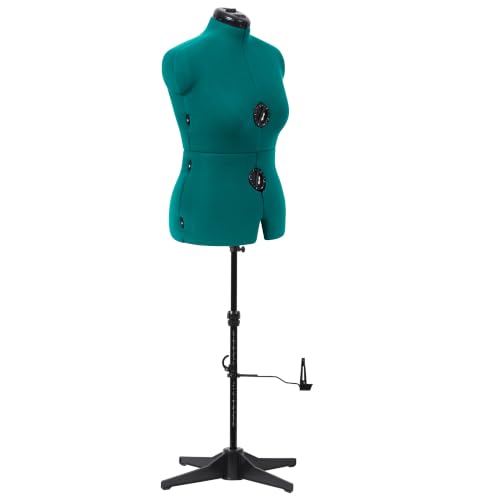
- 12 multi-point body adjustments
- Fits approximate US sizes 12–18
- Adjustable height and 360° hem marker
Best For: Custom garment fitting and draping for medium/large sizes
Best for Display and Decor

- 60–67-inch height adjustment
- Foam torso with cotton cover
- Lightweight wood-tripod design
Best For: Boutique displays, photography, and home decor
Best for Small-Size Sewing

- Adjusts for approximate sizes 4–10
- 13 multi-point body adjustments
- Extends torso length up to 2 inches
Best For: Small-size garment fitting, draping, and sewing
Best Lightweight Pinnable Display

- Adjusts from approximately 51–66 inches
- Pinnable foam torso
- Wooden tripod supports heavier garments
Best For: Size 6 clothing display and lightweight pinning
Precision-Fit Workhorse
Dritz My Double Designer Adjustable Dress Form

- 12 adjustment wheels with inch/cm markings
- Lockable rolling base and 360° hem marker
- Fits approximate US women's sizes 4–14
Best For: Detailed fitting, alterations, and advanced home sewing
Versatile Everyday Fitter
SINGER Adjustable Dress Form Medium/Large

- 12 dials cover approximate sizes 10–18
- Foam-backed flannel supports easy pinning
- Includes 360° hem guide and tool-free setup
Best For: Everyday alterations, draping, and garment display
Compact Practice Companion
Half Scale Miniature Sewing Dress Form

- 1:2 miniature format, about 16 inches tall
- Fully pinnable PVC-and-fabric body
- Designed for practice, display, and draping
Best For: Miniature design training and compact garment displays
Best Adjustable Fit
SINGER Female Adjustable Dress Form

- 12 dials for customizable fitting
- Pinnable foam-backed flannel exterior
- Includes 360-degree hem gauge
Best For: Home sewists working in sizes 4–10
Best for Mobility
Beige Adjustable Dress Form Mannequin

- 13 soft-grip adjustment dials
- Rolling base with lockable casters
- Cotton cover supports pinning
Best For: Mobile sewing and clothing display
Best for Display

- Adjustable 60–75-inch stand
- Sturdy rubber wood tripod
- Linen cover with pinnable foam body
Best For: Clothing and garment display
Best for Custom Fitting – Dritz Sew You Adjustable Dress Form
For sewists who need dress forms that can closely follow changing body measurements, this Dritz model offers extensive adjustability across a medium/large US 12–18 range. Its multiple dials, adjustable height, pinnable surface, and hem marker make it suited to fitting and draping full-length garments.
Best For: Home sewists working on custom-fitted garments in US women’s sizes 12–18.
Pros:
- 12 multi-point adjustments, including nine side and back wheels plus front and neck controls.
- Adjustable height reaches up to 63 inches for shoulder-to-floor matching.
- Foam-backed surface supports angled pinning, while the 360-degree hem marker helps with even hems.
- Adjusts across approximate bust sizes 39–46 inches, waists 32–40 inches, and hips 41–47 inches.
Cons:
- Limited to an approximate US women’s size range of 12–18.
- At 10.1 pounds, it is less lightweight than simpler torso forms.
This is a strong choice when precise adjustment matters more than portability. The measurement-recording feature is especially practical for returning to a preferred setup or fitting more than one person.
Best for Display and Decor – FDW Female Mannequin Torso
This FDW mannequin is one of the more straightforward dress forms for displaying clothing, photographing outfits, or adding a boutique-style accent to a room. Its foam torso, cotton cover, wood tripod, and 60–67-inch height adjustment provide a practical balance of presentation and portability.
Best For: Boutique displays, photography, and home decor using a standard-sized female torso.
Pros:
- Height adjusts from 60 to 67 inches with a simple knob.
- High-density foam torso accepts pinning for basic tailoring and styling.
- Solid wood tripod and stainless steel tube provide a stable display base.
- Lightweight 4-pound construction assembles and disassembles without tools.
Cons:
- Its fixed torso measurements—34.6-inch chest, 25.6-inch waist, and 33.8-inch hips—offer less fitting flexibility than adjustable sewing forms.
- The black torso may be less useful for showcasing very dark garments.
Choose this model when display versatility and easy movement are priorities. It is better suited to presenting finished clothing and basic pinning than to detailed custom fitting.
Best for Small-Size Sewing – Dritz Twin-Fit Dress Form
Small-size sewists looking for adjustable dress forms can use this Dritz Twin-Fit model to refine fit across an approximate US women’s 4–10 range. Its 13 adjustment points, half-inch dial increments, torso extension, and hem guide support more precise measuring, draping, and garment construction.
Best For: Sewing and fitting garments for approximate US women’s sizes 4–10.
Pros:
- 12 auto-set dials and 13 adjustment points allow detailed torso fitting.
- Torso length extends up to 2 inches, and the center pole adjusts to a maximum height of 64 inches.
- Foam-backed surface supports pinning at multiple angles.
- Fits approximate bust sizes 33–39 inches, waists 25–31 inches, and hips 34–40 inches.
Cons:
- Designed for a relatively narrow small-size range rather than broad size coverage.
- Its listed item dimensions describe a mini form, which may require checking available workspace before purchase.
With its extra torso-length adjustment and clearly marked dials, this is a practical pick for small-size pattern work. It is more fitting-focused than a fixed display mannequin.
Best Lightweight Pinnable Display – Bonnlo Female Dress Form
Bonnlo Female Dress Form Pinnable Mannequin Body Torso with Wooden Tripod Base Stand (White, 6)
Check Price On AmazonThis Bonnlo dress form combines a pinnable foam torso with a wooden tripod and broad height range, making it useful for displaying clothing while accommodating basic styling and alterations. The form represents approximately a US women’s size 6 and can be moved easily when needed.
Best For: Lightweight display and pinning for approximately US women’s size 6 garments.
Pros:
- Height adjusts from approximately 51 to 66 inches.
- Strong foam torso allows direct pinning across the form.
- Wooden stand and stainless steel tube support heavier clothing and decorative materials.
- Assembles and disassembles without tools and is relatively lightweight to carry.
Cons:
- The torso is approximately a fixed US women’s size 6 rather than an adjustable multi-size form.
- Styrofoam construction may be less substantial than heavier professional dress forms.
This model makes sense for shoppers who want an affordable-feeling, movable display form with useful height adjustment. For detailed multi-size fitting, a dial-adjustable form would offer more control.
Precision-Fit Workhorse – Dritz My Double Designer Adjustable Dress Form
For sewists who need detailed fitting control, this Dritz dress form combines 12 soft-grip adjustment wheels, a pinnable foam-backed surface, and a 360-degree hem marker. Its small size is designed for approximate US women’s sizes 4–14, with added torso and height adjustment for draping and garment construction.
Best For: Detailed fitting, alterations, pants, jackets, gowns, and serious home sewing setups.
Pros:
- Adjustable bust, waist, hips, neck, and torso with inch/cm markings.
- Lockable rolling base makes repositioning easier while maintaining stability.
- 360-degree pin hem marker supports consistent hemming and tailoring.
- Foam-backed surface accepts pins at multiple angles.
Cons:
- Small size is limited to an approximate US 4–14 range.
- The full-size, wheeled design requires more workspace than a compact form.
This is a strong choice when measurement precision and mobility matter more than a minimalist footprint. Check the listed body measurements carefully before buying, especially if your projects fall near the edges of the adjustment range.
Versatile Everyday Fitter – SINGER Adjustable Dress Form Medium/Large
This SINGER dress form offers practical adjustability for sewing and alterations, covering sizes 10–18 with 12 dials for fitting the bust, waist, hips, neck, and height. Its foam-backed flannel exterior is made for pinning patterns and garments, while the included hem gauge helps with finishing work.
Best For: Everyday dressmaking, garment alterations, pattern draping, and displaying finished outfits.
Pros:
- Accommodates approximate sizes 10–18 with 12 adjustable dials.
- Foam-backed flannel holds pins securely during fitting and draping.
- Includes a 360-degree hem guide for marking and basting.
- Tool-free assembly and height adjustment simplify setup.
Cons:
- Its medium/large range may not suit smaller body measurements.
- Tripod base lacks the rolling mobility of a wheeled dress form.
Choose this model for a straightforward, versatile dressmaking station with useful fitting controls and no-tool setup. Confirm the listed bust, waist, hip, and neck ranges to ensure the form matches your needs.
Compact Practice Companion – Half Scale Miniature Sewing Dress Form
This half-scale dress form is a compact 1:2 miniature intended for design practice, small garment display, and draping exercises—not adult-size fitting. Measuring about 16 inches high, it has a fully pinnable fabric-covered body, a heavy-duty iron base, and a lightweight PVC construction.
Best For: Fashion design training, miniature garment projects, draping practice, and compact displays.
Pros:
- Compact half-scale format is easy to transport and store.
- Fully pinnable and suitable for angled pinning.
- Useful for design training, cutting, and draping practice.
- Can display miniature clothing or counter jewelry.
Cons:
- It is not an adult full-size dress form.
- Its small measurements cannot represent full-size garment proportions.
- Assembly requires tightening the pole and model to the base.
This is best viewed as a teaching, prototyping, or display tool rather than a conventional dressmaker dummy. Its compact scale makes it convenient for practice, but buyers should verify that miniature dimensions fit their intended projects.
Best Adjustable Fit – SINGER Female Adjustable Dress Form
For sewists who want flexible sizing in their dress forms, the SINGER Female Adjustable Dress Form covers sizes 4–10 with 12 adjustment dials. Its pinnable flannel surface, hem guide, and tool-free setup make it practical for alterations, pattern draping, and garment construction.
Best For: Home sewists working across small-to-medium women’s sizes who need adjustable fitting and precise hemming support.
Pros:
- 12 dials adjust the neck, bust, waist, hips, and height.
- Foam-backed flannel securely holds pins for pattern work.
- Includes a 360-degree hem gauge and tool-free height adjustment.
- Can also display finished outfits when not being used for sewing.
Cons:
- The stated adjustment range is limited to sizes 4–10.
- Its red finish may not suit every room or studio style.
This SINGER model is a strong all-purpose choice when fitting flexibility and sewing-focused features matter more than an especially broad size range.
Best for Mobility – Beige Adjustable Dress Form Mannequin
This adjustable dress form is designed for sewing, display, and easy repositioning. Thirteen soft-grip dials help customize the chest, waist, hips, back, and height, while the rolling base provides mobility and lockable stability for garment work or display.
Best For: Sewists, home decorators, and shop users who want a movable dress form with a broad adjustable height range.
Pros:
- 13 dials allow adjustments across several body areas.
- Height adjusts approximately from 42.5 to 60 inches.
- Detachable, lockable casters make it easy to move or secure.
- Stretchable 100% cotton covering is suitable for pinning and marking.
Cons:
- The supplied details list conflicting size measurements, so verify fit before buying.
- The rolling base may be less convenient where a fixed stand is preferred.
Choose this model if mobility is a priority and you want one dress form for both sewing tasks and clothing display.
Best for Display – Bonnlo Female Dress Form
The Bonnlo Female Dress Form combines a linen-covered torso with a rubber wood tripod stand for a display-focused option among dress forms. The foam interior accepts pins, while the adjustable stand accommodates heights from approximately 60 to 75 inches.
Best For: Displaying clothing, wedding gowns, jewelry, and decorative pieces in bedrooms, studios, stores, or shows.
Pros:
- Rubber wood tripod and stainless steel tube provide a sturdy stand.
- Adjustable height suits garments of different lengths.
- Lightweight construction makes it easy to move.
- Linen exterior and styrofoam body support display and pinning.
Cons:
- The size 6–8 torso is narrower than broadly adjustable dress forms.
- It does not include the adjustment dials or hem guide described for some sewing-oriented models.
This Bonnlo form is most compelling when presentation and stand stability are the main goals, with occasional pinning rather than extensive fitting adjustments.
How We Picked These Dress Forms
We selected options across the main use cases: home sewing, pattern drafting, garment fitting, jewelry or clothing display, and space-conscious practice. The lineup includes adjustable full-body forms, torso mannequins with stands, pinnable bodies, and a half-scale model for miniature fitting work.
Our comparison emphasizes practical details that affect everyday use, including size range, adjustment flexibility, pinnability, stand design, height control, stability, and whether the form is intended for sewing or display. Because body proportions vary, a form’s labeled size range should be treated as a starting point rather than a guarantee of perfect fit.
Quick Comparison
| Type | Best For | What to Check |
|---|---|---|
| Adjustable full-body form | Fitting several garment sizes | Adjustment points, size range, and dial accuracy |
| Pinnable mannequin | Draping and pattern work | Surface depth, firmness, and pin penetration |
| Torso display form | Clothing, jewelry, or photography | Stand height, base stability, and finish |
| Half-scale form | Drafting and compact practice | Scale compatibility and miniature measurements |
Key Buying Factors for Dress Forms
Size and Adjustability
Choose a form whose minimum and maximum measurements surround the garments you make most often. Adjustable dials are useful when one form must handle multiple sizes, but they can create uneven shaping if expanded too far. For precise fitting, prioritize the closest base size and verify bust, waist, hip, and back-length measurements.
Pinnability and Surface Construction
If you drape fabric or alter patterns directly on the form, look for a pinnable surface with enough depth to hold pins securely. Display mannequins may have a smoother or firmer exterior that looks attractive but is less suitable for repeated pinning.
Stand, Height, and Stability
A strong tripod or weighted base helps prevent wobbling while you pin, rotate, or compare hems. Height adjustment matters for dresses, coats, and full-length garments. Check the stand material and footprint if you work in a small room or plan to move the form frequently.
Scale and Intended Use
A half-scale form is not a substitute for an adult mannequin; it is designed for compact pattern drafting and technique practice. Likewise, a torso model may be ideal for display but lack the contouring or pinnability needed for serious fitting.
Who Should Buy Which Dress Forms?
Choose an adjustable sewing form if you make garments across several sizes or want one form for repeated alterations. Choose a pinnable model if draping, fitting muslins, and pattern manipulation are your priorities. Choose a torso mannequin for showcasing finished clothing, accessories, or jewelry, especially when full-body fitting is not required. Choose a half-scale form if you are learning pattern drafting, have limited space, or want to test designs with less fabric.
Before ordering, compare the listed measurements with a garment that fits you well, confirm whether the stand is included, and check assembly and adjustment requirements. The best Dress Forms are those that match both your working method and the types of garments you make most often.