Folding room dividers make it easier to create privacy, define zones, or refresh an open layout without permanent construction. The options in this roundup range from lightweight woven screens to wide, wheeled partitions.
We compared these 10 selections by panel design, portability, stability, materials, coverage, and everyday versatility to help you choose a screen that fits your room and routine.
Best 10 Folding Room Dividers Picks for 2026
Classic Floral Privacy

- Japanese-inspired black frame and plum-blossom print
- Four panels fold flat for storage
- Approximately 71 inches wide when opened
Best For: Decorative privacy in bedrooms, living rooms, and offices
Lightweight Mesh Partition

- White wooden four-panel design
- Panels adjust to different room layouts
- Folds flat for convenient storage
Best For: Flexible separation in living rooms, offices, and dressing areas
Rolling Privacy Solution

- Four panels open to approximately 88 inches wide
- Lockable wheels support easy repositioning
- Opaque coated fabric is designed for privacy
Best For: Mobile privacy in dorms, studios, offices, and classrooms
Extra-Wide Natural Screen

- Nearly 80 inches wide when opened
- Natural bamboo and wood construction
- No assembly and folds flat for storage
Best For: Wide decorative separation in bedrooms, living rooms, and offices
Lightweight Woven Privacy

- Portable wooden frame with hand-woven mesh
- Folds for storage and flexible positioning
- 71-inch height; about 106 inches wide unfolded
Best For: Decorative, movable separation in bedrooms, living rooms, and offices
Natural Bamboo Flexibility

- No assembly; unfolds and folds flat quickly
- Six panels extend to 92.1 inches wide
- Pine frame, bamboo panels, and non-slip pads
Best For: Flexible privacy and separation in apartments, studios, and home offices
Stable Full-Coverage Privacy

- Steel frame with wider feet for added stability
- Non-see-through coated polyester fabric
- Folds to about 22 inches wide for storage
Best For: Indoor bedrooms, offices, studios, and classrooms needing stronger privacy
Best Adjustable Screen
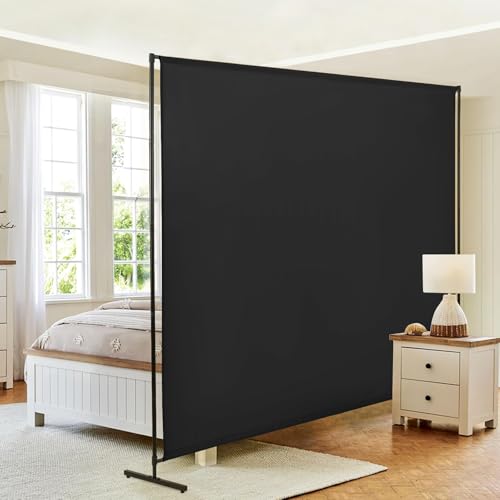
- Adjustable 71-inch height and width
- Opaque fabric provides full visual privacy
- Removable feet and tool-free placement
Best For: Temporary privacy zones and compact room separation
Best Wide Folding Screen
Four-Panel White Privacy Divider

- 88-inch-wide four-panel design
- Flexible connectors allow multiple configurations
- Folds compactly for storage
Best For: Wide indoor separation in bedrooms, offices, and dressing areas
Best Decorative Screen

- Solid wood frame with black grid design
- Rotating hinges fold in multiple directions
- No assembly required
Best For: Stylish privacy, backdrops, and indoor room accents
Classic Floral Privacy – Japanese Plum Blossom Screen
This four-panel screen is one of the more decorative folding room dividers for adding privacy without making a small room feel permanently partitioned. Its black wood frame, white rice-paper panels, and plum-branch print create a Japanese-inspired accent, while the freestanding design makes it easy to reposition.
Best For: Bedrooms, living rooms, dining areas, and offices that need a lightweight decorative privacy screen.
Pros:
- Japanese-inspired floral design adds visual interest.
- Folds flat for storage and arrives ready to use.
- Four 18-inch-wide panels provide approximately 71 inches of coverage when opened.
- Lightweight 11-pound construction is easy to move.
Cons:
- Rice-paper panels may require careful handling.
- Color can vary slightly from the product photo depending on lighting or display settings.
Choose this divider when appearance matters as much as basic privacy. It offers a classic decorative look and convenient storage, though it is best suited to indoor spaces where the rice paper will not face rough treatment.
Lightweight Mesh Partition – White Hand-Woven Screen
This white four-panel option is a practical choice among folding room dividers for separating a living area, dressing space, restaurant, or office. The wooden frame and hand-woven mesh give it a simple modern appearance, and the panels can be repositioned or folded away as needed.
Best For: Flexible indoor space separation where portability, a neutral white finish, and easy storage are priorities.
Pros:
- Four equal-size panels can be angled to shape the space.
- Folds completely for storage and is easy to move.
- Approximately 71 inches high and 70.5 inches wide when unfolded.
- Hand-crafted wooden construction with a simple, environmentally friendly design.
Cons:
- Its mesh construction may not provide fully opaque privacy.
- Designed for indoor use only.
This is a versatile everyday divider for rooms that need occasional separation rather than a permanent wall. Its white finish blends readily with many interiors, while the foldable four-panel layout allows quick changes to your floor plan.
Rolling Privacy Solution – Lockable-Wheel Fabric Divider
For shoppers who need folding room dividers that can be repositioned frequently, this four-panel fabric screen adds mobility that standard freestanding models lack. Silent PE wheels glide across the floor, and each wheel has a locking brake to help keep the approximately 88-inch-wide divider in place.
Best For: Dorms, studios, offices, classrooms, bedrooms, and other indoor spaces requiring broad, adjustable privacy coverage.
Pros:
- Lockable wheels make the 72-inch-tall screen easier to move and secure.
- 240gsm polyester fabric with PA coating is designed for non-see-through privacy.
- Double hinges allow multiple angles and folding configurations.
- Powder-coated steel frame and widened feet support stability.
Cons:
- Fabric may arrive with stains that fade when aired in a well-ventilated area.
- Its metal frame and wheels may feel less furniture-like than a wooden screen.
- Intended for indoor use.
This model stands out when coverage and mobility are more important than a decorative finish. The locking wheels, opaque fabric, and adjustable hinges make it especially useful for frequently changing layouts, provided you are comfortable with its modern fabric-and-metal construction.
Extra-Wide Natural Screen – Woven Bamboo Room Divider
This woven bamboo model is one of the wider folding room dividers in the group, offering nearly 80 inches of coverage while retaining a warm Japanese-style look. Its wood-and-bamboo construction is freestanding, folds flat, and requires no assembly, making it suitable for quickly separating residential or office spaces.
Best For: Shoppers who want broad decorative coverage for bedrooms, living rooms, dressing areas, dining rooms, or offices.
Pros:
- Extra-wide 79.9-inch span provides substantial area separation.
- Woven bamboo and wood create a warm natural appearance.
- Folds flat, is lightweight for its size, and needs no installation.
- Hinged panels can unfold in either direction.
Cons:
- At approximately 15.4 pounds, it is heavier than some lightweight screens.
- Woven construction may not offer completely opaque privacy.
- Designed for indoor use.
Consider this divider when you need more width than a standard four-panel screen and prefer natural materials over fabric or rice paper. It balances decorative appeal with convenient portability, although shoppers seeking total visual blocking may want a more opaque design.
Lightweight Woven Privacy – Coal Black 4-Panel Divider
If you want folding room dividers that are easy to reposition, this FDW screen combines a portable wooden frame with hand-woven mesh. Its four panels can be angled to shape a space, separate areas, or create a temporary privacy screen.
Best For: Renters, bedrooms, living rooms, offices, and flexible space separation where portability and a modern coal-black look matter.
Pros:
- Folds for more convenient storage and can be repositioned as needed.
- Freestanding design works across living rooms, bedrooms, dining areas, and offices.
- Hand-woven finish and environmentally friendly wood provide a decorative appearance.
- At 11 pounds, it is relatively easy to move.
Cons:
- The four-panel layout provides less width than some six-panel alternatives.
- The woven mesh may not provide fully opaque privacy.
- Its 71-inch height may not suit shoppers seeking a ceiling-height partition.
With a 71-inch height and an unfolded width of about 106 inches, this divider offers broad coverage while remaining portable. Choose it for decorative separation and adaptable placement rather than maximum sound blocking or complete visual isolation.
Natural Bamboo Flexibility – 6-Panel Folding Bamboo Screen
This Furnnylane option is one of the more adaptable folding room dividers for large or changing spaces. The six-panel bamboo screen needs no assembly, folds flat for storage, and can be opened fully or partially to fit the room.
Best For: Apartments, studios, home offices, bedrooms, and households that frequently rearrange rooms or need temporary privacy.
Pros:
- No assembly is required; simply unfold it for use.
- Six panels provide flexible configurations up to 92.1 inches wide.
- Solid pinewood framing, metal hinges, and non-slip base pads support stability.
- Natural bamboo and pine construction is described as non-toxic and family-safe.
Cons:
- At 67 inches tall, it is shorter than some six-foot room screens.
- The natural bamboo finish may not match every décor style.
- It is intended for indoor use only.
This screen balances coverage, adjustability, and easy storage. Its natural materials and slip-resistant base make it a practical choice when you want a freestanding divider that can be moved or reshaped without assembly.
Stable Full-Coverage Privacy – 4-Panel Fabric Room Divider
For shoppers prioritizing coverage and stability, these folding room dividers use a powder-coated steel frame, wider feet, and a non-see-through polyester fabric panel. The four sections can be repositioned or folded for storage when the partition is not needed.
Best For: Bedrooms, offices, studios, classrooms, and other indoor spaces where stronger visual privacy and a steadier base are important.
Pros:
- Wider metal feet are designed to reduce wobbling and tipping.
- 240g polyester fabric with PA coating is described as wrinkle-resistant, wear-resistant, and water-resistant.
- Triple-buckle hinges allow flexible positioning and connection with additional panels.
- Folds to about 22 inches wide for storage.
Cons:
- Assembly is required using the supplied tool.
- The fabric-and-metal design may feel less decorative than a wood or bamboo screen.
- It is listed for indoor use only.
Measuring about 88 inches wide by 71 inches high when arranged at maximum size, this divider offers a useful balance of coverage and portability. Its coated fabric and broad base make it especially suitable for practical privacy rather than purely decorative room styling.
Best Adjustable Screen – Portable Black Fabric Divider
If you need flexible coverage without a multi-panel footprint, this folding room dividers alternative offers a single 71-by-71-inch fabric panel for quickly separating a bedroom, office, or shared living area. Its adjustable height and removable feet make it easy to reposition on hardwood, tile, or carpet.
Best For: Creating a temporary privacy zone, dressing area, home office nook, or clutter-concealing backdrop.
Pros:
- Height adjusts for different room layouts and privacy needs.
- Opaque, high-density fabric blocks visibility.
- Removable feet support stability and easier relocation.
- Tool-free setup requires placing and adjusting the panel.
Cons:
- As a single panel, it offers less shaping flexibility than folding multi-panel screens.
- Its 71-inch width may not cover a larger opening by itself.
This is a practical choice when quick setup and adjustable coverage matter more than decorative styling or expansive room separation. The black fabric has a simple, modern look suited to offices, bedrooms, and studio spaces.
Best Wide Folding Screen – Four-Panel White Privacy Divider
For broad coverage and configurable layouts, this four-panel option is one of the more versatile folding room dividers. It spans 88 inches wide, uses flexible connectors for different shapes, and folds down to approximately 22 by 67.5 inches for storage.
Best For: Separating bedrooms, offices, dressing areas, classrooms, or other indoor spaces where wide, movable coverage is useful.
Pros:
- Four polyester panels provide wide coverage and visual privacy.
- Panels can be arranged in different directions and shapes.
- Three wide bases are designed to improve stability.
- Powder-coated metal framing resists scratches and rust.
Cons:
- At 67.2 inches high, it may not provide full-height separation in every room.
- The 5.47-kilogram construction is less lightweight than a single-panel screen.
- Assembly is required.
Choose this screen when adaptable positioning and a wider span are priorities. Its wipe-clean polyester surface and foldable design make it particularly practical for frequently changing indoor layouts.
Best Decorative Screen – Japanese-Style Wood Divider
This Japanese-style folding room divider combines a black wood grid with privacy fabric for a more decorative room separator. Its four connected panels rotate and fold in multiple directions, while the no-assembly design makes it ready to place in a bedroom, dining area, office, or living space.
Best For: Adding a stylish privacy screen, video-call backdrop, sunlight filter, or flexible room accent to indoor spaces.
Pros:
- Solid wood construction offers a durable, finished appearance.
- 360-degree bidirectional hinges support flexible positioning and folding.
- Nonwoven fabric blocks visibility while allowing airflow.
- No assembly is required.
Cons:
- At 63.8 inches wide and 66.9 inches high, it provides less coverage than the 88-inch screen.
- The 12.1-pound weight may make frequent relocation less convenient.
- A zigzag setup is recommended for added support and tip resistance.
This divider suits buyers who want room separation without an utilitarian appearance. The wood grid and black finish make it useful as both a privacy screen and a decorative backdrop, though its shorter dimensions may limit coverage.
How We Picked the Best Folding Room Dividers
We focused on practical features that affect daily use rather than appearance alone. Our evaluation considered panel count and width, overall height, frame and screen materials, folding design, portability, base stability, and whether wheels or adjustable sections improve flexibility. We also looked for options suited to different settings, including bedrooms, studios, home offices, dressing areas, and shared living spaces.
Because a divider can serve as both furniture and a visual backdrop, we included Japanese-inspired wood screens, bamboo designs, fabric panels, mesh inserts, and neutral finishes. The goal was to cover a range of privacy needs, room sizes, budgets, and decorating styles.
Quick Comparison
| Type | Best For | Main Advantage | Potential Trade-Off |
|---|---|---|---|
| Four-panel screen | General room separation | Balanced coverage and portability | May need careful positioning for stability |
| Six-panel bamboo screen | Wide spaces and decorative zoning | Extra visual coverage | Can require more storage space |
| Wheeled divider | Frequently changing layouts | Easy repositioning | Casters add hardware and floor-clearance considerations |
| Single-panel divider | Focused privacy or office use | Simple placement and storage | Less coverage than a folding multi-panel screen |
Key Buying Factors for Folding Room Dividers
Width and Height
Measure the area you want to screen before choosing a model. A four-panel divider often provides a useful balance between coverage and maneuverability, while six-panel designs can separate wider areas. Check the listed dimensions when unfolded, and remember that angled panels may reduce the straight-line opening covered.
Privacy and Light Control
Solid fabric blocks more visibility, while woven mesh, bamboo, and slatted screens may allow light and airflow through. For changing clothes or creating a private work corner, choose a denser panel. For decorative zoning, a semi-open material may feel less confining.
Stability and Mobility
Wider feet, a heavier frame, and a gently zigzagged setup generally improve stability. Wheeled models are useful when the divider moves often, but lockable casters are preferable so the screen stays in place. Avoid placing lightweight screens where strong airflow or frequent contact could tip them.
Materials, Finish, and Storage
Wood and bamboo provide a warmer, furniture-like appearance, while fabric and mesh can be lighter and easier to move. Confirm that the folded size fits your storage area. Also consider whether the finish complements existing furniture, since a large screen quickly becomes a prominent visual element.
Who Should Buy Which Folding Room Dividers?
Choose a four-panel screen for everyday bedroom separation, home-office zoning, or flexible apartment layouts. A six-panel bamboo option is better when you need broader coverage and a natural decorative look. Select a wheeled divider for studios, classrooms, salons, or multipurpose rooms where the layout changes frequently. A single-panel model makes sense for targeted privacy beside a desk or dressing area when full-room separation is unnecessary. For a lighter, more portable choice, look for a compact wooden frame with woven mesh; for stronger visual blocking, prioritize dense fabric or a more opaque construction.