Building a garage gym starts with the right floor. The best garage floor tiles for home gyms protect concrete, reduce vibration, improve traction, and create a more comfortable surface for lifting, cardio, and floor exercises.
This roundup compares 10 interlocking options across rubber-top and EVA foam designs, with different thicknesses, coverage areas, and levels of impact protection. Use the guide below to match your equipment, workout style, and available space.
Best 10 Garage Floor Tiles for Home Gyms Picks for 2026
Best Overall Coverage
ProsourceFit 144 Sq Ft Puzzle Mat

- Covers 144 square feet
- Cushioned, water-resistant EVA foam
- Includes border pieces
Best For: Large home gyms and garage workout areas
Best Rubber-Topped Option
SUPERJARE 48 Sq Ft Gym Flooring

- EVA foam and EPDM rubber layers
- Grippy, slip-resistant surface
- Helps reduce noise and vibration
Best For: Compact gyms using weights and cardio equipment
Best Compact Coverage
ProsourceFit 48 Sq Ft Puzzle Mat
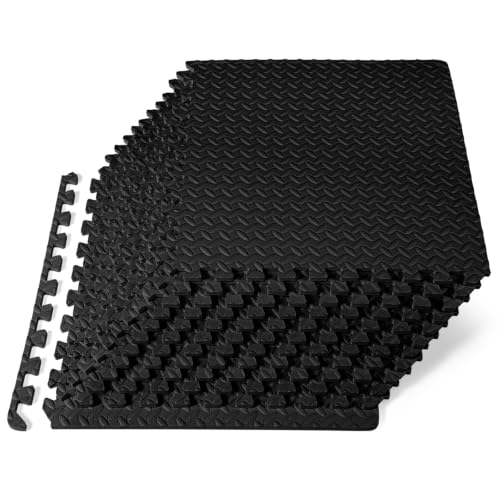
- Covers 48 square feet
- Easy to assemble and store
- Water-resistant EVA foam
Best For: Small workout zones and modular layouts
Best Flexible Dual-Layer Design
0.6-Inch Rubber Top Exercise Mats

- Rubber top over EVA foam
- Slip-resistant and impact-cushioned
- Modular 48-square-foot packs
Best For: Flexible layouts and mixed equipment workouts
Best Heavy-Training Pick
Baselayer Performance Series TPE Tiles

- Firm ½-inch TPE surface for weights and impact
- Secure interlocking fit with cord channels
- 30 sq. ft. per pack; edges sold separately
Best For: Heavy lifting and high-impact garage workouts
Best for Maximum Cushioning
SUPERJARE 1-Inch Rubber-Top Mats

- Thick 1-inch build cushions impacts and protects floors
- EPDM rubber top offers strong traction
- 12 tiles cover 48 sq. ft.; borders included
Best For: High-impact training and noise-conscious home gyms
Best Coverage Value

- 32 tiles cover 128 sq. ft.
- Tool-free puzzle assembly and flexible layouts
- Textured, cushioned, water-resistant EVA foam
Best For: Large general-purpose home workout areas
Best Value Dual-Layer Pick
0.56-Inch Rubber-Top Gym Tiles

- Rubber top over high-density EVA foam
- 12 interlocking tiles cover 48 sq. ft.
- Water-resistant and easy to clean
Best For: Everyday home-gym workouts and equipment protection
Best Heavy-Duty Pick
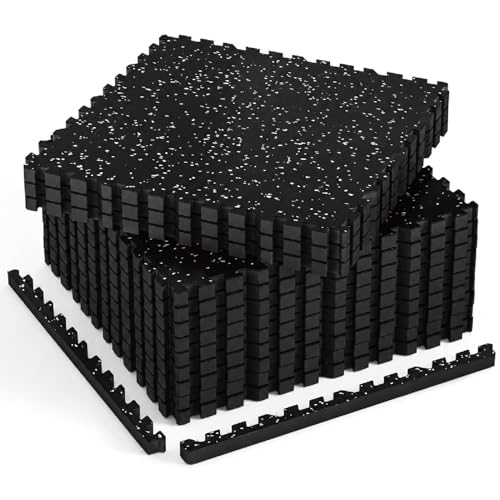
- Full 1-inch rubber and EVA construction
- Designed to reduce impact noise and vibration
- Includes interlocking tiles and border strips
Best For: High-impact training and noise-conscious home gyms
Balanced Heavy-Workout Pick

- Middle-ground 0.79-inch thickness
- Rubber surface with EVA foam cushioning
- Interlocking 48-square-foot modular layout
Best For: Garage gyms with mixed equipment and workouts
Best Overall Coverage – ProsourceFit 144 Sq Ft Puzzle Mat
For shoppers comparing garage floor tiles for home gyms, this 144-square-foot ProsourceFit set is a practical way to cover a large workout area. The 1/2-inch EVA foam tiles interlock easily, provide cushioning, and include border pieces for a finished edge.
Best For: Large home gyms, garage workout areas, and buyers who want broad floor coverage in one set.
Pros:
- Covers 144 square feet with 36 two-by-two-foot tiles.
- High-density EVA foam provides support and cushioning.
- Water-resistant, noise-reducing, and easy to clean.
- Includes end borders and a limited lifetime warranty for manufacturer defects.
Cons:
- Foam may compress slightly under heavy objects.
- Best results require a flat, hard surface.
- Color and texture may vary slightly between production batches.
This is a strong value when coverage matters most. Its lightweight foam construction works well for general exercise, stretching, and equipment areas, though heavier loads may leave minor surface variation.
Best Rubber-Topped Option – SUPERJARE 48 Sq Ft Gym Flooring
These garage floor tiles for home gyms combine a high-density EVA foam base with an EPDM rubber top. The 0.56-inch dual-layer design provides cushioning, traction, and floor protection for workouts involving weights, treadmills, kettlebells, or other equipment.
Best For: Home gym users who want a grippy rubber surface with cushioning and noise reduction.
Pros:
- Dual-layer EVA and EPDM rubber construction supports heavy exercise equipment.
- Textured rubber surface provides strong traction.
- Foam layer helps absorb shock, noise, and vibration.
- Interlocking tiles can be expanded or rearranged, with detachable borders included.
Cons:
- The set covers 48 square feet, less than some larger flooring kits.
- Requires assembly and a suitable layout before use.
Compared with basic foam tiles, the rubber top gives this flooring a more equipment-ready surface and improved grip. It is a good choice for a compact garage gym or dedicated workout zone.
Best Compact Coverage – ProsourceFit 48 Sq Ft Puzzle Mat
If you need garage floor tiles for home gyms without covering an entire room, this 48-square-foot ProsourceFit set offers a manageable starting point. Its 1/2-inch EVA foam tiles interlock for quick setup and can be taken apart for storage.
Best For: Small workout areas, apartment fitness corners, and buyers testing a modular floor layout.
Pros:
- Provides 48 square feet of cushioned flooring in 12 tiles.
- Lightweight interlocking design assembles and disassembles easily.
- Water-resistant and noise-reducing for indoor workouts.
- Includes border pieces for a polished perimeter.
Cons:
- Foam may compress slightly beneath heavy objects.
- Coverage may be limited for larger equipment or full-room gyms.
- Best results are on flat, hard surfaces.
This set makes sense when you want a defined workout station rather than wall-to-wall flooring. It offers simple installation and portable storage, with enough cushioning for many general home exercises.
Best Flexible Dual-Layer Design – 0.6-Inch Rubber Top Exercise Mats
These garage floor tiles for home gyms use a recycled rubber top over high-density EVA foam to balance impact support, traction, and floor protection. The interlocking 24-by-24-inch tiles cover 48 square feet per 12-pack and can be rearranged as your workout space changes.
Best For: Flexible home gym layouts, equipment zones, and workouts that need a slip-resistant surface.
Pros:
- Dual-layer construction cushions impact and helps reduce noise and vibration.
- Textured rubber top supports steady footing.
- Protects floors beneath benches, dumbbells, kettlebells, bikes, and treadmills.
- Interlocking layout can be expanded, removed, or rearranged.
Cons:
- Each 12-pack covers 48 square feet.
- Care instructions specify hand washing only.
- Product details list tile dimensions inconsistently, so verify sizing before planning a large installation.
This flooring is a versatile middle ground between soft foam and harder rubber mats. Its modular design suits temporary workout spaces, while the rubber surface is practical for both floor exercises and equipment placement.
Best Heavy-Training Pick – Baselayer Performance Series TPE Tiles
For home gyms that need firm support under weights and heavy equipment, these ½-inch TPE tiles offer a durable alternative to foam. Their interlocking design, low-odor material, and 30-square-foot pack size make them a practical option among garage floor tiles for home gyms.
Best For: Heavy weights, high-impact training, and garage workout areas needing a firm, cushioned surface.
Pros:
- Durable ½-inch TPE construction has a rubber-like feel without the supplied notes’ foam drawbacks.
- Precision interlocking tabs create a stable, flush fit with minimal gapping.
- No-slip texture, cord channels, and chemical-resistant construction support safer, lower-maintenance workouts.
- Made in the USA and easy to clean with a damp cloth.
Cons:
- Edges and corners are sold separately.
- Each pack covers 30 square feet, so larger gyms may require multiple packs.
This is the strongest fit of the three for serious lifting and repeated impact. Choose it when durability, a firmer feel, and integrated cord management matter more than maximizing coverage per pack.
Best for Maximum Cushioning – SUPERJARE 1-Inch Rubber-Top Mats
These 1-inch interlocking mats combine a high-density EVA base with an EPDM rubber top for extra cushioning and impact protection. With 48 square feet per 12-tile set, they are a substantial choice for garage floor tiles for home gyms where noise and floor protection are priorities.
Best For: High-impact workouts, heavy equipment, and shared spaces where reducing impact noise is important.
Pros:
- Extra-thick 1-inch construction helps absorb shock and protect floors, joints, and equipment.
- Matte rubber surface provides traction for squats, deadlifts, and other strength exercises.
- Interlocking edges make the layout easy to assemble, detach, move, or expand.
- Each tile includes detachable borders for a cleaner square or rectangular finish.
Cons:
- The 1-inch profile is thicker than the other options and may require more floor clearance.
- The construction uses an EVA foam base, which may not suit shoppers specifically seeking solid rubber-like tiles.
If maximum cushioning and impact-noise reduction are central to your setup, this is the most protective option in the group. Its 48-square-foot coverage also suits larger training zones.
Best Coverage Value – 32-Pack EVA Puzzle Tiles
For covering a broad workout area on a simpler budget, this 32-piece EVA foam set provides 128 square feet of interlocking flooring. The ½-inch textured tiles are lightweight, tool-free to assemble, and useful for many garage floor tiles for home gyms and exercise rooms.
Best For: Large home workout areas, general exercise equipment, and users who want broad coverage with easy installation.
Pros:
- Thirty-two 24-by-24-inch tiles cover a generous 128 square feet.
- Puzzle-piece edges connect and separate quickly without tools.
- High-density EVA foam provides cushioning and shock absorption.
- Textured, slip-resistant, and water-resistant surface supports everyday workouts.
Cons:
- At ½ inch thick, it offers less cushioning than the 1-inch SUPERJARE set.
- EVA foam is less specifically suited to heavy weight drops than the TPE option.
- The supplied details do not mention detachable borders or cord channels.
This set stands out when coverage and flexible installation matter most. It is a practical choice for general workouts, though heavy lifters may prefer a denser or thicker surface.
Best Value Dual-Layer Pick – 0.56-Inch Rubber-Top Gym Tiles
If you need garage floor tiles for home gyms that balance cushioning, floor protection, and easy installation, this 48-square-foot AIRHOP set is a practical option. Its textured rubber surface and EVA foam base create a cushioned, slip-resistant workout area for equipment and training.
Best For: Home gyms needing an affordable, versatile surface for weights, cardio, yoga, and general workouts.
Pros:
- Dual-layer rubber and high-density EVA construction helps absorb shock and protect floors.
- Twelve 24-by-24-inch tiles cover 48 square feet and interlock without adhesive.
- Water-resistant, damp-cloth cleaning and detachable tiles simplify maintenance and storage.
Cons:
- At 0.56 inches thick, it provides less cushioning than the thicker AIRHOP alternatives.
- The 48-square-foot layout may not cover larger garage gyms without additional sets.
This is a well-rounded choice when you want rubber-topped garage flooring with easy assembly and everyday equipment protection without prioritizing maximum thickness.
Best Heavy-Duty Pick – 1-Inch Ultra-Thick Gym Tiles
For shoppers comparing garage floor tiles for home gyms, this AIRHOP set stands out for its full 1-inch thickness. The rubber-top, EVA-foam design is intended to cushion high-intensity training, reduce vibration, and help protect hard floors from workout impacts.
Best For: High-impact home workouts, treadmills, plyometrics, and apartment or basement gyms where noise reduction matters.
Pros:
- One-inch thickness provides substantial cushioning for joints and dropped-weight protection.
- Dual-layer construction is designed to reduce workout noise and vibration.
- Interlocking 24-by-24-inch tiles assemble without tools and include detachable border strips.
Cons:
- The manufacturer recommends airing the tiles for 24–48 hours because a slight rubber scent may be present.
- Best used on hard surfaces rather than high-pile carpet.
- Stationary machines with small footprints may need equipment mats to distribute pressure.
This is the strongest fit in the group when cushioning and impact-noise control are higher priorities than a lower-profile floor surface.
Balanced Heavy-Workout Pick – 0.79-Inch Rubber-Top Tiles
This 0.79-inch AIRHOP set offers a middle ground for garage floor tiles for home gyms, combining a textured rubber top with high-density EVA foam underneath. The 12 interlocking tiles cover 48 square feet and are designed for heavy equipment, weights, and varied training.
Best For: Garage gyms that need more cushioning than standard thin mats while retaining a manageable, modular tile format.
Pros:
- Thicker than the 0.56-inch option while remaining lower-profile than the 1-inch set.
- Textured rubber surface provides a non-slip workout layer and helps protect against scratches, scuffs, and dents.
- Interlocking edges allow tiles to be assembled, detached, or expanded as needed.
Cons:
- The 48-square-foot coverage may require multiple sets for a full-size garage.
- As with other foam-backed rubber flooring, heavy equipment may benefit from additional pressure-distribution mats.
Choose this version if you want a balanced combination of cushioning, traction, and floor protection for a flexible garage workout area.
How We Picked the Best Garage Floor Tiles for Home Gyms
We focused on interlocking tile systems suited to common home-gym conditions: concrete garage floors, exercise equipment, free weights, and repeated daily use. The selection includes rubber-top tiles with high-density EVA cores, TPE designs, and lower-cost EVA foam mats. We considered thickness, stated coverage, tile size, material, cushioning, traction, installation convenience, and suitability for heavier equipment.
Because product specifications can vary by listing and configuration, confirm the current dimensions, package contents, and coverage before ordering. A tile count alone does not always indicate the total floor area.
Quick Comparison
- Best for large coverage: A 144-square-foot, 36-tile ProsourceFit set can cover a substantial training area with one purchase.
- Best for compact spaces: 48-square-foot sets are easier to plan around racks, benches, and storage.
- Best for heavier equipment: Choose thicker rubber-top or TPE tiles, particularly beneath benches, racks, and weight-storage zones.
- Best budget option: EVA puzzle tiles provide basic cushioning and floor separation at a typically lower cost.
- Best for extra impact absorption: One-inch options offer more cushioning than half-inch designs, though they may feel softer and require more precise assembly.
Key Buying Factors for Garage Floor Tiles for Home Gyms
Material and Surface
Rubber-top and TPE tiles generally provide a more durable, equipment-friendly surface than exposed EVA foam. They are often better suited to dumbbells, benches, and routine foot traffic. EVA is lighter, easier to handle, and comfortable for stretching or bodyweight workouts, but it can dent or tear more readily under concentrated loads.
Thickness and Impact Protection
Half-inch tiles work well for general workouts, light equipment, and protection from scuffs. Around 0.56 to 0.6 inch adds cushioning for mixed training, while one-inch flooring is more appropriate when comfort and impact absorption are priorities. Thickness alone does not guarantee protection; dense construction and a stable subfloor also matter.
Coverage, Fit, and Installation
Measure the usable area, then add a small margin for trimming or future expansion. Interlocking edges make installation straightforward and allow damaged tiles to be replaced individually. Check whether borders are included, and leave enough clearance for doors, garage fixtures, and equipment movement.
Moisture, Cleaning, and Odor
Garage floors may experience humidity, temperature changes, or occasional moisture. Look for a surface that is easy to wipe clean and follow the manufacturer’s cleaning guidance. Allow new flooring to air out before installation if odor is a concern, and avoid trapping moisture beneath the tiles.
Who Should Buy Which Garage Floor Tiles for Home Gyms?
Choose thicker rubber-top flooring if you lift regularly, use benches or racks, or want better resistance to wear. Choose one-inch tiles for high-impact training, floor exercises, or extra comfort. Choose 0.56- to 0.6-inch rubber-top designs for a balanced combination of cushioning, durability, and value. Choose EVA puzzle mats for light home workouts, stretching, yoga, and temporary or portable setups. For a large dedicated garage gym, prioritize coverage and consistent thickness so equipment sits on a stable, unified surface.