Choosing the right pottery tool kit for a classroom means balancing variety, durability, storage, and value. The best sets give students enough tools to carve, shape, texture, trim, and model clay without making setup or cleanup unnecessarily complicated.
We compared 10 classroom-friendly options, including compact kits for guided lessons and larger assortments suited to shared workstations. Use the guide below to match your class size, projects, and preferred clay techniques with the most practical set.
Best 10 Pottery Tool Kits for Classrooms Picks for 2026
Classroom Essential
S & E 8-Piece Pottery Tool Set

- Eight double-sided tools
- Smooth wooden handles
- Supports core clay techniques
Best For: Beginners and classrooms needing a compact essential set
Trusted Core Set
Kemper 7-Piece Pottery Tool Kit

- Seven-piece pottery kit
- Compact package dimensions
- Lightweight classroom option
Best For: Basic instruction and smaller classroom tool stations
Large Class Collection
50-Piece Clay Sculpting Tool Set

- Fifty sculpting and detailing tools
- Includes storage bag
- Designed for varied clay projects
Best For: Adult beginner classes, teachers, and studios needing broad tool coverage
Organized Studio Pick
Blisstime 42-Piece Pottery Tool Kit

- Forty-two versatile tools
- Individually stored in zip-up case
- Wood, rubber, and stainless steel construction
Best For: Classes and studios prioritizing variety and portable organization
Compact Starter Pick
18-Piece Clay Sculpting Tool Kit

- 18 tools cover core carving and modeling tasks
- Double-ended designs save storage space
- Includes a zippered organization pouch
Best For: Beginner classroom projects and small clay groups
Versatile Class Set
Blisstime 42-Piece Pottery Tool Kit
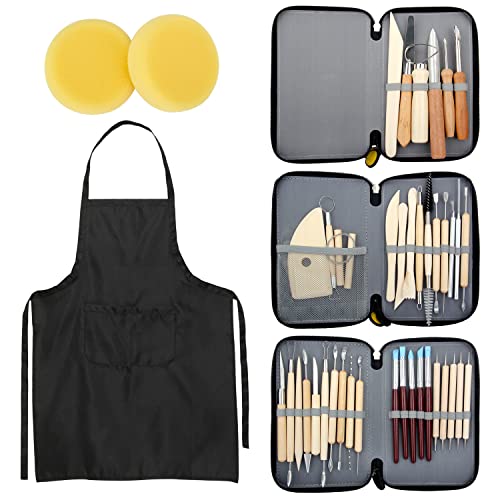
- 42 tools support a broad range of clay tasks
- Double-sided designs aid detail carving
- Zip-up storage keeps tools organized
Best For: Pottery classes needing variety and portable storage
Bulk Classroom Value
Leriton 80-Piece Clay Tool Kit

- 80 pieces come as 10 sets of eight tools
- Supports simultaneous student projects
- Wood and iron construction is built for varied clay tasks
Best For: Larger classes and group activities needing multiple sets
Most Comprehensive Classroom Set

- Broad assortment for modeling, carving, trimming, and texturing
- Includes durable metal, wood, and plastic tools
- Canvas zippered case supports organized storage
Best For: Classrooms with varied clay projects and mixed skill levels
Best Portable Classroom Option
42-Piece Clay Sculpting Tool Kit

- 42-piece assortment covers core clay techniques
- Unfolding roll bag improves portability and access
- Stainless steel tools and ergonomic wooden handles
Best For: Mobile classrooms and students sharing work areas
Best Compact Starter Set

- Core tools for hand building and modeling
- Compact assortment with zippered canvas case
- Supports beginners, students, and experienced artists
Best For: Introductory classes and space-conscious storage
Classroom Essential – S & E 8-Piece Pottery Tool Set
For classrooms seeking pottery tool kits for classrooms that cover everyday clay work without taking up much space, this 8-piece S & E set offers a focused selection. The double-sided tools range from 6.3 to 7.9 inches and support smoothing, cleaning, carving, shaping, and sculpting.
Best For: Beginners, hobbyists, and classroom activities centered on core pottery techniques.
Pros:
- Eight double-sided tools provide multiple working surfaces.
- Wooden handles are smooth and comfortable to hold.
- Compact, lightweight design is easy to distribute and store.
Cons:
- It has fewer pieces than larger classroom-oriented kits.
- The supplied notes do not mention a storage case or bag.
This is a practical choice when students need essential shaping and detailing tools rather than a large assortment. Its simple format may also make classroom cleanup and tool distribution easier.
Trusted Core Set – Kemper 7-Piece Pottery Tool Kit
The Kemper 7-piece kit is a straightforward option for shoppers comparing pottery tool kits for classrooms. Its supplied details identify a compact seven-tool set, making it suitable for basic classroom stations or individual student use where a smaller kit is preferred.
Best For: Basic pottery instruction and classrooms looking for a simple seven-piece tool set.
Pros:
- Seven tools provide a focused starting selection.
- Compact package dimensions support convenient storage.
- Lightweight design is practical for classroom handling.
Cons:
- The supplied notes do not list the individual tools or their functions.
- No storage bag or case is specified in the available details.
Choose this kit when a modest, uncomplicated tool count fits your lesson plans. Because the notes provide limited feature information, review the included tool selection before purchasing for a specific curriculum.
Large Class Collection – 50-Piece Clay Sculpting Tool Set
For classrooms needing pottery tool kits for classrooms with broad coverage, this 50-piece set combines 30 clay sculpting tools with 20 detailing tools. It is designed for carving, shaping, trimming, smoothing, and refined work, and includes a visible storage bag for organization and transport.
Best For: Adult beginner classes, teachers, studios, and projects requiring both general tools and fine-detail options.
Pros:
- Fifty pieces offer a wide range of sculpting and detailing functions.
- Wooden handles and reinforced metal fittings are designed for repeated practice.
- Storage bag helps keep tools organized and portable.
- Suitable for pottery, ceramic clay, polymer clay, wax, and fondant work.
Cons:
- The set includes sharp points or blades, so supervision is recommended for younger crafters.
- Tools should not be submerged in water for more than 1.5 hours.
- Its larger assortment may be more than needed for introductory lessons.
This is the most comprehensive option in the group for teachers who want variety and organized storage in one purchase. The adult-oriented safety guidance makes it particularly important to establish clear handling and cleanup procedures.
Organized Studio Pick – Blisstime 42-Piece Pottery Tool Kit
This Blisstime kit is a strong contender among pottery tool kits for classrooms when variety and organized storage matter. Its 42 pieces support carving, shaping, modeling, cutting, scraping, and smoothing, while the zip-up case keeps tools individually stored and ready for class use.
Best For: Pottery classes, studio sessions, and clay artists who want a broad set with portable organization.
Pros:
- Forty-two pieces cover a wide range of clay-making tasks.
- Double-sided designs support detailed carving and general shaping.
- Zip-up storage case makes tools easier to find, carry, and store.
- Stainless steel tips and wood or rubber handles support control and durability.
Cons:
- Metal parts are sharp and require careful handling.
- The tools should not be soaked for long periods and should be dried before storage.
- The larger case and 1.76-pound weight may be less convenient for very small individual kits.
For instructors who value quick access and tidy storage, the individually organized case is a useful classroom feature. Just plan for safe handling of the sharp metal components and proper drying after cleanup.
Compact Starter Pick – 18-Piece Clay Sculpting Tool Kit
For classrooms seeking pottery tool kits for classrooms that cover everyday shaping and detailing without taking up much storage space, this 18-piece set is a practical starter option. It includes double-ended tools, a zippered pouch, and stainless steel and wood construction for work with soft clay and similar materials.
Best For: Beginner classroom projects, small clay groups, and organized individual tool storage.
Pros:
- Includes 18 tools for carving, cutting, modeling, trimming, and smoothing.
- Double-ended designs provide additional tool options while saving storage space.
- Comes with a large-capacity zipper tool bag for organization.
- Works with polymer clay, ceramic clay, fondant, dough, wax, and soap.
Cons:
- Sharp metal parts require careful use and supervision.
- Tools should not be soaked for more than 1.5 hours and need prompt drying.
- With 18 pieces, it offers fewer tools than larger classroom sets.
This set suits classrooms that value compact storage and core sculpting functions. Its manageable piece count makes distribution and cleanup simpler, though larger groups may need multiple kits.
Versatile Class Set – Blisstime 42-Piece Pottery Tool Kit
This 42-piece option is a strong choice for pottery tool kits for classrooms where students need varied tools for shaping, carving, scraping, and smoothing. Its individually stored tools, zip-up box, and comfortable wood and rubber handles support shared studio organization and frequent use.
Best For: Pottery classes needing broad tool variety and portable, organized storage.
Pros:
- Provides 42 tools for carving, shaping, modeling, cutting, scraping, and smoothing.
- Double-sided tools support more precise detail work.
- Individually stored tools are easy to identify and retrieve.
- Stainless steel tips and wood or rubber handles offer durability and a comfortable grip.
Cons:
- Sharp metal parts require care to help prevent scratches.
- The larger 1.63-pound kit may require more storage space than compact sets.
- Tools should be kept dry and not soaked for a long time.
Compared with smaller kits, this set gives students more tool choices for detailed projects while keeping the collection together in a zip-up case. It is especially useful when classes move equipment between work areas.
Bulk Classroom Value – Leriton 80-Piece Clay Tool Kit
For instructors comparing pottery tool kits for classrooms with multiple students, the Leriton set stands out for its quantity: 80 tools arranged as 10 sets of eight. The wood and iron construction is designed for carving, shaping, modeling, cutting, scraping, and smoothing across many clay projects.
Best For: Larger classes, group activities, and classrooms that need multiple matching tool sets.
Pros:
- Includes 80 pieces organized into 10 sets of eight tools.
- Provides enough matching equipment for many students or simultaneous projects.
- Wood handles are lightweight and comfortable for extended work.
- Supports carving, shaping, modeling, cutting, scraping, and smoothing.
Cons:
- The 2.14-pound collection may take more space to store than smaller kits.
- Iron parts and tool edges require careful handling.
- The notes do not specify a storage case or pouch.
This is the most classroom-scaled option of the three, offering repeated tool sets rather than a single compact assortment. It makes sense when access and quantity matter more than having the widest range of unique tool designs.
Most Comprehensive Classroom Set – 48-Piece Pottery Tools Kit
For classrooms needing pottery tool kits for classrooms with broad project coverage, this 48-piece set offers a substantial mix of modeling, carving, trimming, shaping, and texturing tools. The included brown canvas zippered case also helps keep the assortment organized between lessons.
Best For: Art classrooms, pottery students, and mixed-skill groups working with air-dry, polymer, or pottery clay.
Pros:
- Broad selection includes modeling tools, loop tools, needles, scrapers, knives, cutters, styluses, shapers, ribs, and sponges.
- Supports many tasks, including hand building, trimming, carving, smoothing, decorating, and wheel throwing.
- Uses stainless steel needles, hardwood, and plastic handles for durability and comfortable handling.
- Comes in a zippered canvas case for storage and transport.
Cons:
- The large assortment may require more classroom storage space than smaller kits.
- Its broad tool selection may be more than beginners need for introductory projects.
This is a strong all-around choice when a classroom wants one versatile kit that can serve beginners, students, and more experienced makers across varied clay activities.
Best Portable Classroom Option – 42-Piece Clay Sculpting Tool Kit
This 42-piece option is a practical pick among pottery tool kits for classrooms, especially when students need a wide range of tools that can be carried between work areas. Its hand-rolled bag unfolds to make the tools easier to find during projects.
Best For: Portable classroom setups, studio instruction, beginners, hobbyists, and students learning basic clay techniques.
Pros:
- Includes double-sided tools, shaping blades, ball styluses, rubber-tip tools, a sponge, and additional implements.
- Supports cutting, smoothing, shaping, texturing, stippling, carving, molding, and trimming.
- Hand-rolled storage bag is designed for carrying and quick tool access.
- Stainless steel components provide corrosion resistance, while wooden handles support grip comfort.
Cons:
- The set’s many pieces may be less convenient to inventory than a smaller, simpler kit.
- The notes do not specify a rigid storage case, so the rolled bag may offer less protection than a hard container.
Choose this kit when portability and variety matter equally. The organized roll makes it particularly useful for classrooms where tools move between tables, studios, or home assignments.
Best Compact Starter Set – 23-Piece Ceramic Modeling Kit
For instructors seeking pottery tool kits for classrooms without an oversized assortment, this 23-piece set focuses on core hand-building and modeling tools. It includes a black canvas zippered case and covers common tasks from cutting and carving to smoothing and wheel throwing.
Best For: Introductory pottery classes, small groups, students, teachers, and classrooms prioritizing a compact core toolkit.
Pros:
- Includes essential tools such as a wire cutter, wood rib, scraper, fettling knife, loop tools, needle tool, styluses, modeling tools, and sponge.
- Suitable for hand building, sculpting, trimming, molding, slicing, and wheel throwing.
- Compact 23-piece format may be easier to store and distribute in classroom settings.
- Black canvas zippered case helps keep the tools together between sessions.
Cons:
- Provides fewer pieces than the 42- and 48-piece alternatives.
- The notes describe it as suited to medium-duty clay work, which may limit heavier applications.
This set is a sensible starting point for classes that need the main pottery tools without managing a very large inventory. Its compact assortment also works well for student kits and introductory projects.
How We Picked the Best Pottery Tool Kits for Classrooms
We focused on the features that matter most in a school studio: tool variety, ease of organization, likely durability, versatility across clay types, and overall value. Sets with carving, shaping, trimming, smoothing, and texturing tools offer more flexibility for mixed-ability classes. We also considered whether a kit’s size and storage options make it practical for shared tables, art carts, or individual student stations.
Because product descriptions can vary, teachers should confirm the exact contents, materials, dimensions, and quantity before ordering. Larger piece counts do not always mean better classroom performance; a smaller set with useful, sturdy tools may be easier for beginners to manage.
Quick Comparison
| Classroom need | Best kit style | Why it works |
|---|---|---|
| Teacher demonstrations or small groups | Compact 7- or 8-piece set | Simple to explain, store, and distribute |
| Mixed projects and techniques | 18- to 50-piece assortment | Provides more carving, modeling, and texturing options |
| Shared supply stations | 42- to 80-piece kit | Offers greater variety and backup tools |
| Polymer or air-dry clay lessons | General-purpose sculpting set | Supports detail work beyond wheel-thrown pottery |
Key Buying Factors for Pottery Tool Kits for Classrooms
Tool Selection and Duplicates
Look for a useful mix rather than a high count alone. Wire cutters, loop and ribbon tools, needle tools, ribs, scrapers, modeling tools, and texture tools cover most beginner and intermediate activities. Duplicate high-use tools can reduce sharing conflicts in larger classes.
Construction and Safety
Wood, metal, and plastic tools each have advantages. Metal edges can be effective for trimming and carving, while wood and plastic are often lighter and more approachable for younger students. Check for smooth handles, secure joins, rounded edges where appropriate, and age suitability. Sharp or pointed tools should be introduced with clear handling rules and supervised use.
Storage and Cleanup
A storage bag or organized case helps prevent lost tools and speeds up classroom transitions. Choose washable materials when possible, and establish a cleaning routine so wet clay does not harden around joints or textured surfaces. For shared kits, labeled compartments or small bins may be more useful than a crowded pouch.
Class Size and Project Type
Estimate how many students will use the tools simultaneously. A compact kit may suit demonstrations, intervention groups, or individual projects, while a larger assortment is more practical for a full class. Wheel work may require different tools than hand-building, polymer clay, or air-dry clay activities, so match the kit to your curriculum.
Who Should Buy Which Pottery Tool Kits for Classrooms?
Choose a compact 7- or 8-piece kit for teachers who need dependable basics for demonstrations, small groups, or a focused introductory unit.
Choose an 18- to 23-piece set for beginners who want broader capability without managing an oversized collection. These kits can work well for individual learners and elementary or middle-school projects.
Choose a 42- to 50-piece assortment for classrooms covering multiple techniques, especially carving, molding, shaping, and decorative texture work. Verify that the set includes genuinely different tools rather than many near-duplicates.
Choose an 80-piece kit when variety and backup supplies matter most, such as a shared art room serving several classes. Before buying, confirm storage quality and whether the extra pieces justify the added organization and cost.