Throwing large bowls demands more than a basic tabletop wheel. You need dependable torque, a stable work surface, smooth speed control, and enough room to center and shape a wide mass of clay.
These 10 selected products include electric pottery wheels, banding wheels, bats, molds, and trimming accessories to help match your studio setup, experience level, and bowl-making goals.
Best 10 Pottery Wheel for Large Bowls Picks for 2026
Best Powered Option

- 350W brushless motor and 60–300 rpm speed range
- Supports up to 11 pounds of clay
- Includes tools, apron, pedal, and removable basin
Best For: Powered large-bowl throwing and complete starter setups
Best Heavy-Duty Manual Option
12-Inch Cast-Iron Banding Wheel

- Cast-iron surface with weighted rim
- Manual rotation provides precise speed control
- Non-slip base supports stable decorating and sculpting
Best For: Manual shaping, decorating, and stable large-form work
Best for Press-Molded Bowls

- Includes four round mold sizes
- Detachable handles support assisted pressing
- Designed for bowls, plates, and dishes
Best For: Press-molding repeatable bowl and dish shapes
Best Double-Sided Banding Wheel

- 12-inch and 7-inch working surfaces
- Balanced aluminum-alloy construction
- Suitable for pottery, painting, sculpting, and decorating
Best For: Flexible manual rotation across large and small projects
Best for Easy Setup

- 12-inch heavy cast-metal turntable
- Supports up to 50 pounds
- Non-skid base with centering circles
Best For: Manual pottery, sculpting, decorating, and clay work
Powered Large-Format Pick
14-Inch Adjustable Electric Wheel

- 14-inch aluminum alloy turntable
- 60-300 RPM reversible motor
- Height-adjustable design with splash basin
Best For: Powered throwing of larger pieces at home, school, or studio
Workflow Accessory Pick
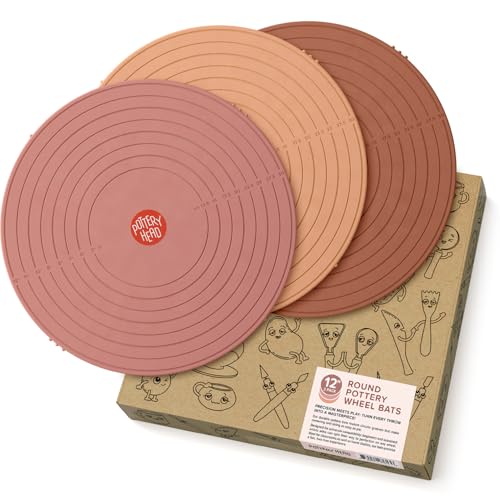
- Three removable 12-inch bats
- Centering guide lines included
- Non-slip, easy-clean plastic design
Best For: Compatible wheels, classrooms, workshops, and repeated throwing
Best Large-Bowl Pick

- 14-inch aluminum-alloy turntable
- 450W motor with 60–300 rpm range
- Height-adjustable design with 16 tools
Best For: Large bowls, dishes, and home studio projects
Best Trimming Accessory
Large Pottery Wheel Trimming Chuck

- Supports bowls and vessels during trimming
- Dual-end design fits varied openings
- Large size for wider and taller forms
Best For: Trimming leather-hard bowls and vessels
Best Powered Option – VEVOR 11-Inch Pottery Wheel
For shoppers seeking a pottery wheel for large bowls, this VEVOR model offers an 11-inch turntable, a 350W brushless motor, and capacity for up to 11 pounds of clay. Its variable speed and pedal control make it a practical choice for shaping larger pieces at home, in a classroom, or in a studio.
Best For: Potters who want a powered wheel with generous clay capacity and included tools.
Pros:
- Handles up to 11 pounds of clay on an 11-inch turntable.
- Brushless motor runs at 60–300 rpm with stated operation around 60dB.
- Includes stainless-steel and wood tool sets, an apron, pedal control, and a removable basin.
Cons:
- At 28 pounds, it is less convenient to move than a lightweight banding wheel.
- The included 11-inch work surface may still limit exceptionally oversized bowls.
This is the most capable powered option in the group for larger bowl work, especially if you value adjustable speed, quieter operation, and a complete starter kit.
Best Heavy-Duty Manual Option – 12-Inch Cast-Iron Banding Wheel
This 12-inch manual banding wheel is worth considering when a pottery wheel for large bowls needs a broad, stable platform rather than an electric motor. Its cast-iron construction, weighted rim, and smooth ball-bearing rotation support controlled hand-powered shaping and decorating.
Best For: Artists who prefer manual control for pottery, sculpting, decorating, and larger clay forms.
Pros:
- Solid cast-iron surface and weighted rim provide stability and rotational momentum.
- Manual operation allows precise speed control without electricity.
- Non-slip rubber base and 12-inch surface help keep projects steady.
- Concentric circles and three scales assist with centering and detail work.
Cons:
- It does not provide powered rotation, so the user must turn it by hand.
- Its 10.2-pound cast-iron build may be cumbersome to relocate.
Choose this model for deliberate, hands-on work where stability and tactile speed control matter more than powered throwing.
Best for Press-Molded Bowls – Large Wooden Clay Mold Set
These wooden molds offer an alternative to throwing when you want a pottery wheel for large bowls but prefer pressing clay into forms. The four round sizes—8.46, 7.48, 6.5, and 5.5 inches—provide several starting dimensions for bowls, plates, and dishes.
Best For: DIY makers and beginners creating bowls, plates, and dishes with press-mold techniques.
Pros:
- Four sizes provide flexibility for different bowl and dish projects.
- Pine wood construction has a protective surface coating.
- Detachable handles allow assisted pressing or direct use of the mold.
Cons:
- These are molds, not a powered or rotating pottery wheel.
- The largest listed mold is 8.46 inches, smaller than the 12-inch banding-wheel surfaces in this roundup.
This set is best treated as a forming aid rather than a wheel replacement, particularly when repeatable bowl shapes and straightforward DIY projects are the priority.
Best Double-Sided Banding Wheel – Yncotte 12-Inch Turntable
For a pottery wheel for large bowls that can also handle smaller projects, the Yncotte provides a 12-inch surface on one side and a 7-inch surface on the other. Its balanced aluminum-alloy construction is designed for smooth manual rotation and multi-purpose use in studios, classrooms, and homes.
Best For: Potters who want a corrosion-resistant manual turntable with two working diameters.
Pros:
- Double-sided design offers 12-inch and 7-inch rotating surfaces.
- Aluminum alloy resists corrosion and scratches, according to the supplied specifications.
- Balanced construction, polished edges, and brushed finish support smooth handling.
- Can also be used for cake decorating, painting, sculpting, and DIY projects.
Cons:
- It is a manual banding wheel, not a powered pottery wheel.
- At 3.67 pounds, it may provide less inherent mass than the cast-iron alternative for very forceful work.
The Yncotte stands out for flexibility: its larger side suits broad forms, while the smaller side accommodates compact work without requiring another turntable.
Best for Easy Setup – 12-Inch Metal Sculpting Wheel
If you need a pottery wheel for large bowls but prefer a simple, portable setup, this 12-inch manual turntable offers a sturdy working surface without a motor or electrical connection. Its heavy cast-metal construction, ball bearing, weighted rim, and concentric centering circles make it suitable for rotating and shaping substantial projects.
Best For: Artists, sculptors, decorators, and makers who want a durable manual wheel for pottery, clay design, cake decorating, or related studio work.
Pros:
- 12-inch metal turntable with concentric circles for centering.
- Heavy-duty cast-metal construction and ball bearing allow smooth rotation.
- Supports up to 50 pounds and includes a non-skid rubber base.
- Weighted rim adds momentum while working.
Cons:
- Manual operation requires you to rotate the wheel yourself.
- The 12-inch surface may be limiting for especially wide bowls.
- Its metal construction is sturdy but less feature-rich than an electric wheel.
Choose this model when stability and straightforward manual control matter more than powered speed adjustment. It is a practical option for hand-rotated work and projects that benefit from a solid, non-skid base.
Powered Large-Format Pick – 14-Inch Adjustable Electric Wheel
For shoppers seeking a pottery wheel for large bowls, this 14-inch electric model provides a larger aluminum alloy turntable plus adjustable speed and height. Its 60-300 RPM range, reversible rotation, detachable splash basin, and included tools make it a versatile choice for home studios, classrooms, and pottery bars.
Best For: Beginners and experienced ceramic makers who want powered control for larger pieces, with adjustable working height and cleanup-friendly features.
Pros:
- Large 14-inch aluminum alloy turntable suits larger forming projects.
- 60-300 RPM speed range with clockwise and counterclockwise rotation.
- Lift-top adjusts from 0 to 2 inches for users of different heights.
- Includes a detachable ABS water basin and 16 sculpting tools.
Cons:
- At 44 pounds, it is considerably less portable than a small manual wheel.
- The 14-inch wheel and surrounding machine require dedicated workspace.
- Its electric operation requires a suitable connection and floor or tabletop space.
This is the strongest match for large-bowl work when you want powered rotation, variable speed, and ergonomic adjustability. The basin and included tools add convenience, while the reinforced base is designed to help keep the machine stable during use.
Workflow Accessory Pick – 12-Inch Centering Bat Set
These 12-inch pottery bats are an accessory rather than a complete pottery wheel for large bowls, but they can make larger throwing projects easier to center, move, and repeat. The set includes three injection-molded plastic bats with guide lines, non-slip ribbing, and a design intended to fit commercial wheel bat-pin spacing.
Best For: Potters who already own a compatible wheel and want multiple removable surfaces for throwing, classroom use, or repeated production.
Pros:
- Three 12-inch bats provide multiple ready-to-use work surfaces.
- Built-in guide lines support consistent centering.
- Non-slip underside helps reduce rocking and manage moisture.
- Injection-molded plastic is designed for straightforward cleanup.
Cons:
- This set does not include a pottery wheel or motor.
- Compatibility depends on the wheel’s bat-pin spacing.
- A 12-inch bat may not extend beyond the working area needed for very large bowls.
Consider these bats if your existing wheel is compatible and you want faster transitions between pieces. They complement a large-bowl setup by providing centering guidance and removable work surfaces, but they cannot replace the wheel itself.
Best Large-Bowl Pick – VEVOR 14-Inch Pottery Wheel
For shoppers seeking a pottery wheel for large bowls, the VEVOR 14-inch model offers a spacious aluminum-alloy wheel head, a 450W motor, and adjustable height. Its 60–300 rpm range, reversible rotation, and included tools make it suitable for more substantial throwing projects at home or in a teaching setting.
Best For: Adults, students, and hobbyists who need a large work surface for bowls, dishes, vases, and other larger forms.
Pros:
- 14-inch turntable provides more room for large pieces.
- 450W brushless motor supports 60–300 rpm operation with low listed noise.
- Height-adjustable lift-top design accommodates different users.
- Includes 16 shaping tools and a detachable basin.
Cons:
- At 32 pounds, it is less convenient to move than a compact tabletop wheel.
- The product has no listed warranty.
- Its larger footprint may require dedicated workspace.
This is the strongest match in the group for large-bowl work because its 14-inch wheel head and sturdy, adjustable base provide more working capacity than mini models. The detachable basin also helps simplify cleanup after throwing.
Best Trimming Accessory – Large Pottery Wheel Trimming Chuck
This trimming chuck is not a pottery wheel for large bowls itself, but it can be a useful companion for finishing large bowls and other leather-hard forms. Its large hourglass shape helps support vessels during trimming, especially when a piece needs centered support without making a fresh wet clay chuck.
Best For: Ceramicists trimming bowls, bottles, vases, and narrow-neck vessels on an existing pottery wheel.
Pros:
- Designed to help hold bowls and vessels centered during trimming.
- Dual flared ends provide multiple contact points for different forms.
- Rounded rims help reduce marking on delicate clay surfaces.
- Available in four sizes for varied vessel dimensions.
Cons:
- It is a support accessory, not a complete pottery wheel.
- Fit and stability depend on the shape and size of the piece being trimmed.
- The supplied notes do not specify a wheel or mounting system.
Choose this item only if you already have a compatible wheel and need a reusable trimming support. The large version is particularly relevant to wider or taller vessels, but it does not replace the throwing capacity of a full-size wheel.
Best Compact Starter – Insnug 6-Inch Pottery Wheel Kit
If you want a compact pottery wheel for large bowls only in the sense of experimenting with smaller forms first, the Insnug kit is an accessible starter option. Its 6-inch metal turntable, adjustable speed, included air-dry clay, and storage-focused design are better suited to small projects than genuinely large bowl throwing.
Best For: Beginners, adults, and children learning basic pottery techniques with small pieces at home.
Pros:
- Complete starter package includes 2.2 pounds of air-dry clay and five carving tools.
- Compact 14.4-by-10-by-3.9-inch design is easy to store.
- Two-way rotation and adjustable speed support basic practice.
- Detachable basin helps contain mud and simplify cleanup.
Cons:
- The 6-inch turntable is not intended for genuinely large bowls.
- Air-dry clay differs from traditional wheel-thrown ceramic clay.
- Its 7.34-pound build may provide less stability for demanding projects.
This kit makes sense for learning, gifting, and small decorative work, but shoppers specifically prioritizing large bowls should choose the VEVOR model instead. Its compact format favors convenience over capacity.
How We Picked the Best Pottery Wheel for Large Bowls
We focused on features that matter when working with wider forms: wheelhead diameter, motor power, speed range, stability, work height, control method, and included accessories. Larger electric models generally offer better support for centering substantial clay, while banding wheels and hand tools can complement a primary throwing wheel or suit low-tech forming methods.
We also considered usability for different skill levels. Adjustable-speed controls, foot pedals, detachable splash pans, lift tables, and replaceable bats can make repeated throwing and cleanup easier. Product descriptions should be checked carefully for actual wheelhead size, maximum clay capacity, voltage, and whether accessories are included.
Quick Comparison
| Best For | What to Look For | Standout Feature |
|---|---|---|
| Large electric wheels | 350–450W motor, broad wheelhead, stable frame | Torque and adjustable speed |
| Banding wheels | Heavy metal base and smooth rotation | Hand-building, decorating, and trimming |
| Beginners | Simple controls, manageable size, included tools | Accessible setup |
| Advanced shaping | Compatible bats, trimming chucks, and height adjustment | Workflow flexibility |
Key Buying Factors for a Pottery Wheel for Large Bowls
Motor Power and Torque
Large bowls require the wheel to maintain rotation while you center and compress a heavy clay wall. Wattage is useful as a starting point, but construction, gearing, and stated clay capacity also affect real-world performance. Favor models designed for heavier workloads rather than judging by wattage alone.
Wheelhead Size and Stability
A 12- to 14-inch wheelhead gives broad support for bats and wide forms. A rigid frame, non-slip feet, and balanced rotation help prevent wobble as the bowl expands. A smaller wheel can work with a larger bat, but confirm compatibility before buying.
Speed Control and Ergonomics
Variable speed is important: slower rotation helps with centering and shaping, while faster settings can assist with trimming and finishing. A foot pedal lets you adjust speed without removing your hands from the clay. Height adjustment may also reduce strain during long sessions.
Accessories and Cleanup
Detachable splash pans, bats, clay tools, and trimming supports can save additional expense. However, included accessories vary widely. Check whether the kit includes a pedal, bats, tools, or only the wheel itself, and make sure replacement parts are available.
Who Should Buy Which Pottery Wheel for Large Bowls?
Choose a 14-inch, 450W-style electric wheel if your priority is throwing large bowls regularly and you want stronger support for heavier clay. A 12-inch heavy-duty wheel can be a practical middle ground for home studios with limited space.
Choose a banding wheel if you mainly hand-build, decorate, refine surfaces, or need a secondary rotating platform. Bats and trimming chucks are best treated as workflow accessories rather than substitutes for a powered throwing wheel. Beginners who want an all-in-one introduction should prioritize a simple speed-controlled kit, but serious bowl work may justify upgrading to a larger, sturdier machine.