The best printmaking press gives you more consistent pressure, cleaner impressions, and a smoother workflow than hand-burnishing alone. This roundup compares 10 options for linocut, etching, woodblock printing, and tabletop studio work.
From compact hand-lever models to adjustable metal presses and slab roller designs, these picks cover beginner projects, classroom use, and more demanding printmaking setups.
Best 10 Printmaking Presses Picks for 2026
Best Compact Block Press

- For prints up to 6 x 8 inches
- Two adjustable height settings
- Portable steel construction
Best For: Small block-printing projects at home or school
Best Tabletop Slab Roller
Portable Manual Printmaking Machine
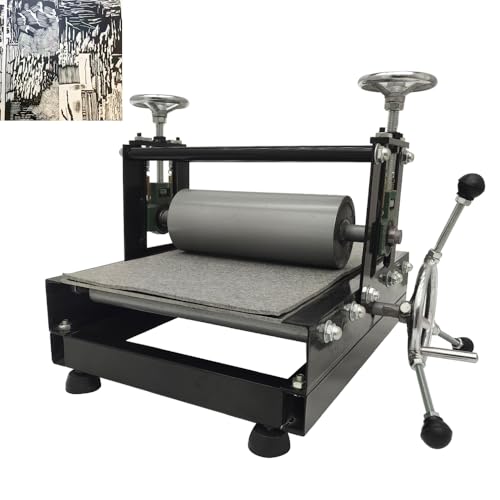
- 19.7 x 12.6-inch panel
- Adjustable roller height
- No electricity required
Best For: Larger tabletop relief and embossed artwork
Best All-Metal Etching Press
Basic Monochrome Printing Machine

- Supports etching and embossing
- All-metal construction
- Approximately 11 x 10-inch printing area
Best For: Multi-technique printmaking and monochrome projects
Best Beginner Linocut Press

- Three adjustable pressure settings
- Works with A4 paper and 25 mm blocks
- Beech wood plate with stainless steel frame
Best For: Beginner linocut and small relief-print projects
Compact Etching Workhorse

- Supports prints up to 9 × 15 inches
- Includes felt pad and base plate
- Steel construction with smooth roller
Best For: Beginners, home studios, and varied printmaking techniques
Large-Format Studio Option

- 19.7 × 12.6-inch panel
- Adjustable roller height
- Handwheel operation with anti-slip feet
Best For: Larger relief, gravure, and pressed-art projects
Beginner Linocut Pick

- Designed for A5 printing
- Handles blocks up to 25 mm thick
- Includes roller, pads, and wrenches
Best For: Small-format linocut and relief printing
Best with Extra Features

- 19.7 x 12.6-inch workspace
- Adjustable roller height
- Iron construction with stable feet
Best For: Larger copperplate, woodblock, and relief-printing projects
Effort-Saving Lever Pick

- Three-level adjustment for blocks up to 25mm
- Even, low-effort lever pressing
- Includes roller and cushioning pads
Best For: Beginners and hobbyists making A4 block prints
Portable Hobbyist Pick

- Compact A4 tabletop design
- Plywood body for stable pressing
- Includes felt pad, lino sheet, and tools
Best For: Students and hobbyists making portable A4 linocut projects
Best Compact Block Press – Speedball Model B Steel Press
Speedball Block Printing Press - Adjustable Height Model B Steel Press For Printmaking
Check Price On AmazonIf you need a straightforward option among printmaking presses for small relief-print projects, the Speedball Model B is designed for prints up to 6 x 8 inches. Its steel construction, portable size, and hand-operated lever make it practical for home or classroom use.
Best For: Beginners, hobbyists, classrooms, and artists making small block prints.
Pros:
- Supports prints up to 6 x 8 inches.
- Two adjustable height settings help accommodate different substrates.
- Steel construction provides a sturdy pressing surface.
- At about 5.7 pounds, it is relatively easy to transport.
Cons:
- The compact format limits the maximum print size.
- Manual operation requires pulling the handle for each impression.
This is a focused block-printing press rather than a large, multi-purpose etching machine. Choose it when portability and simple, even pressure matter more than a larger work area.
Best Tabletop Slab Roller – Portable Manual Printmaking Machine
This tabletop machine is one of the larger printmaking presses in the roundup, with a 19.7 x 12.6-inch panel and manual handwheel operation. Adjustable roller height, leveling feet, and a broad contact area make it suited to artists who need more workspace and pressure control.
Best For: Craftspeople and printmakers working on relief plates, gravure printing, and other embossed artwork.
Pros:
- Provides a relatively large 19.7 x 12.6-inch working panel.
- Manual operation needs no electricity.
- Roller height adjusts by about 1.57 inches for different material thicknesses.
- Adjustable anti-slip feet help stabilize the machine.
Cons:
- At 48.9 pounds, it is much less portable than compact presses.
- Its tabletop footprint requires substantial workspace.
- Manual adjustment and operation may take more setup than a simple block press.
With its larger panel and pressure adjustments, this machine is aimed at more involved tabletop work. Its weight is a tradeoff for stability and a broader working area.
Best All-Metal Etching Press – Basic Monochrome Printing Machine
For artists comparing printmaking presses for multiple techniques, this basic etching machine supports etching, embossing, block printing, and monochrome work. Its all-metal structure and 11 x 10-inch printing area offer a balance of durability and usable workspace.
Best For: Artists and printmakers who want one manual machine for etching, embossing, and block printing.
Pros:
- Supports etching, embossing, and block printing.
- All-metal construction is designed for durability.
- Offers an approximately 11 x 10-inch printing area.
- Designed with user-friendly controls for beginners and experienced users.
Cons:
- The product is described as a basic machine, so advanced features may be limited.
- Its 25-pound weight is less convenient to move than a lightweight block press.
- The listed workspace may not suit oversized prints.
This press is a versatile middle-ground choice for makers who want more technique options than a dedicated block press provides. Its all-metal build favors durability, while the moderate size keeps projects relatively contained.
Best Beginner Linocut Press – Premium Beech Wood A4 Machine
This compact linocut press combines a natural beech wood pressure plate and handle with a 304 stainless steel frame. Among printmaking presses, it stands out for its three pressure settings, felt pad, and compatibility with A4 paper and blocks up to 25 mm thick.
Best For: Beginners, children, home studios, classrooms, and craft workshops focused on linocut and small relief prints.
Pros:
- Three pressure gears provide adjustable control.
- Handles A4 paper and blocks up to 25 mm thick.
- Felt pad helps protect blocks and support even ink transfer.
- Supports linocut, woodcut, letterpress, rubber printing, and crafts.
Cons:
- Its compact format is not intended for oversized prints.
- Manual lever operation may be slower for high-volume production.
- At 13 pounds, it is portable but heavier than the smallest block presses.
The adjustable pressure settings and approachable tabletop design make this a flexible choice for learning relief-print techniques. Select it when A4-scale work and material protection are more important than production speed.
Compact Etching Workhorse – Basic Etching Printing Press
This compact option is a practical entry point for shoppers comparing printmaking presses for home studios, classrooms, workshops, or exhibitions. It supports work up to 9 × 15 inches and covers several techniques, including etching, embossing, block printing, monotype, lithography, and relief printing.
Best For: Beginners and artists who want a space-saving press with a base plate and felt pad included.
Pros:
- Supports multiple printmaking techniques and prints up to 9 × 15 inches.
- 360° rotating L-shaped handle is designed for smooth, comfortable operation.
- Includes a felt pad and base plate, so fewer accessories are needed to begin.
- Heavy-duty steel construction and a smooth roller help provide even pressure.
Cons:
- Its supported print area is smaller than that of the larger 12.6 × 19.7-inch press in this roundup.
- At 18.5 pounds, it is portable for a press but not especially lightweight.
Choose this model when compact storage and broad technique compatibility matter more than a larger working surface. Its included accessories and straightforward manual design make it a practical starting point for printmaking.
Large-Format Studio Option – TECHTONGDA Slab Roller Press
For shoppers seeking printmaking presses with a larger panel, the TECHTONGDA offers a 19.7 × 12.6-inch work surface and a handwheel-controlled rolling action. Its adjustable roller height and anti-slip feet are useful when working at a tabletop and accommodating different project requirements.
Best For: Artists who need a larger manual press for relief plates, gravure work, and other pressed artworks.
Pros:
- Provides a 19.7 × 12.6-inch panel for larger projects.
- Adjustable roller height reaches about 1.57 inches or 4 cm.
- Handwheel operation is designed to apply even pressure.
- Four anti-slip feet help stabilize it on a tabletop.
Cons:
- At 58 pounds, it is considerably heavier than the compact presses in this roundup.
- The larger package and work surface require more room for handling and storage.
- Its operation involves separate lifting and forward handwheel adjustments.
This is the strongest fit for users who prioritize work area and adjustable setup over portability. The iron frame, PVC surface, and tabletop feet support a more substantial studio-style workflow.
Beginner Linocut Pick – TOPOWN Mini Lever Press
The TOPOWN Mini Linocut Press is a straightforward choice among printmaking presses for A5-sized relief work. Its manual lever is designed to transfer pressure evenly, while the included felt, rubber, and roller accessories help beginners get started with linocut and related block-printing projects.
Best For: Beginners, children, and artists making A5 prints from linoleum, wood, rubber, or other relief blocks.
Pros:
- Manual lever design is intended to reduce effort and distribute pressure evenly.
- Works with A5 papers and blocks up to 25 mm thick.
- Includes a rubber roller, felt pad, rubber pad, and wrenches.
- Powder-coated alloy-steel frame is designed for durability and stability.
Cons:
- Blocks are not included in the package.
- Its A5 format limits it to smaller prints.
- It is oriented toward relief techniques rather than the broader range of techniques supported by an etching press.
This press makes the most sense for accessible, small-format relief printing rather than large or highly varied studio work. The included accessories and lever operation keep the setup approachable for new printmakers.
Best with Extra Features – BEILOCKERY Slab Roller Press
For artists comparing printmaking presses, the BEILOCKERY manual slab roller stands out with a roomy 19.7 x 12.6-inch workspace. Its adjustable roller height and iron construction make it suited to larger copperplate, woodblock, and relief-printing projects.
Best For: Artists, studios, universities, and art educators handling larger-format printmaking work.
Pros:
- Large workspace accommodates copper plates, woodblocks, and other sizable projects.
- Adjustable roller height supports different substrates and printing requirements.
- Iron construction, non-slip feet, rollers, and a large handwheel promote stable, controlled operation.
- Designed for woodcuts, engravings, and paper prints.
Cons:
- Its tabletop footprint is relatively substantial at 19.7 x 13.8 x 16.1 inches.
- Manual operation requires turning the handwheel for every impression.
This is the most suitable option here for users who prioritize working area and adjustable pressure over compact portability. It is a practical studio-oriented choice for larger relief and gravure projects.
Effort-Saving Lever Pick – TOPOWN Linocut Hand Press
The TOPOWN hand lever press is one of the more approachable printmaking presses for linocut and block printing. Its lever-driven design applies pressure evenly, while three adjustment levels accommodate blocks up to approximately 25mm thick and A4-size papers.
Best For: Beginners, families, classrooms, and hobbyists making linocut, woodcut, or other block prints.
Pros:
- Lever operation is designed to reduce effort and distribute pressure evenly.
- Three-level adjustment supports blocks up to about 25mm thick.
- Includes a rubber roller, felt pad, rubber pad, and wrenches.
- Supports several applications, including linocut, woodcut, letterpress, cork, and cardboard printing.
Cons:
- Its compatibility is centered on A4-size paper and a 12 x 11.5-inch overall footprint.
- Blocks are not included.
- The plywood pressure plate is functional but less suited to users seeking a metal press surface.
Choose this model when simple lever operation and included accessories matter most. Its compact size and easy-to-use format make it a strong entry-level option for manual block printing.
Portable Hobbyist Pick – AsellPress Linocut Press
The AsellPress A4 is a compact choice among printmaking presses, using a lightweight tabletop format for home studios, classrooms, and art spaces. Its plywood body provides a stable manual pressing surface for linoleum and woodblock projects.
Best For: Artists, students, and hobbyists who want a portable A4 linocut press.
Pros:
- Compact tabletop design is suited to home use, classrooms, and studios.
- Premium plywood construction is described as strong, stable, and durable.
- Manual pressing is designed to produce smooth, consistent impressions.
- Includes a felt pad, lino sheet, and six carving tools.
Cons:
- The A4 version is less suited to larger-format work than the available A3 option.
- It is a manual press, so each impression depends on user-applied pressure.
- The supplied details do not specify a pressure-adjustment system.
This model is a convenient fit for smaller relief-printing projects and users who value portability. The included starter materials also make it appealing for students and hobbyists beginning linocut work.
How We Picked These Printmaking Presses
We selected these Printmaking Presses based on the needs that matter most in real studio use: press type, working area, pressure adjustment, construction, portability, ease of operation, and suitability for different printmaking techniques. The lineup includes compact linocut hand presses, manual etching presses, slab roller-style machines, and sturdier metal models.
Because product specifications and included accessories can vary, check the current listing for exact dimensions, platen or roller capacity, materials, and included felts or base plates before ordering. A press that suits small relief blocks may not provide the clearance or pressure control needed for larger plates.
Quick Comparison
| Press type | Best suited to | Main advantage |
|---|---|---|
| Mini hand-lever press | Small linocuts and beginners | Compact, simple operation |
| Wooden A4 press | Home studios and practice | Lightweight, approachable design |
| Manual etching press | Linocut, woodblock, and plate printing | Broader technique flexibility |
| Slab roller press | Larger tabletop prints | Generous working surface |
| Adjustable steel press | Frequent or demanding use | Durability and pressure control |
Key Buying Factors for Printmaking Presses
Press Type and Printing Method
Choose a hand-lever or wooden press for small relief prints and straightforward linocut work. An etching press is more versatile for plates, woodblocks, and layered prints, while a slab roller design can offer a larger working area for tabletop production.
Working Size and Clearance
Measure your largest planned block or plate, then allow room for paper, blankets, and registration. A compact press saves space but can restrict your print dimensions. Larger models need a stable table and more storage room.
Pressure and Adjustability
Consistent pressure is essential for even ink transfer. Adjustable roller height or pressure settings are especially useful when switching between thin linoleum, wood, plates, blankets, and thicker paper.
Materials, Stability, and Maintenance
Metal construction generally handles frequent use and heavier pressure, while beech wood and plywood presses may be easier to move and more suitable for beginners. Look for a firm base, smooth moving parts, accessible adjustment points, and surfaces that are easy to clean.
Portability and Accessories
Consider whether you need a press that can be stored after each session or remain set up permanently. Felts, base plates, rollers, and other included accessories can improve value, but verify what is actually supplied.
Who Should Buy Which Printmaking Presses?
Beginners and students: Start with a compact hand-lever or wooden linocut press if you primarily make small relief prints and want an uncomplicated learning curve.
Home printmakers: Choose a tabletop etching or slab roller press when you need more flexibility but have limited studio space.
Artists printing larger work: Prioritize a wider working area, adjustable pressure, and a stable frame so the press can accommodate different blocks, plates, and paper thicknesses.
Frequent or professional users: A durable metal press with dependable adjustment and a rigid base is usually the better long-term investment. Match the press to your technique and maximum print size rather than choosing solely by price.