The right rolling shop stool can reduce fatigue, keep tools close, and make long repair or detailing sessions more comfortable. For professional mechanics, stability, weight capacity, height adjustment, and durable casters matter more than appearance alone.
We compared 10 heavy-duty options with features such as padded seats, backrests, pneumatic height adjustment, tool trays, and steel frames to help you choose a stool suited to your workflow and shop floor.
Best 10 Rolling Shop Stools for Professional Mechanics Picks for 2026
Most Comfortable
Powerbuilt Professional Mechanics Roller Seat

- Padded 16-inch seat with backrest
- Two drawers, tool tray, and can caddy
- 500-pound capacity with locking casters
Best For: Detailers and mechanics needing comfort and organized storage
Best Adjustable Value
WEN 73012T Pneumatic Mechanic Stool

- Adjusts from 15 to 20 inches
- Five swiveling casters for movement
- 300-pound capacity with tool storage
Best For: General shop work requiring flexible seating height
Best for Rough Floors
Powerbuilt Heavy Duty Roller Mechanics Seat

- Four-inch rubber-coated swivel casters
- Wide concave 18-by-10-inch seat
- Drawer plus two removable tool trays
Best For: Floor-level work across driveways and shop surfaces
Most Compact
MaxWorks 80771 Pneumatic Roller Seat

- Adjusts from 15 to 20 inches
- Lightweight 10.5-pound design
- Built-in 15.25-inch tool tray
Best For: Mobile mechanics needing simple adjustable seating
Adjustable Comfort Pick
Garage Mechanic Stool with Backrest

- 330-pound capacity with 20–26.1-inch height adjustment
- Padded backrest, seat, and adjustable footring
- Three removable trays plus braking casters
Best For: Mechanics wanting supported, adjustable seating with tool storage
Low-Profile Storage Seat

- 15.4-inch low seat for vehicle-side access
- Three trays and a pull-out drawer for tools
- Rubber casters with two brakes
Best For: Mechanics working near lower vehicle areas and needing storage
Wide-Base Workstation Stool
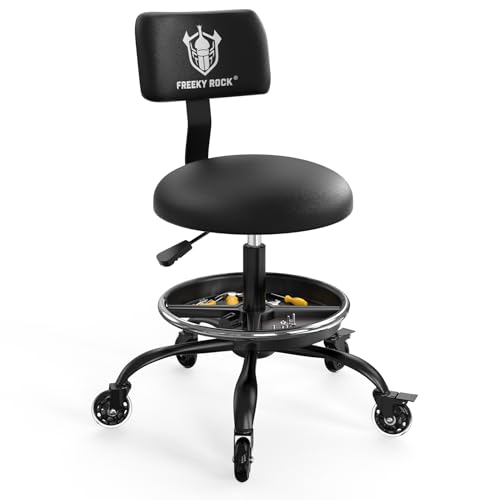
- 18.7–25.59-inch pneumatic height range
- 330-pound capacity with wide 22.4-inch base
- Memory-foam seat and magnetic-lined storage tray
Best For: Mechanics seeking stable, cushioned seating for longer tasks
Heavy-Duty Comfort Pick
Adjustable Rolling Shop Stool with Backrest

- Welded steel frame with powder-coated finish
- Adjustable 13 to 18-3/4-inch seat height
- Padded leather seat, backrest, and tool tray
Best For: Extended repair sessions requiring comfort and adjustable support
Storage-Focused Choice
400-Pound Pneumatic Mechanic Stool

- 400-pound stated weight capacity
- Pneumatic 15.7- to 20.47-inch height range
- Tray, two holders, and small-parts storage
Best For: Mobile maintenance work where onboard storage is important
High-Position Stability Pick
Five-Wheel Adjustable Shop Stool

- 22- to 26-inch pneumatic seat adjustment
- Five-wheel anti-tip base with two lockable wheels
- Backrest, padded PU seat, and steel mesh tray
Best For: Higher work surfaces requiring a stable rolling seat
Most Comfortable – Powerbuilt Professional Mechanics Roller Seat
For professional mechanics who spend long stretches detailing or repairing vehicles, the Powerbuilt roller seat combines a generously padded seat and backrest with substantial onboard storage. Its 500-pound capacity and locking casters make it a strong, stable choice among rolling shop stools for professional mechanics.
Best For: Detailers and mechanics who prioritize padded support, storage, and a higher weight capacity.
Pros:
- Thick, 16-inch-wide padded vinyl seat with supportive backrest.
- Two steel drawers, a front tool tray, and a two-can caddy keep supplies close.
- Three-inch ball-bearing swivel casters provide smooth movement; two lock for stability.
- One-inch steel frame members support up to 500 pounds.
Cons:
- At 37.4 pounds, it is heavier than the simpler rolling stools in this roundup.
- Assembly is required.
This is the feature-rich option for jobs that demand comfort and organized storage. Choose it when the backrest, drawers, and higher capacity matter more than low weight or a compact footprint.
Best Adjustable Value – WEN 73012T Pneumatic Mechanic Stool
The WEN 73012T is a straightforward choice for mechanics who want adjustable seating without the bulk of a drawer-equipped stool. Its pneumatic height range, padded vinyl seat, five swiveling casters, and onboard tool storage suit everyday garage and workshop work.
Best For: Mechanics who need flexible seat height and an easy-to-maneuver stool for general shop tasks.
Pros:
- Pneumatic adjustment changes the seat from 15 to 20 inches.
- Thick, absorbent vinyl-protected multilayer padding improves comfort.
- Five 2.5-inch swiveling casters allow omnidirectional movement.
- Steel-frame construction supports up to 300 pounds and includes tool storage.
Cons:
- The 300-pound capacity is lower than the Powerbuilt 500-pound model.
- Assembly instructions are not included.
With its adjustable height and 12.1-pound weight, this WEN stool emphasizes mobility and positioning rather than extensive storage. It is a practical fit for shops where tasks vary from low work to bench-height jobs.
Best for Rough Floors – Powerbuilt Heavy Duty Roller Mechanics Seat
The Powerbuilt 240036 is designed for mechanics who need a low, stable seat that can cross demanding shop surfaces. Its four-inch rubber-coated casters, broad concave platform, and pull-out storage make it a capable option among rolling shop stools for professional mechanics.
Best For: Mechanics working across driveways, shop floors, and other surfaces where larger rubber wheels are useful.
Pros:
- Four-inch rubber-coated swivel casters roll smoothly under load.
- Wide 18-by-10-inch concave bench helps keep the user positioned.
- Full-length drawer and two removable trays provide practical storage.
- Steel frame and durable plastic body support up to 300 pounds.
Cons:
- The 14-inch seat height is not adjustable.
- There is no padded backrest.
- Assembly instructions are not included.
This stool favors rugged mobility and a low working position over plush seating. Its larger casters and storage layout are especially useful for hands-on floor-level repairs and jobs that require moving between work areas.
Most Compact – MaxWorks 80771 Pneumatic Roller Seat
MaxWorks 80771 Pneumatic Roller Seat/Creeper with Adjustable Height - 300 lb Capacity
Check Price On AmazonThe MaxWorks 80771 keeps the design simple: a thick cushioned seat, pneumatic height adjustment, and a built-in circular tool tray. For mechanics who want a lightweight, compact option, it delivers the core features expected from rolling shop stools for professional mechanics without drawers or a backrest.
Best For: Mechanics who want lightweight, adjustable seating with basic tool access.
Pros:
- Side-lever pneumatic adjustment provides a 15-to-20-inch height range.
- Five 2.5-inch non-marring swivel castors roll easily under load.
- Thick, comfortable cushion and built-in 15.25-inch tool tray add utility.
- Lightweight 10.5-pound design is easy to reposition.
Cons:
- Its 300-pound capacity is lower than the highest-capacity option here.
- It has a single tool tray rather than drawers or enclosed storage.
- No backrest is listed in the supplied specifications.
The MaxWorks is a sensible pick for compact work areas and users who frequently move their seat around the garage. Its adjustable height and tray cover essentials while keeping the design light and uncomplicated.
Adjustable Comfort Pick – Garage Mechanic Stool with Backrest
For professional mechanics who need rolling shop stools for professional mechanics with back support, adjustable height, and nearby tool storage, this model combines a padded swivel seat with a practical workshop layout. Its seat adjusts from 20 to 26.1 inches and supports up to 330 pounds.
Best For: Mechanics who want a comfortable, height-adjustable rolling seat with a backrest, footring, and organized tool trays.
Pros:
- Padded seat and backrest provide lumbar support for longer tasks.
- Height adjustment, a footring, and 360-degree casters support flexible positioning.
- Three removable trays help organize small tools and parts.
- Two casters include brakes for more controlled positioning.
Cons:
- Its backrest and storage features make it less compact than a simple low mechanic seat.
- Assembly is required.
- The listed manufacturer warranty is six months.
This is a strong choice when comfort and tool access matter as much as mobility. The adjustable range suits varied work heights, while the backrest and footring add support during garage or repair-shop work.
Low-Profile Storage Seat – VEVOR 300-LB Mechanics Stool
This VEVOR model is a practical option among rolling shop stools for professional mechanics who work close to vehicles and need tools within reach. Its 15.4-inch seat height and compact, low-profile design help provide access in tight areas, while the steel base supports up to 300 pounds.
Best For: Automotive repair, tire work, and detailing tasks that benefit from a low rolling seat and built-in tool storage.
Pros:
- Low 15.4-inch seat height fits work around lower vehicle areas.
- Three storage trays include partitioning, plus a pull-out tray for additional tools.
- Four-inch rubber casters provide 360-degree movement, with two braking casters.
- Thick sponge cushioning and a curved seat support a more relaxed posture.
Cons:
- The seat is not height adjustable.
- Its 300-pound capacity is lower than the 330-pound options in this roundup.
- No manufacturer warranty is listed.
Choose this stool when a low working position and storage capacity are priorities. It is less adaptable to different bench heights than adjustable models, but its compact format is well suited to vehicle-side maintenance.
Wide-Base Workstation Stool – Adjustable Rolling Shop Stool
For professional mechanics comparing rolling shop stools for professional mechanics, this stool emphasizes adjustable comfort and stability. Its pneumatic seat height ranges from 18.7 to 25.59 inches, while the 22.4-inch-wide steel base and 330-pound capacity support demanding garage work.
Best For: Professionals who want a cushioned, height-adjustable stool with a broad base, foot support, and organized parts storage.
Pros:
- Thick memory-foam cushion, ergonomic backrest, and waterproof cover support extended sessions.
- Wide star-shaped base is designed to reduce tipping risk on uneven floors.
- Five casters provide quiet 360-degree movement, with two braking wheels.
- Three removable trays include one with a magnetic liner for metal parts.
Cons:
- The wide base may require more floor space than a compact mechanic seat.
- Assembly or setup details are not specified in the supplied notes.
- No manufacturer warranty is listed.
This model is compelling for mechanics who spend long periods seated and value a stable footprint. Its broad base, adjustable footring, and magnetic-lined tray add useful workstation features, though the larger footprint may be less convenient in crowded bays.
Heavy-Duty Comfort Pick – Adjustable Rolling Shop Stool with Backrest
For professional mechanics who need rolling shop stools for professional mechanics that can handle extended repair sessions, this Speedway Motors model combines a welded steel frame, adjustable gas-assist height, a padded leather seat, and a backrest. Its four 3-inch ball-bearing casters make it easy to reposition, while the included feet allow stationary use.
Best For: Mechanics and shop users who want a supportive adjustable stool with built-in tool storage and a stationary-use option.
Pros:
- Welded, powder-coated steel frame supports demanding garage use.
- Gas-assist adjustment spans 13 to 18-3/4 inches at the seat.
- Padded 15-3/4-inch leather seat and mini backrest improve comfort.
- Lower tool tray keeps frequently used supplies close at hand.
Cons:
- The listed specifications conflict on capacity, citing both 330 and 300 pounds.
- At 25 pounds, it is less convenient to carry than lighter shop stools.
- Product care instructions specify dry cleaning for the leather seat.
This is a well-rounded option when stability, comfort, and flexible positioning matter more than minimum weight. Verify the applicable weight rating before purchase because the supplied specifications are inconsistent.
Storage-Focused Choice – 400-Pound Pneumatic Mechanic Stool
This rolling mechanic stool is built for mobile garage work, with a pneumatic seat adjustment from 15.7 to 20.47 inches and a 360-degree swiveling seat. For professional mechanics comparing rolling shop stools for professional mechanics, its tray, two side holders, and small-parts storage areas help keep repair supplies moving with you.
Best For: Mechanics working on tires, motorcycles, bicycles, and other medium- to low-height maintenance tasks who value accessible storage.
Pros:
- 400-pound stated capacity is the highest among these options.
- Pneumatic height adjustment and 360-degree swivel improve positioning.
- Includes a storage tray, two cup/tool holders, and small-parts areas.
- Four swivel casters are designed for quiet, maneuverable movement.
Cons:
- Assembly is required.
- Faux-leather upholstery may be less premium than genuine leather.
- The supplied dimensions list a total height of 33.62 inches, which may be tall for some work areas.
Choose this model when carrying tools and supplies alongside the seat is a priority. Its robust angle-steel frame and high stated capacity suit demanding environments, while the pneumatic lift supports varied working positions.
High-Position Stability Pick – Five-Wheel Adjustable Shop Stool
Among rolling shop stools for professional mechanics, this model stands out for its elevated 22- to 26-inch seat range and five-wheel base. Its steel construction, wide foundation, two lockable casters, contoured backrest, and built-in mesh tray are aimed at stable, supported work in a busy garage.
Best For: Mechanics who need a taller rolling seat with extra base stability and the option to secure the stool during repair work.
Pros:
- Five-wheel anti-tip base provides a broad, stable footprint.
- 22- to 26-inch pneumatic adjustment suits higher work surfaces.
- Two lockable wheels help keep the stool in place when needed.
- Includes a wipe-clean PU seat, 10-inch backrest, and steel mesh tray.
Cons:
- The 22-inch minimum seat height is higher than the other listed stools.
- Only two of the five wheels are described as lockable.
- The supplied notes do not specify the stool’s exact overall dimensions.
This is a strong fit for users who prefer a taller seating position and want added stability without giving up mobility. The five-wheel design and lockable casters are especially useful when transitions between rolling and secured work are frequent.
How We Picked the Best Rolling Shop Stools for Professional Mechanics
We focused on the features that affect daily shop use: weight capacity, frame construction, seat comfort, height range, caster design, stability, and accessible storage. We also considered whether each stool supports different tasks, from brake work and detailing to general repairs and parts installation. Pneumatic adjustment, padded backrests, wide seating platforms, and multiple tool trays can improve productivity, but the best combination depends on your workspace and working position.
Quick Comparison
| Feature | Why It Matters | Best For |
|---|---|---|
| Wide padded seat | Improves comfort during extended work | Long repair or detailing sessions |
| Backrest | Provides lower-back support while seated | General maintenance and assembly |
| Pneumatic height adjustment | Matches the stool to vehicles, benches, and lifts | Multi-purpose professional shops |
| Tool trays or drawers | Keeps frequently used tools within reach | Fast-paced repair work |
| Heavy-duty casters | Improves movement and load stability | Concrete garage floors and daily use |
Key Buying Factors for Rolling Shop Stools for Professional Mechanics
Capacity and Frame Strength
Choose a stool rated comfortably above your body weight and any gear you regularly carry. A welded steel frame and broad base are useful for repeated professional use, while a higher capacity can provide an extra margin of stability.
Seat Height and Support
Adjustable models are more versatile when you work around vehicles of different heights. A thick padded seat helps during extended jobs, and a backrest is valuable if you frequently remain seated between tasks. For brake or low-access work, a lower rolling seat with a wide platform may be more practical than a tall shop chair.
Casters and Floor Conditions
Look for smooth-rolling, load-rated casters that suit your floor. Rubber wheels can help on rough concrete and reduce the chance of sliding, while larger casters may roll more easily over seams or debris. Check that the base remains stable when turning or reaching.
Storage and Organization
Built-in trays, drawers, or sliding compartments reduce trips back to a toolbox. Confirm that the storage areas fit your most-used ratchets, sockets, drivers, and small parts without making the stool top-heavy.
Who Should Buy Which Rolling Shop Stools for Professional Mechanics?
Choose a backrest-equipped pneumatic stool if you want one versatile seat for general mechanical work, detailing, and bench-height tasks. A low, wide roller seat is better for brake jobs, wheel work, and tasks where stability and easy access matter most. Models with several trays or drawers suit mechanics who want essential tools at hand, while a simpler stool may be preferable if you already use a rolling tool cart.
For professional shops, prioritize durable construction, reliable casters, and a capacity rating suited to frequent use. For occasional home-garage work, comfort and storage may offer more value than maximum load capacity or specialized hardware.