Intarsia demands clean curves, controlled interior cuts, and repeatable accuracy across different wood species and thicknesses. The right scroll saw can make intricate patterns easier to cut while reducing frustration during blade changes and fine detail work.
We’ve gathered 10 scroll saws spanning established workshop brands and budget-friendly options, then organized the buying advice around the features that matter most for intarsia projects.
Best 10 Scroll Saws for Intarsia Picks for 2026
Premium Precision Pick
DEWALT DW788 20-Inch Scroll Saw
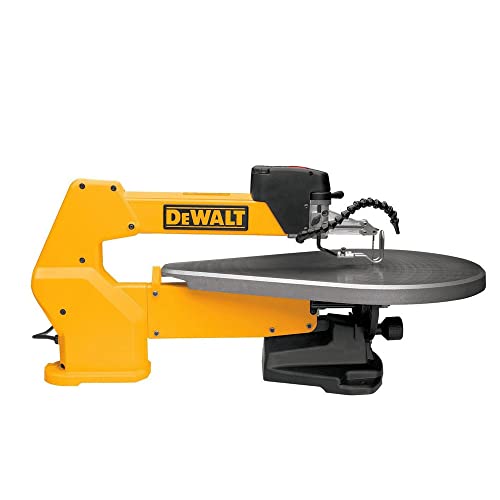
- 20-inch blade length for larger patterns
- Variable-speed trigger for controlled cuts
- Double parallel-link arm design
Best For: Experienced woodworkers making detailed, larger intarsia projects
Most Versatile Angled-Cut Option
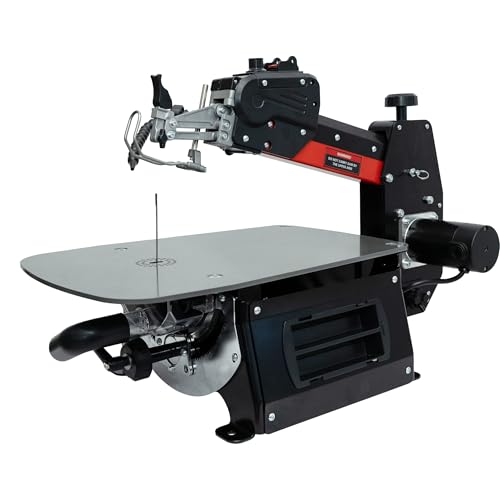
- Rotating arm supports angled cuts
- 360-1,550 RPM variable speed
- Tool-less pinless blade changes
Best For: Intarsia projects requiring bevels and frequent setup changes
Best Easy-Access Design

- Easy-access side panel for blade changes
- 550-1,600 strokes-per-minute range
- 45-degree beveling table
Best For: Hobbyists who frequently change blades for intricate patterns
Simple Budget-Friendly Choice
RYOBI SC165VS 16-Inch Scroll Saw
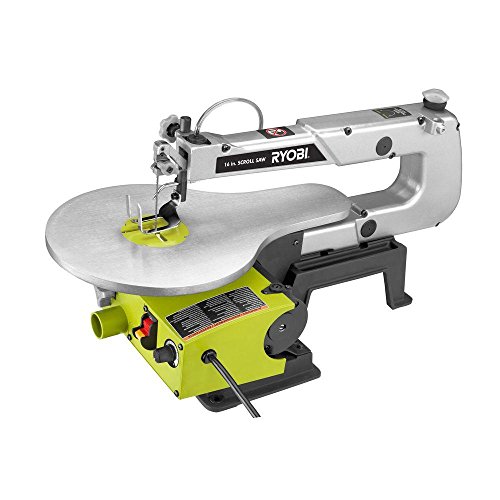
- Tool-free blade changes
- Integrated dust blower
- 45-degree cutting angle
Best For: DIY users handling smaller intarsia and craft projects
Heavy-Duty Pick
Delta 20-Inch Variable Speed Scroll Saw

- 20-inch capacity with a large cast-iron table
- 400–1,750 SPM variable-speed range
- Locking upper arm and tool-free tensioning
Best For: Larger intarsia and fretwork projects
Easy-Access Value
WEN 16-Inch Variable Speed Scroll Saw
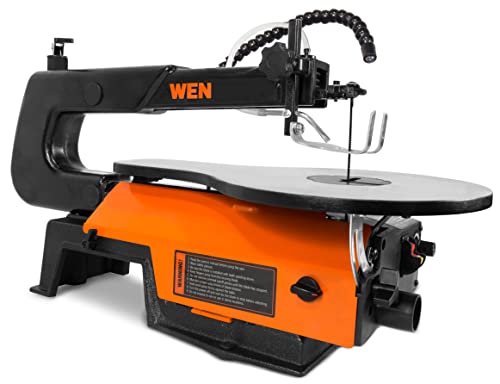
- Flip-open side panel simplifies blade changes
- 550–1,600 SPM speed range
- Includes work light, air pump, and three blades
Best For: Hobbyists prioritizing convenience
Large-Capacity Precision Pick
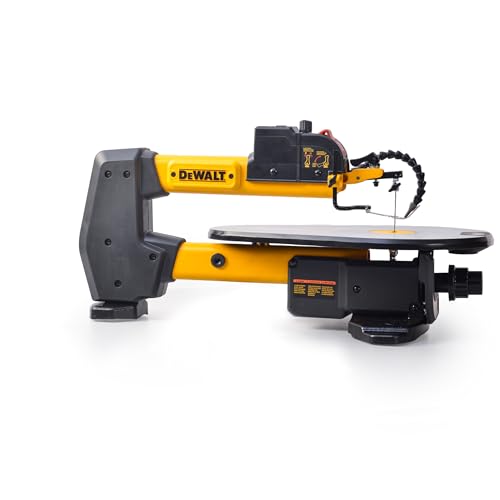
- 18-inch throat for larger patterns
- Die-cast aluminum table for stable support
- Front bevel scale spans 45° left to 15° right
Best For: Larger decorative scrollwork and intricate patterns
Best Overall
SKIL SS9503-00 16-Inch Variable-Speed Scroll Saw

- LED work light and integrated dust removal
- 0–45-degree tilting work table
- Keyless blade changes with onboard storage
Best For: Convenient, detailed intarsia woodworking
Best Stability
16-Inch 1.5-Amp Variable-Speed Scroll Saw

- Cast iron base reduces vibration
- 400–1,650 SPM variable-speed range
- Dual lamps and tool-free blade clamps
Best For: Steady, repeatable intarsia cuts
Best for Large Workpieces
16-Inch Adjustable-Speed Scroll Saw

- Extra-large 0–45-degree tilting table
- 400–1,600 SPM speed adjustment
- LED light, blade guard, and particle port
Best For: Roomy, versatile intarsia workspaces
Premium Precision Pick – DEWALT DW788 20-Inch Scroll Saw
DEWALT Scroll Saw, 1.3 Amp, 20 in Steel Blade, With Variable-Speed Trigger, For Precise Cuts (DW788)
Check Price On AmazonFor woodworkers comparing scroll saws for intarsia, the DEWALT DW788 emphasizes controlled, precise cutting with a 20-inch blade length and double parallel-link arm design. Its 1.3-amp motor and variable-speed trigger are suited to detailed wood projects where smooth handling matters.
Best For: Experienced woodworkers who want a larger-capacity scroll saw for detailed intarsia and precision wood cutting.
Pros:
- 20-inch blade length provides generous throat capacity for larger patterns.
- Variable-speed trigger helps tailor cutting speed to the project.
- Double parallel-link arm design is intended to support controlled, lower-vibration cutting.
- Includes a three-year limited warranty.
Cons:
- At 30 kg, it is substantially heavier than the other listed saws.
- The supplied notes list a maximum speed of 4,500 rpm but do not specify a lower speed range.
The DW788 is the most substantial option in this group, making it a strong fit when work area and machine stability matter more than portability. Its 20-inch format and variable-speed trigger align well with demanding intarsia layouts.
Most Versatile Angled-Cut Option – BUCKTOOL 16-Inch Scroll Saw
The BUCKTOOL 16-inch scroll saw stands out among scroll saws for intarsia because its rotating arm allows angled cuts without repositioning the workpiece. Its broad 360-to-1,550 RPM variable-speed range, pinless blades, and dust-management features support both delicate fretwork and more demanding hardwood work.
Best For: Crafters who need flexible bevel cutting, convenient blade changes, and a clean work area for detailed patterns.
Pros:
- Rotating arm pivots 30° left and 45° right for angled cuts without moving the workpiece.
- 360-to-1,550 RPM variable-speed range accommodates delicate and tougher cuts.
- Upper-arm lift, tool-less clamps, and rapid-tension lever simplify inside cutouts.
- Magnetic dust hood, adjustable blower, and hose fitting help manage sawdust.
Cons:
- Its 16-inch format offers less throat capacity than the DEWALT 20-inch model.
- The supplied notes identify it as a bare tool, so accessory expectations should be checked.
For intarsia makers who frequently incorporate bevels or angled elements, the rotating arm is this saw’s defining advantage. The combination of speed control, pinless blade handling, and dust features also supports an efficient workflow.
Best Easy-Access Design – WEN 3922 16-Inch Scroll Saw
The WEN 3922 is a practical choice among scroll saws for intarsia, pairing a 16-inch throat with a 550-to-1,600-strokes-per-minute speed range. Its side panel and thumb-screw adapter are designed to make blade changes easier, which is useful when a pattern requires repeated inside cuts.
Best For: Hobbyists who value straightforward blade changes, a sturdy cast-iron base, and a compact 16-inch work platform.
Pros:
- Side panel flips open for easier blade access.
- 550-to-1,600 strokes-per-minute variable speed supports different cutting tasks.
- 16-by-10-inch table bevels up to 45 degrees.
- Includes an air pump, dust port, foot-lock clamp, and three blades.
Cons:
- The 16-inch throat is less generous than the DEWALT’s 20-inch capacity.
- The supplied notes list a 15-volt specification that may warrant verification before purchase.
- Included blades are listed as 5-inch blades, which may require checking for project compatibility.
The WEN 3922 focuses on convenience rather than maximum size. Its accessible blade-change design and included dust-management features make it a sensible option for makers who regularly switch between intricate intarsia cuts.
Simple Budget-Friendly Choice – RYOBI SC165VS 16-Inch Scroll Saw
The RYOBI SC165VS offers a straightforward 16-inch platform for shoppers seeking scroll saws for intarsia. Its 1.2-amp corded motor, tool-free blade changes, integrated dust blower, and 45-degree cutting angle cover the core features needed for detailed wood projects.
Best For: DIY users and beginning woodworkers seeking a basic scroll saw for smaller intarsia and general craft cuts.
Pros:
- Tool-free blade changes simplify setup between cuts.
- Integrated dust blower helps keep the cutting line visible.
- 45-degree cutting angle supports basic bevel work.
- Includes a blade, hex wrench, and switch key.
Cons:
- The 1.2-amp motor is the lowest current rating among the listed models.
- The supplied warranty information is limited to 30 days.
- The notes do not provide a variable-speed range despite the product title identifying it as variable speed.
The SC165VS keeps the feature set focused and accessible. It may suit smaller intarsia projects and general hobby work, but buyers who need clearly documented speed control or a longer warranty may prefer one of the alternatives.
Heavy-Duty Pick – Delta 20-Inch Variable Speed Scroll Saw
For shoppers comparing scroll saws for intarsia, the Delta 40-694 stands out with a large cast-iron table, a 20-inch capacity, and front-mounted controls. Its variable speed and adjustable upper arm are useful for detailed work and blade-position changes.
Best For: Woodworkers who want a substantial, stable saw for larger intarsia and fretwork projects.
Pros:
- 20-inch capacity and spacious 16-by-24-inch cast-iron table
- Variable speed from 400 to 1,750 strokes per minute
- Tool-free, single-lever blade tensioning helps simplify setup
- Upper arm lifts and locks for easier blade changes and fretwork adjustments
Cons:
- At about 60–70 pounds, it is not especially portable
- The 1.3-amp motor is less powerful on paper than some larger workshop saws
- Its substantial footprint may require dedicated bench space
The Delta is a strong choice when stability, table space, and broad speed adjustment matter more than portability. Its 45-degree tilting table and up-front controls also support varied decorative cutting tasks.
Easy-Access Value – WEN 16-Inch Variable Speed Scroll Saw
WEN Variable Speed Scroll Saw, 16-Inch with Work Light and Easy Access Blade Changes (3923)
Check Price On AmazonThe WEN 3923 is a practical option for scroll saws for intarsia, especially if convenient blade access is a priority. Its flip-open side panel, thumb-screw blade adapter, work light, and variable-speed control are aimed at straightforward detailed cutting.
Best For: Hobbyists and DIY users who want accessible blade changes and useful built-in features.
Pros:
- Side panel flips open for easy-access blade changes
- Variable speed adjusts from 550 to 1,600 strokes per minute
- Includes a work light, air pump, dust port, foot lock clamp, and three blades
- 16-by-10-inch table bevels up to 45 degrees
Cons:
- Its 16-inch throat is smaller than the Delta and DeWalt options here
- Listed cutting capacity is up to 2 inches, which may limit thicker stock
- The supplied notes do not specify the work-light adjustment or brightness
With its accessible blade-change design and included accessories, the WEN offers a convenient starting point for decorative cutting. It is best suited to users who value ease of use over maximum throat capacity.
Large-Capacity Precision Pick – DeWalt 18-Inch Scroll Saw
For scroll saws for intarsia that need room for larger patterns, the DeWalt provides an 18-inch throat and a die-cast aluminum table. Its front-facing bevel scale and oversized controls are designed to make detailed and angled cuts easier to manage.
Best For: Craftsmen and DIYers working on larger decorative scrollwork and intricate woodworking patterns.
Pros:
- 18-inch throat provides room for larger projects
- Die-cast aluminum table is designed for stable, smooth material support
- Front bevel scale adjusts from 45 degrees left to 15 degrees right
- Oversized front controls allow convenient speed adjustments
Cons:
- The supplied notes do not list blade-change features or included blades
- Its bevel range is asymmetrical, with less adjustment to the right
- Variable speed tops out at 1,500 strokes per minute
The DeWalt balances generous working space with front-access controls and a clearly positioned bevel scale. It is a compelling fit for detailed projects where an 18-inch throat and angled-cut convenience are priorities.
Best Overall – SKIL SS9503-00 16-Inch Variable-Speed Scroll Saw
SKIL 1.2 Amp 16 in. Variable Speed Scroll Saw with LED Work Light for Woodworking - SS9503-00
Check Price On AmazonThe SKIL SS9503-00 is a practical choice among scroll saws for intarsia, combining electronic variable-speed control with a 16-inch tilting work table. Its LED work light, dust removal system, and keyless blade changes support detailed woodworking with less interruption.
Best For: Intarsia makers who want convenient visibility, dust management, and easy blade changes.
Pros:
- Electronic variable-speed control supports different materials and cutting tasks.
- Integrated LED work light improves visibility from multiple angles.
- Keyless blade changes and on-tool blade storage add convenience.
- Work table tilts from 0 to 45 degrees for angled cuts.
Cons:
- The 1.2-amp motor is less powerful than some higher-rated alternatives.
- It is a corded tool and weighs 24.7 pounds.
For detailed intarsia work, the combination of variable speed, a clear cutting area, and tool-free blade changes makes this SKIL model a well-rounded option.
Best Stability – 16-Inch 1.5-Amp Variable-Speed Scroll Saw
This 16-inch scroll saw is a strong candidate for scroll saws for intarsia when stability and speed range matter. Its cast iron base helps reduce vibration, while the steel table, dual lamps, dust port, and tool-free blade clamps support controlled, repeatable cuts.
Best For: Woodworkers prioritizing a steady base, broad speed adjustment, and ample workpiece support.
Pros:
- Cast iron base helps reduce vibration during cutting.
- Variable speed from 400 to 1,650 strokes per minute offers useful control.
- Dual lamps provide visibility with fewer shadows.
- Tool-free blade clamps simplify blade replacement.
Cons:
- The included blades are pin blades, which may limit blade-selection flexibility for some projects.
- At 26.5 pounds, it is relatively heavy to move.
With its vibration-reducing base and wide speed range, this model is suited to makers who value steadiness while shaping multiple intarsia components.
Best for Large Workpieces – 16-Inch Adjustable-Speed Scroll Saw
This adjustable-speed 16-inch scroll saw offers useful features for scroll saws for intarsia, including an extra-large tilting steel table, LED lighting, and a particle-management port. Its 400-to-1,600-strokes-per-minute range is designed for work in softwood, hardwood, and acrylic.
Best For: Crafters who need a roomy table and material flexibility for detailed projects.
Pros:
- Extra-large steel work table tilts from 0 to 45 degrees.
- Adjustable speed accommodates soft wood, hard wood, and acrylic.
- LED work light improves project visibility.
- Hold-down shoe and blade guard help stabilize the workpiece and improve safety.
Cons:
- The listed 0.9-amp motor is lower-rated than the motors in the other two models.
- The product details specify a rectangular blade shape, which may narrow replacement options.
The generous table and broad material guidance make this saw appealing for larger or varied intarsia layouts, especially when angled cuts and workpiece visibility are priorities.
How We Picked These Scroll Saws for Intarsia
We focused on features that directly affect detailed woodworking: variable-speed control, throat capacity, table stability, blade-change convenience, work-area visibility, and overall control. A larger throat can help with broad patterns, while a steady table and low-vibration design are especially valuable when following tight curves or cutting delicate interior openings.
Because intarsia projects vary widely, the selection includes 16-inch and 20-inch-class saws, models with different lighting and blade-access designs, and options suited to both occasional makers and more demanding workshops. Motor amperage was considered alongside usability rather than treated as a standalone measure of performance.
Quick Comparison
| Feature | Why It Matters | What to Look For |
|---|---|---|
| Throat depth | Determines how large a workpiece can be maneuvered | 16 inches for most projects; 18–20 inches for larger patterns |
| Variable speed | Improves control across woods and materials | A broad, easy-to-adjust speed range |
| Blade changes | Saves time when cutting interior openings | Tool-free or front-access blade clamps |
| Work visibility | Helps you follow drawn lines accurately | LED or integrated work light and an unobstructed table |
| Table design | Supports consistent angles and smoother feeding | Rigid, low-play tilting table with dependable locking |
Key Buying Factors for Scroll Saws for Intarsia
Speed Control and Stroke Behavior
Variable speed is one of the most useful features for intarsia. Slower settings can improve control on tight curves, thin stock, and fragile pieces, while faster settings may help with straight cuts or softer wood. Choose controls that are easy to reach without interrupting your work.
Blade Changes and Interior Cuts
Intarsia often requires threading a blade through drilled starter holes. Front-access clamps, quick-release mechanisms, or tool-free changes make repeated interior cuts much less tedious. Check whether the saw accepts pinned, pinless, or both blade styles before buying.
Stability, Vibration, and Table Accuracy
A heavy base and rigid table help keep the cut line steady. Look for a table that locks securely at 90 degrees and at angled settings. Excess vibration can make small pieces harder to control and may leave rougher edges.
Lighting, Dust Control, and Workspace Comfort
An integrated light can improve visibility around fine patterns, especially in a dim workshop. Dust ports and clear airflow around the blade also help keep lines visible. Consider the saw’s footprint, noise, and control placement if you expect long sessions.
Who Should Buy Which Scroll Saws for Intarsia?
Choose a 16-inch model if you primarily make signs, ornaments, small panels, and typical intarsia motifs. These saws generally offer a useful balance of capacity, price, and workshop-friendly size.
Choose an 18- or 20-inch saw if you regularly cut larger panels, need more room to rotate workpieces, or want extra capacity for future projects. The larger throat is helpful, but make sure your bench can support the added footprint.
Choose a feature-rich model if you change blades frequently or work with varied materials. Easy access, strong lighting, reliable speed control, and a stable table can matter more than a modest difference in motor rating.
Choose a budget-oriented saw for occasional hobby use, provided it offers variable speed, a securely locking table, and compatible blades that are easy to source. For any option, use sharp blades, support small pieces carefully, and verify alignment before beginning detailed cuts.