A well-chosen shoe cabinet with doors can keep everyday footwear contained without turning your entryway into a visual catchall. The right design balances storage capacity, accessible shelves, footprint, and a finish that suits your home.
These 10 options include slim organizers, flip-drawer cabinets, tall multi-tier designs, and farmhouse or modern styles. Use the guide below to narrow the list by household size, available space, and the type of shoes you store most often.
Best 10 Shoe Cabinets with Doors Picks for 2026
Best Overall
White Cross-Molding Shoe Cabinet

- Stores approximately 18–24 pairs
- Three adjustable shelves accommodate varied footwear
- Tall design with metal legs and enclosed doors
Best For: High-capacity entryway organization
Best for Large Collections

- Holds approximately 30 pairs
- Dedicated space for boots and heels
- Wide countertop for keys and décor
Best For: Spacious entryways and larger households
Best Farmhouse Style
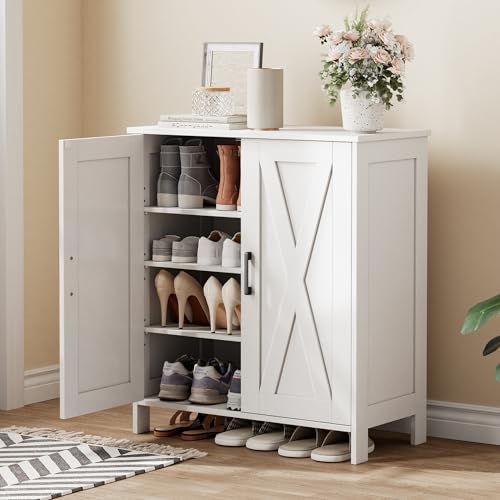
- Stores 15 or more pairs
- Three adjustable shelves fit varied footwear
- Barn doors and wood legs suit farmhouse décor
Best For: Stylish moderate-capacity entryway storage
Best for Narrow Hallways

- Only 9.45 inches deep
- Stores up to 16 pairs
- Adjustable shelves and a useful top fence
Best For: Compact hallways and small entryways
Best for Easy Setup
IRONCK Walnut Slatted-Door Shoe Cabinet
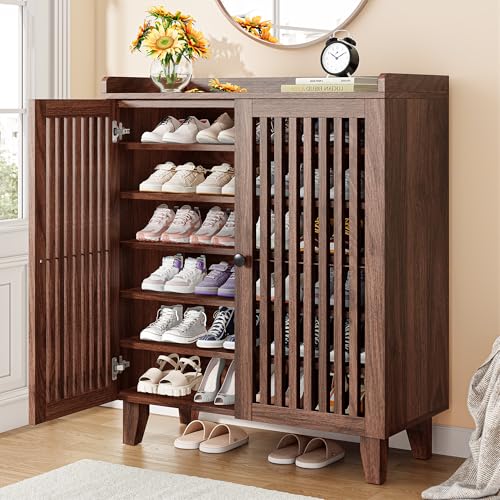
- Holds approximately 24 to 35 pairs
- Three adjustable or removable shelves
- Slatted doors and anti-tip kit
Best For: Larger entryways needing high-capacity enclosed storage
Best for Everyday Use

- Holds up to 20 pairs
- Tilting or removable adjustable shelves
- Two open top storage compartments
Best For: Farmhouse entryways needing hidden and open storage
Best for Mixed Storage
Cross-Molding Door Shoe Cabinet
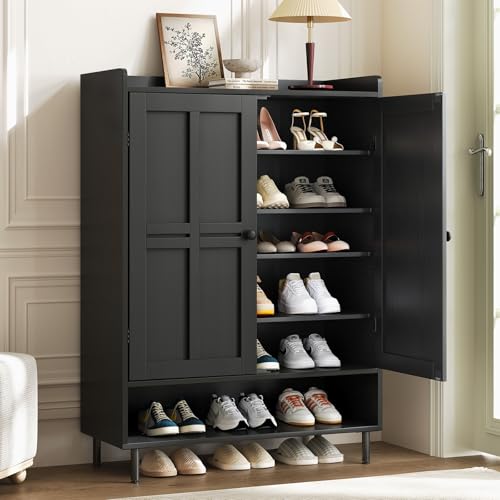
- Stores approximately 18 to 24 pairs
- Five hidden shelves plus two open shelves
- Three adjustable shelves and adjustable feet
Best For: Entryways needing concealed and quick-access storage
Best Space-Saving Pick

- Six adjustable tiers for family shoe storage
- Sliding doors suit narrow entryways
- Includes adjustable feet and wall anchors
Best For: Families needing flexible storage in a narrow entryway
Best High-Capacity Pick

- Eight tiers hold up to 32 pairs
- Acrylic doors keep shoes visible and dust-protected
- Adjustable panels and sturdy E0 MDF construction
Best For: Large shoe collections needing vertical storage
Best Decorative Pick
Walnut Fluted-Door Shoe Cabinet

- Textured fluted doors with a walnut finish
- Five adjustable tiers hold about 20–25 pairs
- Bottom clearance accommodates a robot vacuum
Best For: Stylish concealed storage for modern or mid-century interiors
Best Overall – White Cross-Molding Shoe Cabinet
If you want shoe cabinets with doors that combine substantial storage with a furniture-style look, this white cross-molding cabinet is a strong option. Its six-level layout includes five concealed shelves and one open shelf, with three adjustable shelves for accommodating different footwear heights.
Best For: Entryways needing organized storage for approximately 18–24 pairs of shoes, including boots and high heels.
Pros:
- Six-tier storage with three adjustable shelves
- Fits approximately 18–24 pairs and larger footwear
- Metal legs include adjustable feet to help protect floors
- White cross-molding doors offer a classic-modern appearance
Cons:
- At 45.3 inches tall and 68 pounds, assembly may be easier with two or three people
- The 13.8-inch depth may not suit very deep entryway spaces
This is a practical pick when capacity and enclosed organization matter most. The tall profile, adjustable storage, and sturdy engineered-wood construction make it especially useful for households with varied footwear.
Best for Large Collections – Black Three-Door Shoe Cabinet
Among shoe cabinets with doors, this black three-door model stands out for its wide storage area and approximately 30-pair capacity. Its separate door section is useful for boots and heels, while the countertop provides space for keys, wallets, plants, or décor.
Best For: Larger households that need broad shoe storage plus a convenient entryway surface.
Pros:
- Holds approximately 30 pairs, depending on shoe size
- Separate door section accommodates boots and high-top footwear
- Spacious countertop keeps daily essentials accessible
- Soft-closing hinges and five adjustable metal legs add convenience and stability
Cons:
- At 43.8 inches wide and 86.3 pounds, it requires considerable space and effort to assemble
- The 13.8-inch depth may limit storage for especially bulky footwear
This cabinet is best suited to wide hallways, entryways, or closets where maximum capacity is more important than a narrow footprint. Its black finish and cross-molding doors also add a farmhouse-inspired accent.
Best Farmhouse Style – White Barn-Door Shoe Cabinet
These shoe cabinets with doors do more than hide footwear, and this farmhouse model adds a decorative barn-door look to practical storage. Three adjustable shelves help organize flats, sneakers, and boots, while the cabinet holds 15 or more pairs in a relatively compact footprint.
Best For: Farmhouse-style entryways, hallways, and living spaces needing moderate shoe storage.
Pros:
- Three adjustable shelves support different shoe sizes
- Stores 15 or more pairs in a 27.6-inch-wide cabinet
- Barn doors, black handles, and wood legs create farmhouse appeal
- Includes a wall-anchoring device for added stability
Cons:
- Its capacity is lower than the larger multi-door options
- Particleboard construction may be less substantial than heavier cabinet materials
This is a good balance for shoppers who want enclosed shoe storage without an oversized cabinet. The adjustable interior and multi-purpose design also allow storage of bags, accessories, or everyday items.
Best for Narrow Hallways – Slim Flip-Drawer Shoe Cabinet
For tight hallways, shoe cabinets with doors need to conserve floor depth, and this flip-drawer model is only 9.45 inches deep. Two 60-degree flip doors provide quick access while helping keep shoes protected from dust and pets, and adjustable shelves accommodate different footwear.
Best For: Small entryways and narrow hallways where floor space is limited.
Pros:
- Only 9.45 inches deep for space-conscious placement
- Stores up to 16 pairs across four tiers
- Adjustable or removable shelves help fit boots and high heels
- Top fence offers a spot for keys, plants, or dog leashes
Cons:
- Capacity is lower than wider cabinets
- Flip-drawer storage may be less suitable for bulky footwear than a deep-shelf cabinet
This cabinet makes the most sense when every inch of hallway space matters. Its narrow profile, elevated bottom storage, anti-tip kit, and useful top surface provide a compact way to reduce entryway clutter.
Best for Easy Setup – IRONCK Walnut Slatted-Door Shoe Cabinet
If you want shoe cabinets with doors that combine generous capacity with mid-century style, the IRONCK cabinet is a strong option. Its six-tier layout holds approximately 24 to 35 pairs, while slatted doors promote airflow and three adjustable shelves make room for different shoe styles.
Best For: Larger households and entryways that need tall, enclosed shoe storage with a warm walnut finish.
Pros:
- Holds approximately 24 to 35 pairs of shoes.
- Three adjustable or removable shelves accommodate flats, sneakers, heels, and boots.
- Slatted doors provide airflow, and the anti-tip kit adds security.
- The top surface offers space for décor, plants, or a lamp.
Cons:
- At 42.4 inches tall and 61 pounds, it may require two people to position and assemble.
- Assembly takes approximately 40 minutes.
With its combination of capacity, adjustable storage, airflow, and sturdy wood-and-MDF construction, this is a practical choice when you want enclosed shoe organization without sacrificing a furniture-like appearance.
Best for Everyday Use – ALLSTAND 6-Tier Shoe Cabinet
For shoppers seeking shoe cabinets with doors and farmhouse character, this ALLSTAND model pairs carved doors and metal trim with flexible interior storage. Its three adjustable shelves can tilt or be removed, helping it hold up to 20 pairs across a range of shoe sizes.
Best For: Farmhouse-style entryways that need hidden shoe storage plus accessible space for keys, wallets, or bags.
Pros:
- Stores up to 20 pairs of shoes in four tiers of hidden storage.
- Three adjustable shelves can tilt or be removed for different footwear.
- Two open top compartments provide convenient everyday storage.
- Magnetic door catches, anti-tip fittings, and a sturdy MDF design support daily use.
Cons:
- Its 13.1-inch depth may offer less front-to-back room than deeper cabinets.
- The farmhouse styling may not suit minimalist or contemporary interiors.
This cabinet is a useful balance of concealed shoe storage and open-access organization. The adjustable shelf design is particularly helpful if your collection includes both low-profile shoes and taller footwear.
Best for Mixed Storage – Cross-Molding Door Shoe Cabinet
This black shoe cabinet is designed for shoppers who want shoe cabinets with doors that also provide quick-access open storage. It combines five hidden shelves with two open shelves and three adjustable shelves, accommodating approximately 18 to 24 pairs from flats to knee-high boots.
Best For: Entryways or mudrooms where you want enclosed shoe storage alongside a couple of readily accessible shelves.
Pros:
- Offers storage for approximately 18 to 24 pairs of shoes.
- Three adjustable shelves help accommodate shoes, boots, and shoeboxes.
- Two open shelves provide convenient access while the doors conceal clutter.
- Cross-molding doors, black knobs, adjustable feet, and a painted finish create a versatile look.
Cons:
- Its stated capacity is lower than the IRONCK cabinet’s.
- Assembly is recommended for two people.
The combination of hidden and open shelving makes this a flexible choice for busy entrances. Its tall, 45-inch profile adds substantial storage while the adjustable feet help it sit securely on uneven floors.
Best Space-Saving Pick – DHH Sliding-Door Shoe Cabinet
For narrow entryways, this shoe cabinet with doors combines six adjustable tiers with sliding tambour doors that do not require extra clearance to open. Its walnut mid-century design also gives you a finished surface for shoe-care supplies and other small essentials.
Best For: Families needing flexible, dust-reducing storage in a narrow entryway or hallway.
Pros:
- Six tiers provide room for seasonal family shoe storage.
- Adjustable shelves accommodate flats, heels, high-tops, and ankle boots.
- Sliding doors save floor space and operate quietly on roller tracks.
- Adjustable feet and included wall anchors support stability and safety.
Cons:
- At 60 pounds, it may take more effort to move during setup.
- Engineered-wood construction may not suit shoppers seeking solid wood.
Choose this model when door clearance is a priority. The combination of adjustable storage, enclosed organization, and a 15-inch depth makes it especially practical for tighter spaces.
Best High-Capacity Pick – Tribesigns Tall Shoe Cabinet
This tall shoe cabinet with doors is designed for shoppers who need substantial vertical storage without using much floor width. Its eight adjustable tiers can hold up to 32 pairs, while acrylic doors keep shoes visible and protected from dust.
Best For: Large shoe collections in entryways, closets, or hallways with room for a 67.5-inch-tall cabinet.
Pros:
- Eight tiers accommodate up to 32 pairs, from slippers to boots.
- Adjustable panels let you customize the interior for different footwear.
- Acrylic doors provide visibility while helping protect shoes from dust.
- E0 MDF construction, waterproof boards, and included assembly tools add practicality.
Cons:
- The 67.5-inch height may overwhelm low-ceiling rooms or compact spaces.
- At 105 pounds, assembly and placement may require two people.
- Its 13.8-inch depth may limit the fit of especially bulky footwear.
This is the strongest capacity-focused option in the group. Its narrow footprint helps preserve floor space, but measure carefully for height and plan for a substantial assembly project.
Best Decorative Pick – Walnut Fluted-Door Shoe Cabinet
For a furniture-like approach to shoe storage, this shoe cabinet with doors pairs a walnut finish with textured fluted fronts. Five adjustable tiers hold approximately 20–25 pairs, while the top surface and open bottom area provide convenient everyday storage.
Best For: Modern or mid-century homes that want concealed shoe storage with a decorative walnut finish.
Pros:
- Fluted doors add texture and a refined contemporary appearance.
- Five adjustable shelves fit shoes, bags, hats, or cleaning supplies.
- Estimated capacity of 20–25 pairs suits moderate collections.
- Bottom clearance allows a robot vacuum to pass underneath.
Cons:
- Five tiers offer less capacity than the eight-tier alternative.
- At 14.6 inches deep, it needs more floor depth than some slim cabinets.
- Engineered wood may not meet expectations for a solid-walnut cabinet.
This cabinet is a good balance of style and utility for a moderate shoe collection. Its anti-tip kit and clearly labeled assembly parts are useful additions, especially for placement in a busy hallway.
How We Picked the Best Shoe Cabinets with Doors
We focused on the features that matter most in an entryway organizer: usable capacity, door design, shelf adjustability, overall footprint, construction style, and appearance. The selection includes cabinets for small apartments, family entryways, and shoppers who want furniture-like storage rather than an exposed shoe rack.
We also considered how easily each format can accommodate different footwear. Adjustable shelves are useful for boots and athletic shoes, while flip drawers and sliding doors can make narrow spaces easier to navigate. Because tall cabinets may be top-heavy when fully loaded, shoppers should also check the product’s recommended placement and any included anti-tip hardware.
Quick Comparison
| Best For | Look For | Useful Design |
|---|---|---|
| Small entryways | Shallow depth and compact width | Flip drawers or sliding doors |
| Families | Higher capacity and multiple compartments | Six- to eight-tier cabinets |
| Mixed footwear | Adjustable shelf spacing | Removable or repositionable shelves |
| Traditional decor | Decorative paneling or wood details | Cross-molding or barn-style doors |
| Modern rooms | Clean lines and concealed storage | Slatted, fluted, or minimalist fronts |
Key Buying Factors for Shoe Cabinets with Doors
Capacity and Internal Layout
Check the stated pair capacity against the shoes your household actually owns. Capacity estimates often assume low-profile footwear, so boots and bulky sneakers may reduce the usable total. Multiple compartments can also make it easier to separate adult, children’s, or seasonal shoes.
Dimensions and Door Clearance
Measure the available wall space, baseboard clearance, and walking path before ordering. A cabinet that fits the wall may still obstruct a doorway if its doors, drawers, or flip fronts need room to open. Narrow cabinets are convenient, but tall models may offer better storage per square foot.
Shelf Adjustability and Ventilation
Adjustable shelves provide flexibility for tall shoes, while slatted or partially ventilated doors can help reduce trapped odors. If the cabinet has solid doors, allow footwear to dry before storing it and avoid packing shelves too tightly.
Materials, Stability, and Maintenance
Look for a finish that can handle dirt and occasional wiping. Wood-look panels, engineered wood, and metal components each offer different trade-offs in weight and appearance. Tall or heavily loaded cabinets should be secured to the wall when the manufacturer recommends it.
Who Should Buy Which Shoe Cabinets with Doors?
Choose a slim flip-drawer or sliding-door model if floor space is limited. Families and larger households should prioritize six- or eight-tier cabinets with clearly separated compartments. Adjustable-shelf designs are the most versatile choice for mixed footwear, while cross-molding, barn-door, or fluted fronts work well when the cabinet needs to complement existing furniture. If appearance is your top priority, select a concealed-storage model with a finish that coordinates with your entryway rather than treating capacity as the only measure of value.