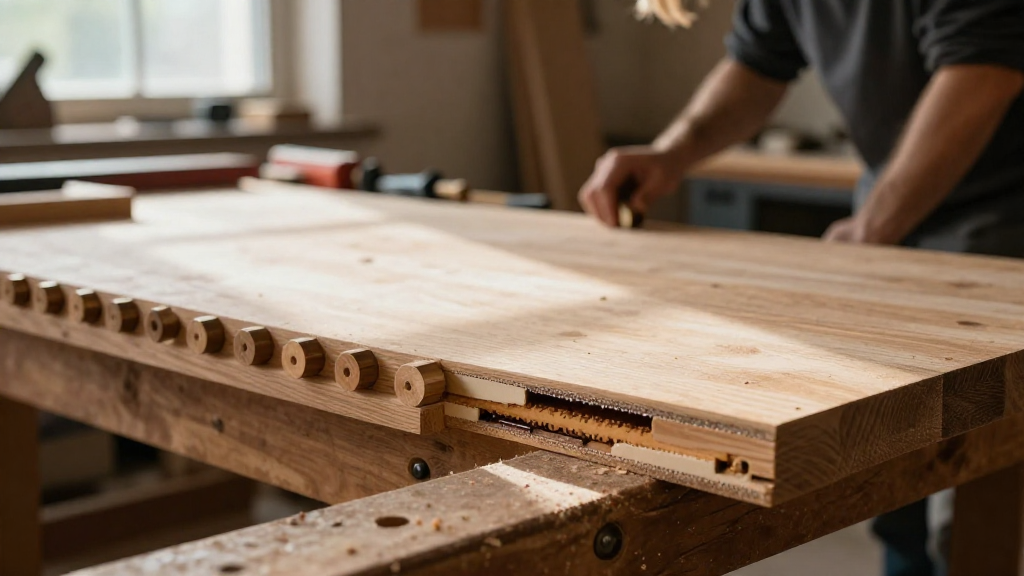
When it comes to woodworking, understanding the nuances of joinery is crucial for creating strong and durable furniture. In this article, we’ll explore dowel joinery vs biscuit joinery, highlighting the pros and cons of each method to help you make an informed decision for your next project.
What is Dowel Joinery?
Dowel joinery involves the use of cylindrical wooden pegs, or dowels, to connect two pieces of wood together.
This method creates a strong, solid joint by inserting dowels into corresponding holes in the two pieces of wood.
How Do You Use Dowel Joinery?
- Drill Holes: Mark and drill holes in each piece of wood where you want the dowels to go.
- Insert Dowels: Apply wood glue to the dowels and insert them into one piece of wood.
- Align and Clamp: Align the second piece of wood and press it against the dowels, using clamps to hold it in place until the glue dries.
Pros of Dowel Joinery:
- Strength: Dowel joints can provide excellent strength when done correctly.
- Flexibility: Dowels can be used in a wide variety of applications, such as cabinet assembly and furniture making.
- Aesthetics: Doweled joints can be hidden easily, leading to a clean and polished look.
- Durability: Well-executed dowel joints can withstand significant weight and pressure.
Cons of Dowel Joinery:
- Precision Required: Accurate drilling is essential, as misaligned holes can lead to weak joints.
- Time-Consuming: This method can take more time due to the need for precise measurements and drilling.
- Materials: Dowels require more hardwood than some other joinery methods, potentially increasing costs.
What is Biscuit Joinery?
Biscuit joinery is a technique that employs thin, oval-shaped wooden pieces, known as biscuits, to connect two pieces of wood.
The process involves cutting matching slots in both pieces and inserting the biscuit, which expands when glue is applied.
How Do You Use Biscuit Joinery?
- Cut Slots: Use a biscuit joiner to cut matching holes in the wood pieces at the appropriate locations.
- Add Glue: Apply wood glue to the slots and the biscuit.
- Insert and Clamp: Insert the biscuit, bring the two pieces together, and clamp until dry.
Pros of Biscuit Joinery:
- Ease of Use: Biscuit joiners make it relatively simple to create strong joints without needing extensive skills.
- Alignment: The biscuits help align the pieces accurately during assembly.
- Speed: Biscuit joinery can generally be completed faster than dowel joinery, especially for larger projects.
- Versatility: Great for edge joining boards as well as making frame joints.
Cons of Biscuit Joinery:
- Potential Weakness: While biscuits do provide strength, they may not be as sturdy as dowel joints in certain applications.
- Limited Aesthetic Appeal: The presence of biscuits may be visible if not placed carefully.
- Requires Special Tools: A biscuit joiner is necessary, which can be an added expense.
Dowel Joinery vs Biscuit Joinery: Which is Stronger?
When comparing dowel joinery vs biscuit joinery, strength is a crucial factor.
Dowel joints often outperform biscuit joints in terms of load-bearing capacity.
Why Dowels May Be Stronger:
- Direct Connection: Dowel joinery uses long pegs that create a direct connection between the two pieces of wood.
- Greater Surface Area: The surface area between the dowel and the joint can lead to better glue adhesion, particularly in larger joints.
When Biscuit Joinery Suffices:
- Lightweight Projects: For light-duty applications, such as bookcases or small tables, biscuits may provide sufficient strength.
- Ease of Assembly: The simplicity of biscuit joinery can often outweigh the benefits of strength, particularly for beginners.
Dowel Joinery vs Biscuit Joinery: Which Is Easier to Work With?
In the debate of dowel joinery vs biscuit joinery, ease of use is an essential consideration.
Generally, biscuit joinery is easier for most woodworkers, particularly novices.
Pros of Ease in Biscuit Joinery:
- Less Precision Needed: Biscuit joiners offer a guide, making it easier to cut slots accurately.
- Quick Setup: The process can be completed faster, especially in assembling larger panels.
Dowel Drawbacks:
- Must Be Precise: Doweling requires careful drilling and alignment to ensure strength and aesthetics.
- More Time-Consuming: The necessity of measuring, drilling, and gluing can extend project timelines.
Dowel Joinery vs Biscuit Joinery: Which Is More Cost-Effective?
Cost is always a consideration in woodworking, and both methods come with their own financial implications.
Analyzing Costs:
- Dowel Joinery: Besides the wood cost, you may also need a doweling jigs which can be affordable or pricey, depending on the quality.
- Biscuit Joinery: The main expense is the biscuit joiner, but this tool can be worth it for those frequently using this method.
Overhead Costs:
- Material Cost: Dowel joinery requires a solid piece of wood for dowels, which can make it slightly more costly.
- Specialized Tools: While biscuits may cost less in terms of materials, the need for a biscuit joiner adds to the initial setup cost.
Conclusion: Which Method Should You Choose?
Ultimately, the choice between dowel joinery vs biscuit joinery may come down to the specifics of your project.
Consider factors such as strength, ease of use, and cost-effectiveness.
Key Takeaways:
- Use dowel joinery for projects requiring high strength and durability.
- Opt for biscuit joinery when simplicity and speed are a priority, especially for smaller, lightweight projects.
Regardless of your choice, both joinery methods can lead to beautifully crafted pieces if executed correctly. Happy woodworking!