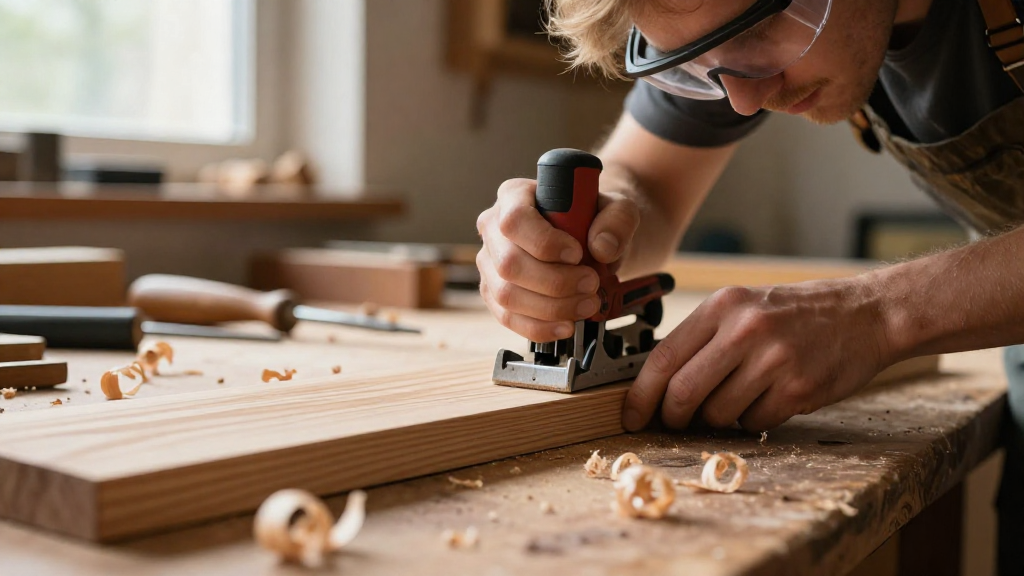
Learning how to chamfer wood edges is an essential skill for any woodworking enthusiast.
Chamfering adds a professional touch to your projects by removing the sharp, 90-degree corners from your wood pieces. This technique not only enhances the appearance but also helps to prevent chipping and splintering.
What Does Chamfering Mean in Woodworking?
Chamfering refers to the process of cutting or shaping the edge of a piece of wood to create a bevel, which can be at various angles.
Why Should You Chamfer Wood Edges?
-
Aesthetic Appeal:
– A chamfered edge adds elegance to furniture and cabinetry.
– It makes joints less noticeable, contributing to a cleaner look. -
Safety:
– Removing sharp corners reduces the risk of cuts and injuries.
– It helps to prevent splinters during handling. -
Durability:
– Chamfered edges are less prone to chipping.
– They often lead to better glue joints, particularly for mitred corners.
Understanding these benefits can motivate woodworkers to master how to chamfer wood edges effectively.
What Tools Do You Need to Chamfer Wood Edges?
When you’re ready to learn how to chamfer wood edges, you have options for tools. Here are the most common tools used:
- Hand Plane or Chisel: Ideal for traditional woodworking techniques.
- Router with Chamfer Bit: Provides quick and uniform results.
- Block Plane: Offers control and precision for smaller projects.
- File or Sandpaper: Useful for smoothing out edges after chamfering.
How to Chamfer Wood Edges by Hand: Step-by-Step Guide
Using hand tools is a rewarding way to learn how to chamfer wood edges. Here’s a concise guide:
Step 1: Prepare Your Material
- Begin with a well-planed, smooth piece of wood.
- Select the desired angle for the chamfer, typically 30 to 45 degrees.
Step 2: Mark the Chamfer Line
- Use a pencil and square to draw straight lines where you want the chamfer.
- Ensure that the lines are consistent on both edges of the wood.
Step 3: Start Profiling with a Hand Plane
- Set your plane to a light cut to start.
- Align the plane with your marked line and apply consistent pressure.
- Work slowly to maintain control and avoid tear-out.
Step 4: Refine with a Chisel
- Use the chisel for any edges that may need a more precise shape.
- Position the chisel at the line, keeping the blade sharp for clean cuts.
Step 5: Smooth the Edge
- Finish by using sandpaper (starting with 120-grit) to smooth out the chamfered edge.
- Gradually move to finer grits (220 and up) for a polished look.
How to Chamfer Wood Edges Using a Router: A Quick Overview
Using a router is an efficient way to learn how to chamfer wood edges quickly. Here’s how it’s done:
Step 1: Gather Your Tools
- Router with a chamfer bit of your desired angle (usually 1/4″ or 1/2″).
- Clamps to secure your wood piece.
- Safety Gear: Always wear safety glasses and hearing protection.
Step 2: Setting Up the Router
- Attach the chamfer bit and set the depth according to your preferred chamfer size.
- Adjust the router’s speed. For wood, a slower speed is often more appropriate.
Step 3: Secure the Wood
- Use clamps to hold the wood securely on your workbench to prevent movement during routing.
- Make sure your work surface is flat.
Step 4: Route the Edge
- Start at one end of the board and move steadily along the edge, keeping the router flat.
- Keep your movements smooth and controlled. Avoid stopping in one place to prevent uneven chamfers.
Step 5: Clean Up
- After routing, check for any rough edges or splinters.
- Sand the chamfer lightly with a fine-grit paper for a smoother finish if required.
Tips and Tricks for Successful Chamfering
To perfect your skills in how to chamfer wood edges, consider these additional tips:
-
Practice on Scrap Wood: Before tackling your main project, practice chamfering on scrap pieces to gain confidence.
-
Consistent Pressure: Maintain even pressure when using hand tools or routers to avoid mistakes.
-
Angle Consistency: Use a protractor or angle finder to ensure your chamfer remains consistent throughout the project.
-
Test Cuts: If you’re unsure about the router depth or angle, make test cuts to see how it turns out before proceeding with the final piece.
Common Mistakes to Avoid
While learning how to chamfer wood edges, it’s easy to make mistakes. Be aware of these pitfalls:
-
Inconsistent Angle: Failing to maintain a consistent angle can result in uneven edges.
-
Skipping Safety Gear: Always prioritize safety, as routers can be dangerous if not handled properly.
-
Not Securing Your Work: Ensure the wood is secured before starting; otherwise, it can lead to inaccuracies or accidents.
Conclusion
Now that you know how to chamfer wood edges, you can tackle various woodworking projects with confidence.
Whether you choose to use hand tools or a router, chamfering edges can significantly improve the aesthetics and functionality of your work.
With practice and the right techniques, you can achieve beautifully chamfered edges that showcase your woodworking skills and attention to detail. So grab your tools, and start enhancing your woodwork today!