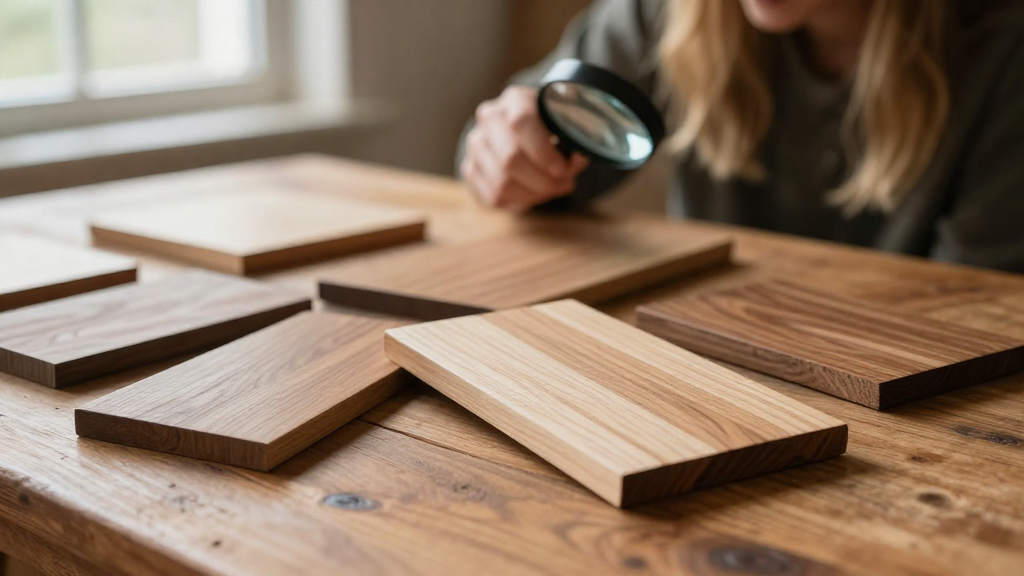
Knowing how to identify wood types can enhance your woodworking projects, improve your home improvement skills, or simply deepen your appreciation for the natural world.
But with so many varieties available, how can you distinguish one from another?
In this article, we will break down some effective techniques and simple tips to help you identify the most common types of wood.
What Are the Characteristics of Different Wood Types?
Different wood types exhibit unique characteristics that can be categorized into three main areas: appearance, texture, and scent.
Appearance
- Color: Wood types come in a variety of hues, ranging from light blonde tones to deep, rich browns.
- Grain Pattern: Look for specific grain patterns, which can be straight, wavy, or curly.
- Knots: Some woods have pronounced knots, which can affect appearance and strength.
Texture
- Smooth vs. Rough: Some woods are naturally smooth, while others may have a rougher texture that requires finishing.
- Density: Denser woods tend to feel heavier and more robust.
Scent
- Natural Aromas: Different woods have distinctive scents. For instance, cedar has a rich, earthy smell, while maple is often sweet.
By closely examining these characteristics, you can begin to differentiate between common types of wood.
How to Identify Wood Types Using Visuals?
Using visuals is one of the most effective ways to identify different wood types.
1. Use a Wood Identification Chart
A wood identification chart displays various types of wood along with their distinct characteristics.
These charts often include:
- Photographic examples: Showing the grain and color of different woods.
- Information on uses: Helping you recognize where each type is commonly found.
You can find many wood identification charts online or in woodworking books.
2. Observe the Grain Patterns
Grain patterns can be an important clue in how to identify wood types. Here are some common patterns:
- Oak: Prominent rays and open pores with a wavy appearance.
- Pine: Straight, uniform grain often with knots.
- Cherry: Fine, straight grain with a smooth texture and a reddish hue.
3. Check the Color
Each wood type has a unique color profile. Here are some examples:
- Maple: Light cream to pale yellow.
- Walnut: Dark brown with purplish tones.
- Teak: Golden to dark brown with a slightly oily sheen.
By familiarizing yourself with these color signatures, you’ll become more adept at identifying wood types at a glance.
What Tools Can Help You Identify Wood Types?
With the right tools in your toolbox, identifying wood can become a straightforward task.
1. Hand Lens
A hand lens magnifies the wood’s grain structure, allowing you to examine the details more closely.
Look for:
- Earlywood vs. Latewood: This refers to the growth rings that can help you identify the species.
2. Moisture Meter
A moisture meter helps determine the moisture content of wood.
Different wood types have varying moisture levels.
Typically, softwoods have a higher moisture percentage compared to hardwoods when freshly cut.
3. Wood Identification Apps
Several apps allow you to take a picture of the wood and suggest potential species based on its appearance.
- Wood Database: A web resource that provides extensive information on various types of wood.
- Wood Finder: An app that allows you to identify wood varieties by uploading photos.
How Do You Test the Hardness of Wood?
Evaluating the hardness of wood can give vital clues on how to identify wood types.
1. The Janka Hardness Test
The Janka hardness test measures the resistance of different wood species to denting and wear.
If you’re trying to identify wood, you can perform this testing method:
- Inspect the denting: Softer woods like pine will show more denting than harder options like hickory.
- Compare textures: Rub a fingernail against the wood; a softer surface will scratch more easily.
2. Scratch Test
Simply running your fingernail or a small knife across the wood can reveal how soft or hard the wood is.
- Softwoods (like cedar) will scratch easily.
- Hardwoods (like oak) will resist scratches.
Understanding hardness can help narrow down your options when determining how to identify wood types.
How Can You Learn More About Wood Identification?
If you’re passionate about woodworking or simply want to improve your skills in how to identify wood types, continuous learning is essential.
1. Read Books on Wood Identification
Books like “Identifying Wood” by Bruce Hoadley and “Wood: A Handbook for Woodworkers” by Bruce Hoadley offer in-depth insights into wood characteristics.
2. Join Woodworking Classes
Taking classes can provide hands-on experience and teach you to identify wood types more effectively.
Many woodworking schools offer courses that include wood identification.
3. Engage with Online Forums
Join woodworking forums and discussion groups where you can share experiences, ask questions, and learn from seasoned woodworkers.
- Facebook Groups: Look for groups that focus on woodworking.
- Reddit: Subreddits like r/woodworking can be incredibly helpful.
Conclusion
Learning how to identify wood types is a valuable skill that can significantly benefit your woodworking or DIY projects.
By understanding the distinctive characteristics of wood—such as appearance, texture, and scent—you can become more confident in identifying various wood types.
Use a combination of visual tools, testing methods, and continuous learning to deepen your knowledge and appreciation of wood.
With practice, you will soon be able to recognize different wood types effortlessly, making your woodworking endeavors even more enjoyable.
So the next time you come across a piece of wood, let this guide help you identify its type accurately!