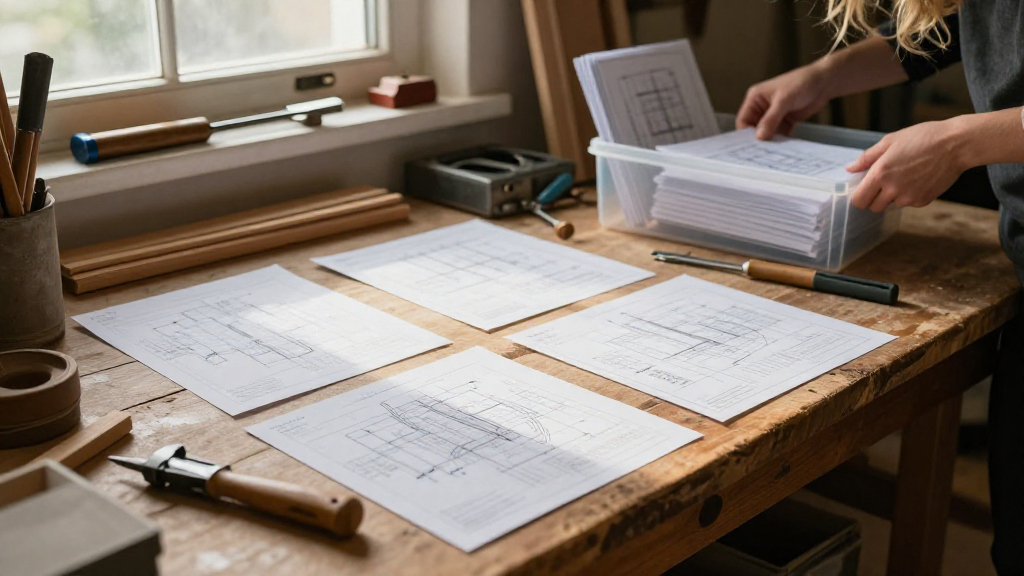
Are you looking to learn how to organize printed woodworking plans?
You’re not alone. Many woodworking enthusiasts find themselves with stacks of plans that can quickly become unmanageable.
Whether you’re a hobbyist or a seasoned woodworker, having an efficient system for organizing your printed woodworking plans is essential for maximizing your productivity and creativity.
In this guide, we will cover several strategies to help you keep your woodworking plans in order, so you can easily find the plans you need when inspiration strikes.
Why Should You Organize Your Woodworking Plans?
Having printed woodworking plans scattered around your workspace can lead to chaos.
Here’s why it’s important to organize them properly:
- Efficiency: Easily locate the plans you need saves time, allowing you to focus on your woodworking projects instead of searching for documents.
- Preservation: Proper storage helps prevent damage from dust, moisture, or physical wear and tear, ensuring your plans last for years.
- Inspiration: An organized collection allows you to quickly review your options, making it easier to select your next project.
By understanding how to organize printed woodworking plans, you can transform your workspace into a well-oiled tool for creativity.
How Can You Categorize Your Woodworking Plans?
The first step in learning how to organize printed woodworking plans is categorization.
Here are some popular ways to categorize your plans:
- Project Type: Group plans by the type of project, such as furniture, cabinets, small crafts, or outdoor projects.
- Skill Level: Separate plans by complexity—beginner, intermediate, and advanced—so you know which to tackle next.
- Wood Species: If you have a preference for certain types of wood, organize plans based on the material used.
- Dimensions: Organizing plans by common sizes can help streamline your project planning and material selection.
- Seasonal Projects: For woodworkers who tackle specific projects based on the season, organizing plans by the time of year can be helpful.
Choosing a categorization method that resonates with you is a crucial part of learning how to organize printed woodworking plans.
What Storage Solutions Work Best for Woodworking Plans?
Once you’ve categorized your plans, it’s time to consider storage solutions.
Here are some effective options for storing your printed woodworking plans:
- Binders:
- Pros: Easy to flip through, can be categorized with dividers.
- Cons: Limited space, can become bulky if overfilled.
- Filing Cabinets:
- Pros: Ample space for numerous plans, easy to label and access.
- Cons: May take up significant floor space, requiring larger work areas.
- Folders:
- Pros: Compact, portable, can easily fit in drawers or on shelves.
- Cons: Less organized compared to binders, requires discipline to maintain.
- Magazine Holders:
- Pros: Perfect for oversized plans, easy visual access.
- Cons: May not adequately protect plans from dust or tearing.
- Digital Storage:
- Pros: No physical space required, easy to back up and share.
- Cons: Requires scanning physical plans, may involve familiarity with technology.
Investing in the right storage solution will further enhance your understanding of how to organize printed woodworking plans.
How Can You Protect Your Plans from Damage?
Even the best-organized plans can fall victim to damage if not properly stored.
Consider these protective measures:
- Laminating: Consider laminating your most-used plans to add a layer of durability.
- Sheet Protectors: Use plastic sheet protectors in binders to shield paper from moisture and handling damage.
- Climate Control: If possible, store plans in a climate-controlled environment to prevent issues related to humidity and temperature changes.
- Avoid Staples: Instead of stapling papers together, use paper clips or binder clips—staples can create damage when removed.
Being aware of these protective measures is essential along your journey of learning how to organize printed woodworking plans.
What Tools Can Help You Stay Organized?
Utilizing the right tools can drastically simplify the process of organizing and storing your plans.
Here is a list of helpful tools to consider:
-
Label Maker: Clearly label sections of binders, folders, or filing drawers for easy identification.
-
Index Cards: Create quick-reference cards for larger plans, providing an overview of the project details without needing to pull out the entire plan.
-
Digital Scanning Apps: Scan your printed plans to create digital backups, helping to ensure you never lose your favorites.
-
Spreadsheet Software: Use spreadsheet tools to catalog your plans, including project type, skill level, and estimated duration.
-
Mobile Apps: Look for organization-focused mobile apps specifically designed for woodworking enthusiasts.
By incorporating these tools, you can greatly enhance how you organize printed woodworking plans.
How Can You Stay Consistent in Maintaining Organization?
Creating an organization system is just the beginning.
To make sure it continues to work for you, consider the following methods:
-
Regular Reviews: Schedule time, like once a month, to review your plans and assess your organization. Consider removing outdated plans.
-
New Projects: Whenever you acquire new plans, immediately categorize and store them to maintain your system.
-
Incorporate Feedback: If you find a certain method isn’t working, be flexible in changing your approach.
-
Teach Others: Sharing your organizational system with fellow woodworkers can reinforce your own habits and encourage consistent maintenance.
By regularly committing to a routine, you will master how to organize printed woodworking plans efficiently.
Conclusion
Learning how to organize printed woodworking plans is not just about tidiness; it enhances your woodworking experience and creativity.
By following the steps outlined in this article, from categorizing your plans and choosing the right storage solutions to implementing protective measures and maintaining consistency, you’ll create an organized system that works for you.
With an efficient setup, you’ll spend less time searching for plans and more time crafting incredible woodworking pieces.
So grab those printed plans and start transforming your workspace today!