If you’re wondering how to square wood edges, you’ve come to the right place.
In this article, we’ll guide you through various techniques to achieve perfectly squared wood edges using simple hand tools. Whether you’re working on a small DIY project or preparing materials for a larger build, being able to square wood edges accurately is essential for precision and quality craftsmanship.
Why is Squaring Wood Edges Important?
When learning how to square wood edges, understanding why it’s important can enhance your skills.
- Precision in Projects: Squared edges ensure that joints fit together flawlessly.
- Aesthetics: Square edges contribute to the visual appeal of your woodworking projects.
- Functionality: Properly squared edges help with the stability and durability of the finished product.
What Tools Do You Need to Square Edges?
To master how to square wood edges, you will need a few essential hand tools:
- Square: A framing square or a combination square is ideal.
- Hand Saw: A quality hand saw helps you cut wood accurately.
- Chisel: Useful for fine-tuning edges.
- Block Plane: Great for smoothing out and refining edges.
- Wood File or Rasp: For final adjustments and removing small imperfections.
- Tape Measure: To ensure accurate measurements.
How Do You Start Squaring Wood Edges?
Starting the process is key when learning how to square wood edges.
-
Prepare Your Workspace: Make sure that you have a clean and flat workspace to avoid any inaccuracies.
-
Measure the Wood: Using your tape measure, mark the edges of the wood where you want the squared edge to be.
-
Align the Square: Place your square against the edge of the wood to establish a straight line.
-
Draw a Line: With a sharp pencil, draw a line along the square to serve as your cutting guideline.
How to Cut the Wood Edges?
Now that you have your wood marked, it’s time to cut the edges efficiently.
-
Use Your Hand Saw:
– Position your hand saw against the pencil line.
– Start cutting slowly, maintaining a steady hand to ensure following the line closely. -
Check Your Progress: After making your initial cut, use the square again to check if the edge is properly squared.
– If not, you’ll need to make additional adjustments as needed.
How to Refine Edges with a Plane?
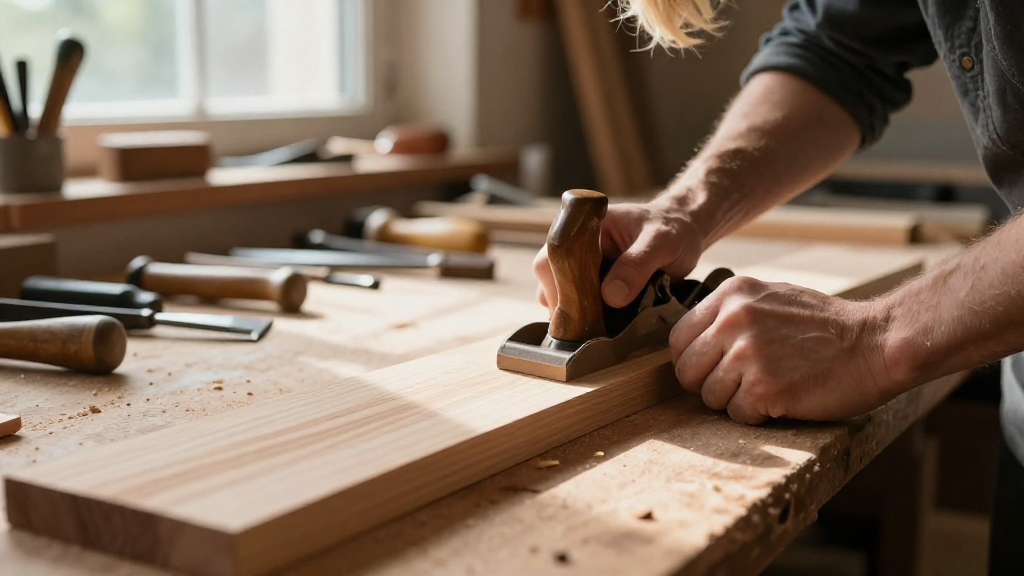
After cutting, your edges might still need some refining. Here’s how to utilize a block plane in your process of how to square wood edges.
-
Adjust the Plane: Make sure the blade of your block plane is sharp and adjusted to the right depth.
-
Plane the Edge:
– Begin at one end and work your way down the edge.
– Use long, consistent strokes to avoid creating bumps or unevenness. -
Check Frequently: Regularly check your work with a square to ensure that you are maintaining that square edge.
What Should You Do About Imperfections?
It’s common to encounter minor imperfections along your edges when trying to square wood.
How to Use a Chisel?
If your edges are not entirely smooth, here’s how a chisel can help:
-
Position the Chisel: Align it with the edge where you see any unevenness.
-
Make Controlled Cuts:
– Gently tap the chisel with a mallet to remove small amounts of material.
– Always work away from your body for safety.
How to Use a File or Rasp?
After chiseling, you might still need to smooth the edges even further.
-
Select the Right Tool: A wood file or rasp can help in this respect.
-
Lightly File the Edge:
– Use gentle strokes to avoid removing too much material.
– Regularly check for squareness and smoothness.
How Can You Ensure Perfect Squaring?
Once you have squared your wood edges, it’s essential to ensure that they remain as precise as possible.
-
Double-Check with a Square: Regularly measure your work with a square throughout the process.
-
Use a Straight Edge: If you are creating multiple pieces, continually compare them to a straight edge or a known square reference.
-
Finishing Touches: Sand the edges lightly to remove any remaining tool marks or imperfections, rounding corners slightly if needed for aesthetics and safety.
Conclusion: Mastering the Technique of Squaring Wood Edges
Knowing how to square wood edges is a vital skill for any woodworker.
From the tools you need to the techniques involved in achieving that perfect square edge, mastering this craft enhances both the quality of your work and your overall woodworking skills.
With practice, patience, and the right approach, you’ll be able to create beautifully squared wood edges that will elevate any woodworking project you undertake.
Whether you are a novice or a seasoned craftsman, applying these techniques will ensure that you can consistently achieve the precision needed for your woodworking endeavors.
So grab your hand tools, prepare your workspace, and start sharpening those skills!