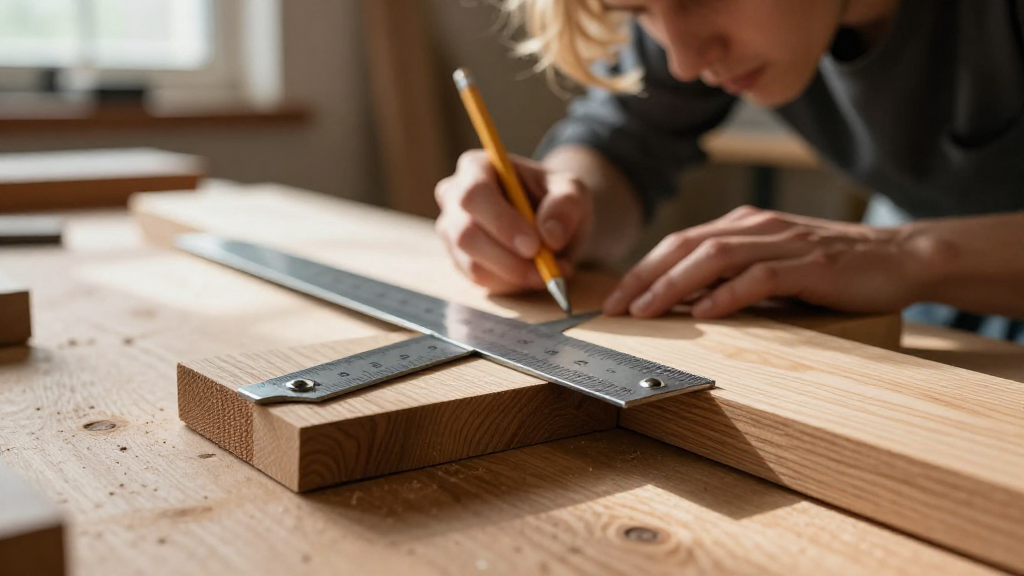
Knowing how to use a combination square can significantly enhance your woodworking skills.
This versatile tool is essential for measuring, marking, and ensuring square cuts in your projects.
What is a Combination Square?
A combination square is a multi-functional tool used in woodworking to measure angles, mark straight lines, and check squareness.
It typically consists of a ruler, a fixed head, and a movable arm that can be adjusted to measure various angles.
With its accuracy and flexibility, this tool is indispensable for both beginners and seasoned woodworkers.
Why Should You Use a Combination Square?
Here are some reasons why mastering how to use a combination square is vital for woodworking:
- Precision Measurement: Ensures accurate measurements every time.
- Versatile Functionality: Can be used for various tasks, such as measuring depth, angles, and marking lines.
- Durability: Usually made of high-quality materials that can withstand wear and tear.
- Easy to Use: Simple design makes it accessible for woodworkers of all skill levels.
How Do You Use a Combination Square?
Understanding how to use a combination square effectively involves mastering several techniques.
Here’s a step-by-step guide on how to use this valuable tool in woodworking.
1. Measuring Length and Width
To measure the length or width of your material:
- Place the ruler’s end against the edge of the wood.
- Align the movable arm to mark the measurement on your wood.
- Use a pencil or marking tool to make a precise mark.
2. Checking for Square
To ensure your cuts are square:
- Position the combination square’s ruler against one piece of wood.
- Align the fixed head with the edge of the perpendicular piece.
- If both edges line up perfectly, your cut is square.
3. Marking Angles
To mark a specific angle:
- Loosen the locking mechanism on the movable arm.
- Set the arm to the desired angle.
- Hold the combination square in place and draw your line along the ruler.
4. Depth Measurement
For measuring depth:
- Insert the fixed head of the combination square into a notch or recess.
- Slide the ruler down until it reaches the bottom of the notch.
- Use the scale on the ruler to determine the depth.
5. Marking Dadoes and Grooves
To mark precise lines for dadoes or grooves:
- Set your combination square to the width of the desired cut.
- Firmly press it against the edge of the board.
- Draw a line on both sides for accuracy.
What are the Common Mistakes to Avoid?
When learning how to use a combination square, avoiding common mistakes can save you time and frustration:
- Aligning Incorrectly: Always ensure the ruler is snug against the wood.
- Over-tightening: When securing the movable arm, don’t over-tighten as it may damage the square.
- Inaccurate Measurements: Double-check measurements before cutting to avoid waste.
How to Maintain Your Combination Square?
Taking care of your combination square will ensure longevity and accuracy.
Here are some maintenance tips:
- Keep it Clean: Wipe the ruler and head with a soft cloth to remove dirt and debris.
- Store Properly: Store the combination square in a dry, flat place to prevent warping.
- Regular Calibration: Check for squareness by placing the square against a known straight edge.
- Avoid Dropping: Handle with care to maintain its integrity.
When Is the Best Time to Use a Combination Square?
Using a combination square is suitable for various tasks in woodworking. Here are some scenarios:
- Cutting Boards: Ensuring edges are square before cutting.
- Joinery: Creating accurate cuts for joints.
- Layout Work: Marking out lines on materials.
- Framing Projects: Assembling wooden frames with precision.
Conclusion
Mastering how to use a combination square is fundamental for any woodworker.
This tool aids in achieving accuracy in measurement and marking, ensuring that your wood projects turn out well.
Whether you are marking lines, checking squareness, or measuring angles, a combination square can make a significant difference in your woodworking quality.
Final Tips
- Practice: Get comfortable with your combination square by practicing on scrap wood.
- Stay Organized: Keep your tools in good condition and easily accessible.
- Utilize Resources: Consider woodworking tutorials and videos for visual guidance.
With every project, the more you incorporate your combination square, the more skilled you will become.
Armed with this knowledge, you are now ready to enhance your woodworking craftsmanship with precision and confidence!