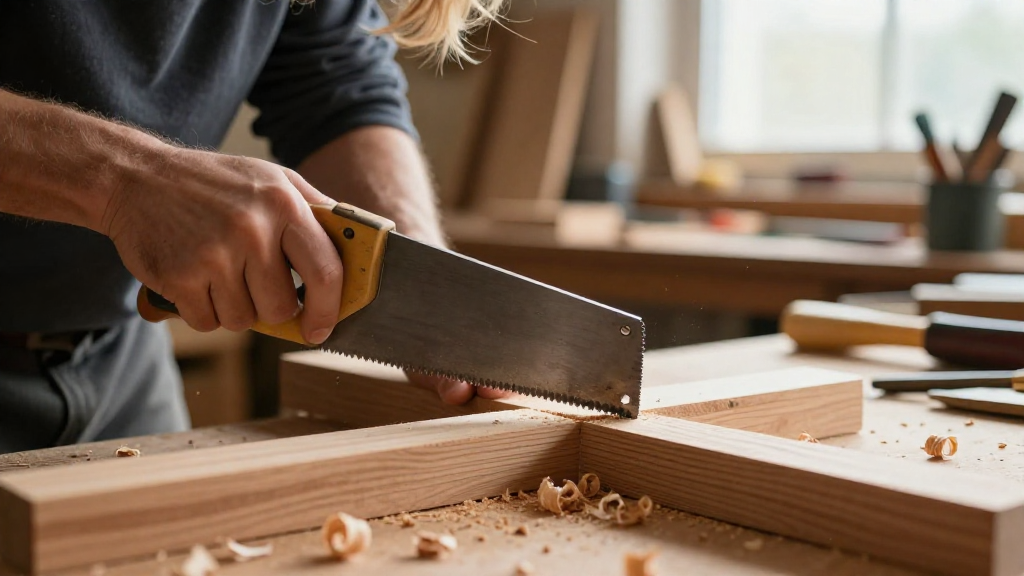
Understanding how to use a dovetail saw is crucial for woodworkers who seek precision and aesthetics in their projects.
The dovetail saw is a specialized hand saw designed to make fine cuts for joinery, and mastering this tool can elevate your craftsmanship significantly.
What is a Dovetail Saw?
A dovetail saw is characterized by its thin blade and fine teeth, typically measuring between 14-20 teeth per inch.
It is often used to create the precise angled cuts required for dovetail joints, which are popular in furniture making and cabinetry.
The saw is lightweight, allowing for maneuverability and control essential for detailed work.
What Are the Features of a Dovetail Saw?
When learning how to use a dovetail saw, it’s important to understand its features:
-
Blade Width: Narrow blades minimize the kerf width, resulting in less material waste and cleaner joints.
-
Tooth Design: The fine, cross-cut teeth are designed for smooth, clean cuts.
-
Handle: Typically, a dovetail saw features a closed handle that provides a secure grip and better control.
Why Should You Use a Dovetail Saw?
Using a dovetail saw offers several advantages:
- Precision: Designed for tight corners and intricate angles, it ensures accurate cuts.
- Clean Cuts: The fine teeth produce smooth surfaces which require less sanding.
- Versatility: Not only useful for dovetails, it can also tackle other joinery tasks.
How to Use a Dovetail Saw: Step-by-Step Guide
Now that you understand the basics, let’s dive into how to use a dovetail saw effectively to achieve precise joints.
1. Gather Your Tools and Materials
- Dovetail Saw
- Wood: The workpiece you’ll be cutting.
- Square: To ensure your lines are straight.
- Pencil: For marking.
- Clamps: To secure the wood during cutting.
- Ruler: For accurate measurements.
2. Mark Your Cutting Lines
When considering how to use a dovetail saw, precise marking is the foundation of successful execution.
-
Measure: Use the ruler to find the dimensions you desire for the joint.
-
Draw Lines: Using your square and pencil, draw clear and visible lines where you need to cut.
3. Secure Your Workpiece
It’s vital to ensure the wood does not move while cutting. Here’s how:
-
Clamping: Use clamps to hold the workpiece securely on a stable surface.
-
Position: Ensure that you can comfortably reach the marks you’ve made.
4. Position the Dovetail Saw
The way you hold and position the saw will affect your cuts.
-
Grip: Hold the handle firmly, but not too tightly, ensuring a relaxed control.
-
Angle: Position the blade at a 90-degree angle to your workpiece for crosscuts and at the marked angle for dovetails.
5. Start Cutting
Now, let’s discuss the actual cutting process:
-
Make a Starter Cut: Before you begin the main cut, create a small notch at the starting point to guide the saw.
-
Cut Smoothly: Use long, fluid strokes.
-
Apply Light Pressure: Let the saw do the work; too much pressure may lead to jagged cuts.
6. Finish Up the Cuts
Completing how to use a dovetail saw means ensuring your cuts are fully clean and precise.
-
Check Alignment: Frequently check your cuts against your marked lines to ensure accuracy.
-
Final Touches: If necessary, clean up any rough edges with sandpaper.
Additional Tips for Using a Dovetail Saw
-
Practice Makes Perfect: If you’re new to this tool, practice on scrap wood before moving to your project.
-
Maintain Your Saw: Regularly clean and inspect your saw for any damages. Keeping it sharp will yield the best results.
-
Mind Your Safety: Always cut away from your body and keep your fingers clear of the blade’s path.
-
Stay Patient: Good joints take time. Rushing can lead to mistakes that compromise the quality of your work.
Conclusion
By understanding how to use a dovetail saw, you’re already on the path to mastering an essential woodworking skill.
Taking the time to learn and apply these techniques will help you create intricate joints that are not only functional but also visually appealing.
With practice, you’ll find that using a dovetail saw becomes second nature, allowing you to tackle more complex projects and showcase your craft to others.
Now that you’re equipped with this knowledge, gather your tools and start making precise joints that elevate your woodworking endeavors!