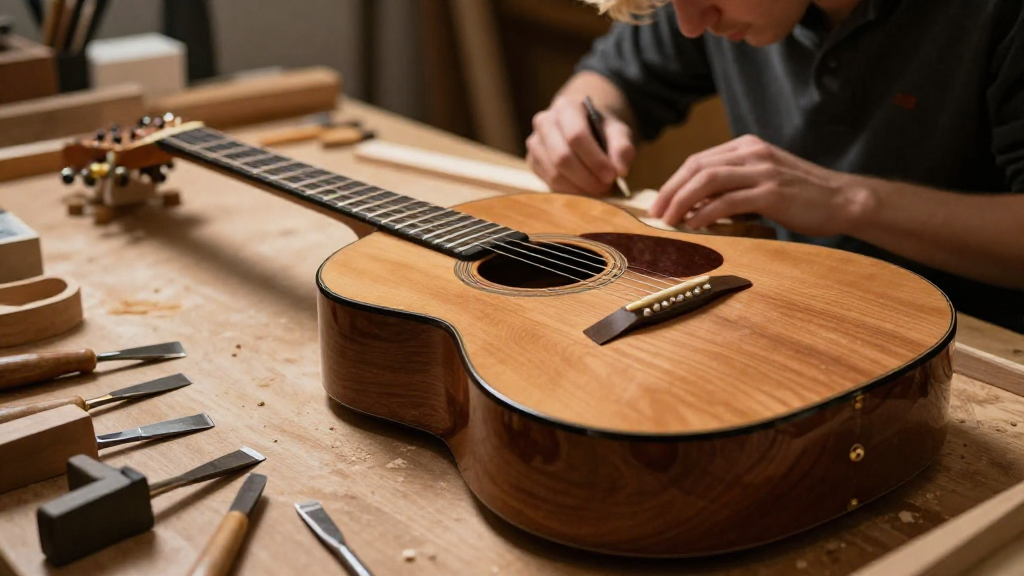
Making a wooden guitar can be a rewarding and fulfilling project for music lovers and woodworking enthusiasts alike.
In this article, we will explore the essential steps and materials required to create your very own wooden guitar from scratch.
What Do You Need for Making a Wooden Guitar?
Before diving into the actual process of making a wooden guitar, it’s important to gather all the necessary tools and materials. Here’s a comprehensive list of what you’ll need:
Tools
- Band saw or hand saw: For cutting the wood to shape.
- Router: For creating decorative edges and hollowing out the body.
- Drill: For making holes for the tuning pegs and bridge.
- Sandpaper and sanding block: To smooth out the surfaces.
- Clamps: For holding pieces together while the glue dries.
- Measuring tape: For accurate measurements.
- Pencil: To mark cuts on the wood.
- File or rasp: For fine details.
Materials
- Wood: Choose high-quality wood like mahogany, spruce, or maple.
- Guitar strings: Make sure to get strings suitable for your guitar type.
- Glue: Wood glue or epoxy for securing parts.
- Finish: Lacquer or oil to protect the wood and enhance appearance.
- Fretboard material: Rosewood or ebony are popular choices.
What Are the Steps Involved in Making a Wooden Guitar?
Now that you have your tools and materials ready, it’s time to dive into the main steps involved in making a wooden guitar.
Here’s a step-by-step guide to help you through the process:
1. Design Your Guitar
Start with a sketch or a plan. Determine the type of guitar you want to make (acoustic, electric, or classical).
Consider factors such as:
- Shape: Dreadnought, concert, or cutaway.
- Size: Full-size or travel-sized.
- Neck profile: U-shape, C-shape, etc.
2. Prepare the Wood
Choose your pieces of wood based on your design.
- Body: For the back and sides, select a solid piece of wood.
- Top: This is crucial for tonal quality; select a tonewood like spruce.
- Neck: Make sure it’s sturdy and straight.
Once selected, cut the wood pieces according to your design dimensions using a band saw or hand saw.
3. Shape the Body and Neck
Using your router or hand tools, shape the guitar body.
- Create a curve on the edges for a more ergonomic feel.
- Hollow out the interior of the body if required (for acoustic guitars).
For the neck, make sure it is comfortable to hold and easy to play.
- Carve the neck according to your desired shape and profile.
- Attach a fretboard to the neck.
4. Make the Fretboard
Once the neck is created, it’s time to attach a fretboard.
- Choose a good quality wood such as rosewood or ebony.
- Mark the fret positions accurately using a template.
- Cut the fret slots with precision using a saw.
- Install the frets carefully by pressing them into the slots and trimming the ends.
5. Assemble the Guitar
With all pieces cut and shaped, it’s time to assemble them.
- Carefully glue the body together, ensuring proper alignment.
- Attach the neck to the body using strong wood glue.
- Use clamps to hold everything in place while the glue dries.
6. Sand and Finish
Once the glue has completely dried, it’s time to sand the guitar down.
- Start with coarse-grit sandpaper and gradually move to finer grits.
- Ensure all edges are smooth and free of imperfections.
After sanding, apply a finish to protect the wood:
- Choose a lacquer for a glossy look or an oil for a natural finish.
- Apply multiple coats, allowing each to dry completely.
7. Install Hardware and Strings
What’s a guitar without its essential hardware?
- Drill holes for the tuning pegs and install them on the headstock.
- Attach the bridge to the body for the strings.
- Install the saddle and nut to ensure proper string height.
- String your guitar, making sure to tune it properly for the best sound.
How to Test Your Wooden Guitar?
Once the guitar is assembled and all hardware is installed, it’s time to put it to the test.
- Play a few chords to evaluate the sound quality.
- Listen for any buzzing or tuning problems.
- Adjust the bridge or nut if necessary for improved playability.
What Are Common Mistakes in Making a Wooden Guitar?
Even seasoned woodworkers can make mistakes while making a wooden guitar. Here are some common pitfalls to avoid:
- Mismarking Measurements: Always double-check before cutting.
- Poor Glue Application: Ensure consistent glue application for strong bonds.
- Neglecting Finishing: A good finish is crucial for protecting your guitar.
By being cautious at each step and learning from these mistakes, you’ll improve your craftsmanship significantly.
Why is Making a Wooden Guitar Worth It?
The satisfaction of making a wooden guitar from scratch is unmatched.
You can create a personalized instrument tailored to your preferences.
Moreover, you gain valuable woodworking and musical skills along the way.
Benefits of Building Your Own Guitar
- Customization: Choose materials, shapes, and finishes that suit your style.
- Cost-Effective: Save money compared to buying a high-end guitar.
- Skill Development: Improve your woodworking and musical skills.
- Sense of Accomplishment: Experience pride in creating something unique.
Conclusion
In summary, making a wooden guitar from scratch is an ambitious yet rewarding project.
By following the steps outlined in this article, you can create a unique instrument that not only reflects your style but also your dedication to music.
Whether you’re a beginner or an experienced woodworker, this guide provides a valuable foundation for your journey into guitar making.
Happy building, and may your hand-crafted wooden guitar bring you joy for years to come!