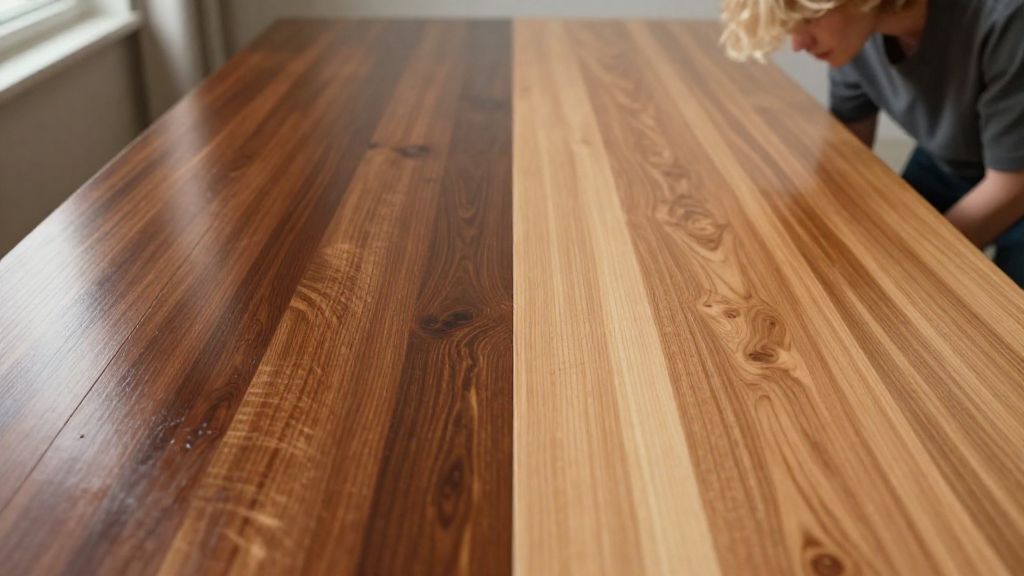
When it comes to wood finishes, many DIY enthusiasts and professionals often find themselves pondering over the question of oil vs polyurethane finish.
This article dives deep into both options to help you understand their benefits and drawbacks, allowing you to make an informed choice for your woodworking projects.
What is an Oil Finish?
Oil finishes are made from natural oils like linseed or tung oil, or synthetic oils designed to enhance wood’s aesthetic and protective qualities.
They penetrate deeply into the wood, enhancing the grain and providing a warm, natural appearance.
Pros of Using Oil Finish
-
Natural Look: Oil finishes highlight the natural beauty of the wood grain, adding warmth and character.
-
Ease of Application: They are generally easy to apply using a cloth or brush.
-
Repairability: Because they penetrate the wood, scratches and blemishes can be easily repaired by applying additional oil.
-
Environmentally Friendly: Many oil finishes are derived from natural ingredients, making them a more eco-conscious choice.
Cons of Using Oil Finish
-
Drying Time: Oil finishes can take longer to dry compared to polyurethane, requiring more time between applications.
-
Protection Level: They offer moderate protection against water, stains, and damage, but are not as durable as polyurethane finishes.
-
Maintenance: Oil finishes require periodic reapplication to maintain their appearance, especially in high-use areas.
What is a Polyurethane Finish?
Polyurethane is a synthetic finish that creates a hard, protective layer on wood surfaces.
It comes in two main types: oil-based and water-based.
Pros of Using Polyurethane Finish
-
Durability: Polyurethane finishes provide a much more durable surface, ideal for high-traffic areas and furniture.
-
Water and Chemical Resistance: They are highly resistant to water and other chemicals, making them great for kitchens and bathrooms.
-
Variety of Sheens: Polyurethane is available in various sheen levels, from matte to glossy, allowing for customization.
-
Quick Drying: Water-based formulas dry rapidly, facilitating quicker project completion.
Cons of Using Polyurethane Finish
-
Application Challenges: Polyurethane can be more difficult to apply evenly, leading to brush strokes or bubbles if not done correctly.
-
Appearance: Some people feel polyurethane can give wood a plastic-like appearance, which may not be desirable for all projects.
-
Repair Difficulty: Touching up scratches or blemishes can be challenging, as it often requires sanding and reapplication.
How Do Durability and Maintenance Compare?
When considering oil vs polyurethane finish, one of the key factors to weigh is durability and maintenance.
Oil Finish Durability
-
Moderate Protection:
While oil finishes do provide some protection, they are not as robust as polyurethane. -
Regular Maintenance:
Expect to reapply oil finishes more frequently, especially in high-traffic areas or surfaces used heavily, like tabletops.
Polyurethane Finish Durability
-
High Resistance:
A well-applied polyurethane finish can withstand heavy use, spills, and scratches with minimal wear. -
Long-lasting:
Once properly cured, a polyurethane finish can last for many years without needing reapplication.
Which Finish Is Easier to Apply?
Applying the finish successfully is crucial to achieving a good-looking and functional surface.
Oil Finish Application
-
Preparation:
Sand the wood surface thoroughly to ensure it is smooth. -
Application:
Apply the oil using a soft cloth or brush, working in small sections. -
Drying Time:
Allow the oil to soak in for a while before wiping off any excess. -
Curing:
Oil finishes usually require several days to cure fully, depending on the type and conditions.
Polyurethane Finish Application
-
Preparation:
Similar to oil, the wood must be well-sanded. Any dust or debris should be removed. -
Application:
Use a high-quality brush or roller to apply the polyurethane. -
Multiple Coats:
Most applications require at least two to three coats, with light sanding between each coat. -
Quick Drying:
Water-based polyurethanes can dry quickly, allowing for faster application, usually within hours.
Which Finish Is More Eco-Friendly?
As the world becomes increasingly environmentally conscious, it’s important to evaluate the eco-friendliness of your options.
Oil Finish Eco-Friendliness
-
Natural Ingredients:
Many oil finishes are made from natural, biodegradable materials. -
Low VOC Options:
Some brands offer low or zero VOC (volatile organic compounds) options, ensuring a healthier home environment.
Polyurethane Finish Eco-Friendliness
-
Synthetic Components:
Traditional oil-based polyurethanes can contain higher VOCs, which may impact indoor air quality. -
Water-Based Options:
Water-based polyurethanes are generally lower in VOCs, making them a better choice for eco-conscious consumers.
Which Finish Is More Suitable for Your Project?
Ultimately, choosing between oil vs polyurethane finish depends on your specific project needs.
When to Choose Oil Finish
-
Aesthetic Appeal:
If highlighting the wood’s natural beauty is paramount, oil finishes may be your best bet. -
Easy Maintenance:
For areas that require occasional touch-up, an oil finish is easier to maintain.
When to Choose Polyurethane Finish
-
Heavy Use Areas:
If you are finishing surfaces that will experience heavy foot traffic or spills, polyurethane is the more durable option. -
Time Constraints:
If you need a faster-drying finish, a water-based polyurethane can save time.
Conclusion: Which is the Better Finish?
Both oil and polyurethane finishes have their unique advantages and disadvantages.
Your decision ultimately hinges on the specific requirements of your project, your preferred aesthetic, and how much time you are willing to invest in the application and maintenance process.
In the battle of oil vs polyurethane finish, there is no one-size-fits-all answer.
Consider your specific needs, and you will be well on your way to selecting the best wood finish for your project.
Whichever finish you choose, make sure to follow proper application techniques for the best results.