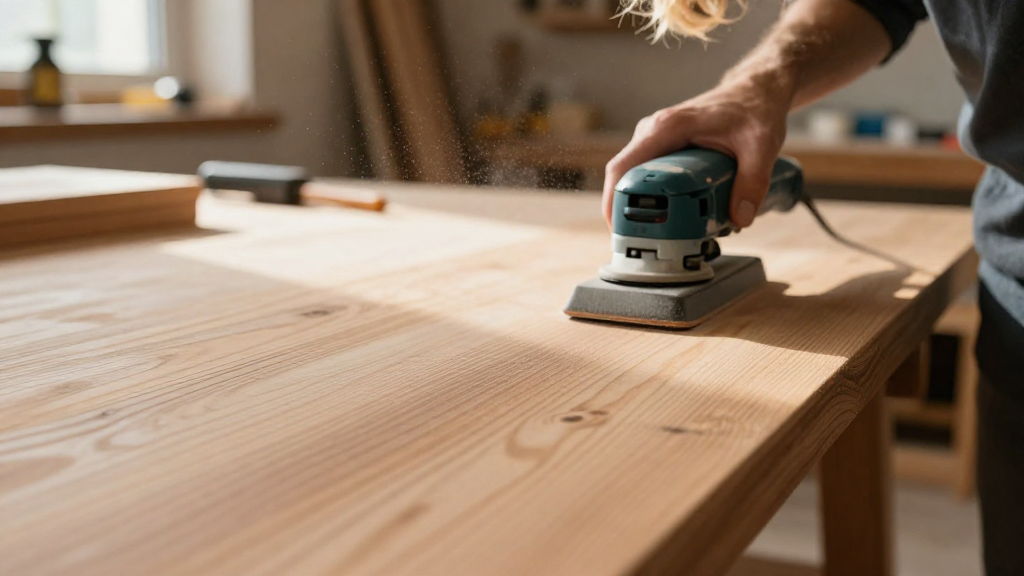
Sanding between coats of finish is an essential step to achieving a smooth, professional-looking surface.
In this article, we’ll explore why sanding between coats of finish is important, how to do it effectively, and some tips to ensure you obtain the best results for your woodworking projects.
What Is Sanding Between Coats of Finish?
Sanding between coats of finish refers to the process of lightly abrading the surface of a wood project after applying each layer of finish, such as varnish, lacquer, or polyurethane.
This technique ensures good adhesion of the subsequent coats, removes imperfections, and creates an evenly finished surface.
Why Should You Sand Between Coats of Finish?
There are several benefits to sanding between coats of finish:
1. Enhanced Adhesion
- Stronger Bond: Sanding creates a rough surface that enhances the bond between the layers of finish.
- Prevents Peel: By ensuring each coat adheres well, you can prevent future peeling or flaking of the finish.
2. Fewer Imperfections
- Removes Debris: Dust particles, bugs, or lint that settle on the wet finish can blemish the final look.
- Smoothing Out the Surface: Sanding helps to remove any bumps or imperfections that may have occurred during application.
3. Improved Finish Appearance
- Uniformity: Each layer becomes smoother and more refined, leading to a higher-quality finish.
- Enhanced Depth: The result is a polished surface that showcases the wood’s natural beauty.
4. Long-lasting Protection
- Extends Durability: A well-sanded finish is less prone to damage, ensuring that your woodworking project lasts longer.
When Should You Sand Between Coats of Finish?
Timing is crucial when it comes to sanding between coats of finish.
Here are some key points to consider:
1. Wait for the Finish to Cure
- Don’t Rush: Allow the first coat of finish to cure fully according to the manufacturer’s recommendations before sanding.
- Stay Mindful of Dry Times: Drying times vary depending on the type of finish—oil-based finishes typically take longer to cure than water-based finishes.
2. Visual Checks
- Touch Test: Conduct a light touch test; the finish should feel dry but may still be slightly tacky.
- Surface Check: Look for any imperfections or dust particles once the finish feels dry to the touch.
How Do You Sand Between Coats of Finish?
Sanding between coats of finish sounds easy, but it’s essential to follow specific steps for the best results.
Here’s how to do it:
Step 1: Gather Your Materials
You’ll need:
– Fine-grit sandpaper (320 to 400 grit is ideal)
– A sanding block or sanding sponge
– Clean, lint-free cloth
– Vacuum cleaner or soft brush
– A dust mask (to avoid inhaling dust particles)
Step 2: Prepare the Workspace
- Clean the Area: Ensure your workspace is clean to minimize dust and debris.
- Set Up Good Ventilation: Proper ventilation will assist in the drying process and keep dust at bay.
Step 3: Lightly Sand the Surface
- Go Lightly: Use fine-grit sandpaper to lightly sand the surface of the dry finish.
- Sand in Circular Motion: Use a gentle, circular motion or perform back-and-forth strokes along the grain of the wood for consistency.
- Focus on Imperfections: Pay extra attention to areas that show imperfections or rough spots.
Step 4: Clean the Surface
- Vacuum or Brush Off Dust: After sanding, remove any dust created using a vacuum or soft brush.
- Wipe with a Cloth: Use a clean, lint-free cloth to wipe down the surface to ensure it’s free from dust residues.
Step 5: Apply the Next Coat
- Follow Instructions: Once the surface is clean and free of dust, apply the next coat of finish as recommended by the manufacturer.
- Avoid Overlapping: Apply a thin, even layer, and avoid over-saturating the surface, as this could lead to runs or drips.
Tips for Effective Sanding Between Coats of Finish
Here are some additional tips for achieving the best results when sanding between coats of finish:
1. Keep Sandpaper Handy
- Use Fresh Sandpaper: Consider changing sandpaper frequently to avoid clogging and ensure effective sanding.
2. Use the Right Pressure
- Gentle Pressure: Use light pressure as you sand. Too much pressure can create scratches that may show through the final coat.
3. Test on a Sample Piece
- Trial Runs: If you’re uncertain about how the finish will react after sanding, test the process on a scrap piece of wood.
4. Choose the Correct Finish
- Compatibility: Ensure the finishes used are compatible with one another to avoid adverse reactions.
5. Don’t Skip the First Coat
- Base Layer: Always ensure you sand after the first coat of finish, as it provides the best foundation for subsequent layers.
6. Frequency Matters
- Multiple Coats: Depending on the finish and the project, you may want to sand between each coat.
Conclusion
Sanding between coats of finish is not just a good practice; it’s essential for achieving a polished, long-lasting finish on your wood projects.
By following the right steps and guidelines outlined in this article, you can ensure that your woodworking projects look professional and stay protected for years to come.
Remember, the key to a brilliant finish lies in the details—and that includes effective sanding between coats of finish.
So, take your time and enjoy the process; the results will be well worth your efforts!