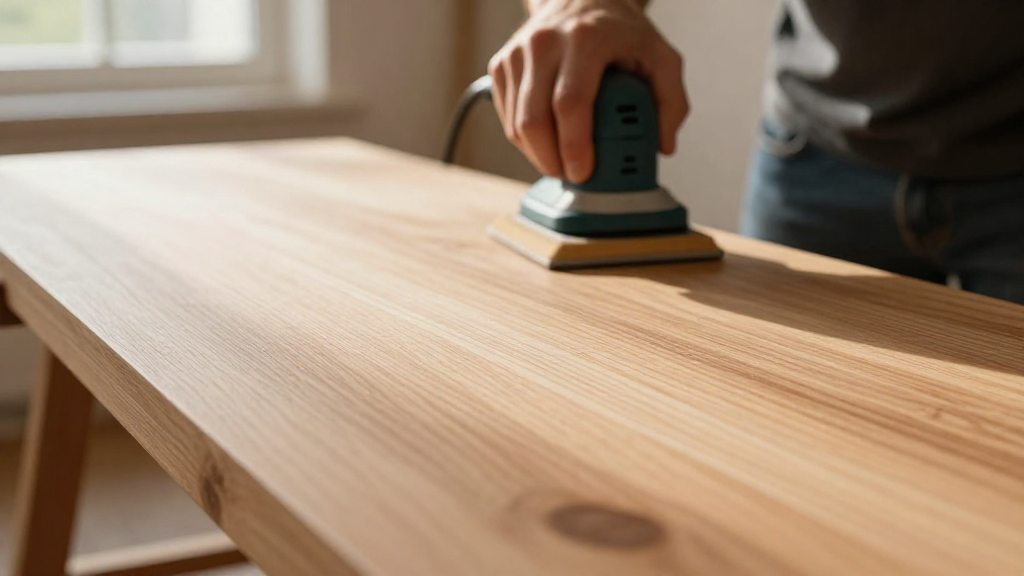
Sanding wood for a smooth finish is essential for achieving that professional look in your woodworking projects.
Why Is Sanding Wood Important for a Smooth Finish?
When it comes to woodworking, the importance of sanding wood cannot be overstated.
Sanding wood serves multiple purposes:
- Prep the Surface: It prepares the surface for further treatments such as staining or finishing.
- Remove Imperfections: Sanding can eliminate scratches, dents, and other surface irregularities.
- Enhance Adhesion: A smooth finish allows paints, stains, and sealers to adhere better, resulting in a more durable and attractive finish.
In essence, proper sanding is crucial for not just aesthetics but also the longevity of your projects.
What Tools Do You Need for Sanding Wood?
To effectively sand wood for a smooth finish, you need the right tools.
Here’s a list of essential tools:
- Sandpaper: Various grits will be needed, from coarse (60-80 grit) to fine (220 grit or higher).
- Sander: An orbital sander or hand sander makes the job quicker and easier.
- Dust Mask: To protect your lungs from fine wood dust.
- Safety Goggles: To shield your eyes from dust particles and debris.
- Tack Cloth or Vacuum: For cleaning the wood surface after sanding.
Investing in quality tools will pay off by providing a superior finish.
How Do You Choose Sandpaper Grit for Different Stages?
Understanding the different grits of sandpaper is vital for effective sanding wood for a smooth finish.
Here’s a guide to choosing the right paper:
- Course Sanding: Use 60-80 grit sandpaper for initial sanding, especially to remove varnish or create a rough shape.
- Medium Sanding: Move to 120-150 grit for smoothing rough areas after the initial sand.
- Fine Sanding: Finish the project with 220 grit or higher for the ultimate smoothness before applying paint or stain.
This gradual step-up in grit helps avoid deep scratches and leaves a perfectly smooth surface.
How Do You Set Up Your Workspace for Sanding Wood?
A well-organized workspace contributes significantly to the sanding process.
Here’s how to set it up:
1. Choose a Suitable Area:
Find a space with good ventilation.
2. Clear the Area:
Remove unnecessary items from your workspace to avoid accidents.
3. Set Up a Stable Work Surface:
Use a bench or saw horses to secure the wood in place, making it easier to sand.
4. Gather Your Tools:
Keep all tools within reach to improve efficiency.
This preparation makes the sanding process smoother and more enjoyable.
How Should You Sand Wood for a Smooth Finish?
Now, let’s dive into the steps on how to effectively sand wood for a smooth finish:
1. Start with Coarse Grit Sandpaper
Begin with 60-80 grit sandpaper to remove the roughest areas.
- Use a Sander: If using a power sander, maintain a consistent motion.
- Hand Sanding: If hand sanding, always go with the grain of the wood, not against it.
2. Inspect Your Work
After the initial sanding:
- Check for Imperfections: Look for any rough areas or visible scratches.
- Feel the Surface: Run your hand over the wood to identify places that need more attention.
3. Repeat with Medium Grit
Next, switch to 120-150 grit sandpaper.
- Smooth Out the Surface: Repeat the same sanding technique, always working with the grain.
- Avoid Pressure: Let the sandpaper do the work rather than pressing down hard.
4. Finish with Fine Grit
Finally, use 220 grit or higher for the last sanding.
- Focus on Details: Pay special attention to edges and corners.
- Feel for Smoothness: Use your hands to ensure the surface is evenly smooth.
5. Clean the Surface
After sanding, it’s crucial to remove all dust.
- Use a tack cloth or a vacuum to pick up fine particles.
- Don’t skip this step; leftover dust can mar the finish.
What Techniques Can Improve Your Results?
To enhance your sanding skills, consider the following techniques:
- Angle your Sander: Slightly angle your power sander to cover more surface area without overlapping marks.
- Work in Sections: Focus on small areas before moving to larger sections to prevent oversight.
- Rotate Grits: Always work your way up from coarse to fine grits for best results.
By employing these techniques, you’ll ensure a smooth finish every time you sand wood.
How Do You Maintain Your Sanding Tools?
To ensure your tools remain effective over time, maintain them properly.
Here are some tips for tool maintenance:
- Store Sandpaper Properly: Keep it in a dry place to prevent moisture damage.
- Clean Sander Pads: Replace or clean the pads on your sanders when they become clogged.
- Inspect for Damage: Regularly check tools for wear and tear, replacing them as necessary.
Caring for your tools will ensure that they perform at their best, making sanding wood for a smooth finish easier.
Conclusion: Mastering Sanding Wood for a Smooth Finish
In summary, sanding wood for a smooth finish is an integral part of the woodworking process that shouldn’t be overlooked.
By understanding tools, grits, techniques, and proper workspace setup, you can achieve that sleek, professional look in your projects.
Whether you’re a hobbyist or a seasoned pro, mastering the art of sanding will elevate your woodworking game.
With patience and practice, you’ll soon find yourself sanding wood with the finesse and skill needed for a perfect finish!
Now, it’s time to get started on your next project. Happy sanding!