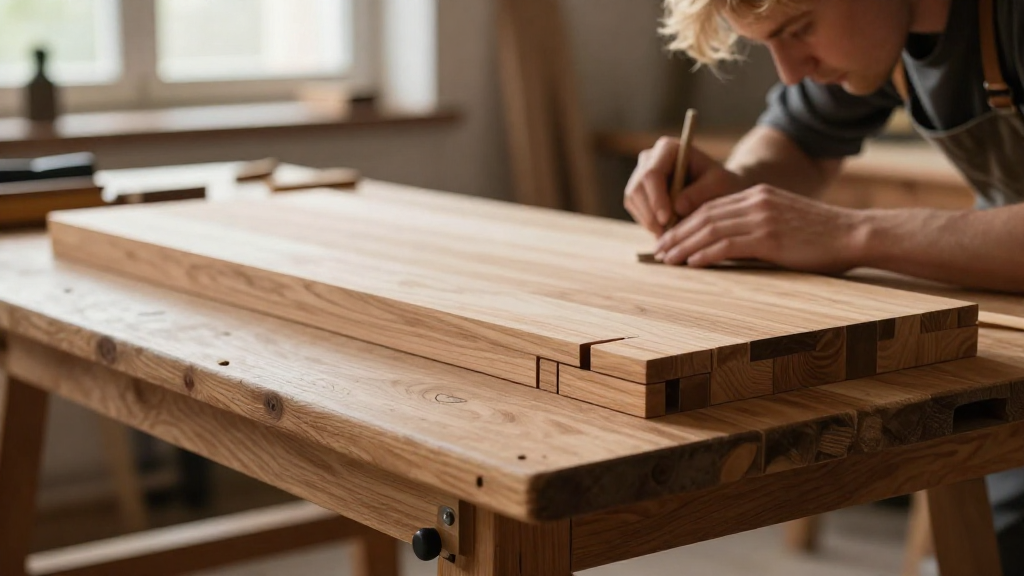
Understanding the types of joinery in woodworking is essential for every woodworker, whether you’re a beginner or a seasoned pro.
Joinery refers to the techniques used to connect different pieces of wood, playing a crucial role in the strength, aesthetics, and functionality of finished products. This article explores the various types of joinery in woodworking, offering insights into their applications and benefits.
What Are the Different Types of Joinery in Woodworking?
The types of joinery in woodworking can vary greatly, but most can be categorized into two main categories: mechanical joinery and adhesive joinery. Below, we’ll delve into specific techniques within these categories.
Why Use Mechanical Joinery?
Mechanical joinery relies on physical connections between wood pieces without the use of adhesives. Here are some common techniques:
-
Butt Joint
– The simplest type of joint.
– Involves joining two pieces by placing one piece against the end of another.
– Easy to create but generally weak. -
Miter Joint
– A variation of the butt joint where the ends are cut at an angle, typically 45 degrees.
– Commonly used in picture frames and cabinets.
– Offers a better look compared to the butt joint, but requires precise cuts. -
Lap Joint
– Involves overlapping two pieces of wood.
– Resists twisting, making it a strong choice for frames and subassemblies.
– Suitable for edge-to-edge applications. -
Dovetail Joint
– Known for its strength and resistance to pulling apart.
– Features interlocking “tails” and “pins” that securely hold the pieces together.
– Frequently used in drawer construction and fine furniture. -
Mortise and Tenon Joint
– One of the strongest wooden joints.
– A rectangular hole (mortise) is cut into one piece and a corresponding tenon is cut on the other.
– Widely used in table and door construction.
What Is Adhesive Joinery?
While mechanical joinery is fundamental, adhesive joinery is equally significant, utilizing glue to hold pieces together permanently. Here are some common types of adhesive joinery:
-
Plywood Lamination
– Layers of wood glued together to form a thicker panel.
– Provides stability and reduces warping.
– Common in cabinetry and structural beams. -
Edge Gluing
– Two boards are glued along their edges to create a wider panel.
– Often used in tabletops and shelves.
– Requires careful alignment and pressing. -
Composite Joining
– Involves the use of epoxy or polyurethane to bond dissimilar materials.
– Often used in modern woodworking projects.
– Excellent for outdoor furniture where moisture resistance is key.
How Do You Choose the Right Joint Type?
Choosing the right type of joinery is crucial for achieving a strong and aesthetically pleasing final product. As you consider the types of joinery in woodworking, keep in mind the following factors:
-
Strength Needs: If the joint will bear significant weight or stress, opt for stronger joints like dovetail or mortise and tenon.
-
Aesthetic Appeal: Some joints are more visually appealing than others. Choose miter joints or dovetails for projects where appearance is crucial.
-
Skill Level: Some joinery techniques, like dovetails, require advanced skills and tools. Beginners might start with butt or lap joints.
-
Material Considerations: Different types of wood and composites may require different adhesives or joints for optimal performance.
What Are the Advanced Types of Joinery?
Once comfortable with the basic types of joinery in woodworking, aspiring woodworkers can explore more advanced techniques:
-
Box Joint
– Similar to a dovetail but easier to create with a table saw.
– Provides a good amount of surface area for gluing while ensuring a strong hold. -
Brad Nailing
– Utilizes small brads or nails to connect pieces together.
– Quick and effective for framing and temporary holds. -
Biscuit Joinery
– Uses thin, oval-shaped pieces of wood (biscuits) to create a strong joint.
– Great for aligning panels and is often used in tabletops and wide boards. -
Spline Joint
– A thin strip of wood is inserted into grooves cut into both pieces, creating a strong bond.
– Perfect for edge joining and can add an aesthetic touch if visible.
How Can You Improve Your Joinery Skills?
Improving your knowledge and skills in the types of joinery in woodworking takes practice and dedication. Here are some tips:
-
Start with Practice: Create scrap joints as practice before moving to actual projects.
-
Select Quality Materials: Use high-quality wood and adhesives to understand how different materials interact.
-
Learn from Experts: Participate in woodworking workshops, classes, or online tutorials.
-
Join a Community: Engage with local woodworking clubs or online forums for feedback and support.
What Mistakes Should You Avoid?
Even experienced woodworkers can make mistakes when working with different types of joinery in woodworking. Here are some common pitfalls:
-
Ignoring Wood Grain: Always pay attention to the direction of the wood grain when cutting joints to avoid weaknesses.
-
Neglecting to Measure: Accurate measurements are essential. Double-check your dimensions before cutting.
-
Overusing Glue: Applying too much glue can lead to messy results. Use just enough to form a bond without excess.
Conclusion: Why Understanding Joinery Matters
Knowing the types of joinery in woodworking provides you with the skills to create durable, functional, and visually appealing projects.
Each joint type has its own benefits and applications, and knowing them will enhance both your skills and the quality of your work.
By practicing various techniques and continuously improving your craft, you’ll find it easier to tackle diverse woodworking challenges.
Joinery isn’t just about connecting pieces; it’s about building lasting relationships with your projects. Happy woodworking!