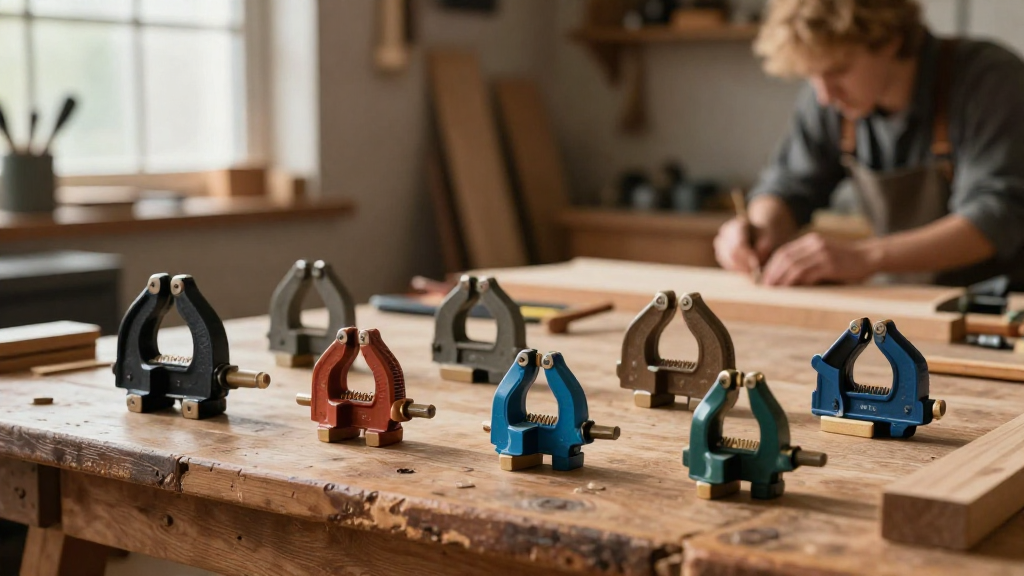
When embarking on woodworking projects, understanding the various types of woodworking clamps is essential for ensuring precision and quality.
What are the Different Types of Woodworking Clamps?
Woodworking clamps are tools that hold pieces of wood together during various processes, such as gluing, assembly, or cutting.
Here are the main types of woodworking clamps you’ll often encounter:
1. What is a Bar Clamp?
Bar clamps, also known as parallel clamps, feature a long metal bar with adjustable arms.
Uses:
– Excellent for holding larger pieces of wood.
– Provides even pressure across the joint.
– Ideal for gluing applications.
Tip: When using bar clamps, make sure the bar itself is clean to avoid any marring on your workpieces.
2. Why Use a Pipe Clamp?
Pipe clamps utilize a pipe as the bar where the clamp’s arms attach, making them versatile and adjustable for various sizes.
Uses:
– Cost-effective option since you can customize the length of the pipe.
– Great for large-scale woodworking projects.
– Provides significant pressure and control over clamping.
Tip: For a better grip, wrap the ends of the pipes with rubber to avoid slipping or damaging the wood.
3. What is a C-Clamp?
C-clamps are traditionally shaped like the letter “C” and can accommodate smaller projects effectively.
Uses:
– Perfect for smaller pieces of wood or intricate assembly work.
– Offers quick and easy adjustments.
– Ideal for holding materials during drilling or cutting.
Tip: Always position the clamp so the screw threads are on the side that will allow better access to adjust the clamp if needed.
4. How Do You Use a F-Clamp?
F-clamps, resembling the letter “F,” provide robust clamping pressure for various woodworking tasks.
Uses:
– Suitable for both light and heavy-duty tasks.
– Commonly used for edge gluing or cabinet assembly.
– The adjustable arm allows for rapid changes in size without the need for additional tools.
Tip: Avoid overtightening, as it may cause the wood to dent or deform.
5. What are Quick-Release Clamps?
Quick-release clamps come equipped with a mechanism that allows for rapid adjustments.
Uses:
– Ideal for projects requiring frequent repositioning.
– Excellent for repetitive clamping tasks.
– Commonly employed in the assembly of jigs and fixtures.
Tip: Always check the tension features; the faster you can disengage, the more efficient your work process will be.
6. Why Consider Corner Clamps?
Corner clamps hold two pieces of wood at a 90-degree angle, providing stability during assembly.
Uses:
– Perfect for creating frames, boxes, or cabinets.
– Ensures joints maintain their shape until the glue dries.
– Simplifies the joining process for those less experienced in alignment.
Tip: Ensure your corner clamps are adequately adjusted before tightening to maintain an accurate right angle.
7. What are Spring Clamps Used For?
Spring clamps employ a spring-loaded mechanism for easy one-handed operation.
Uses:
– Excellent for light-duty clamping tasks where speed matters.
– Useful for holding small pieces together during gluing or surface preparation.
– Commonly used in crafts and DIY projects.
Tip: The clamping force can vary, so look for spring clamps designed for specific tasks.
8. How Do You Utilize String Clamps?
String clamps provide a unique method of clamping pieces of wood together using a cinching string.
Uses:
– Ideal for clamping irregular shapes or multiple pieces simultaneously.
– Useful for woodworking setups where traditional clamps cannot be positioned.
– Great for creating tension across wide surfaces.
Tip: Ensure your string clamps are tightened evenly to distribute pressure across the surface.
Which Types of Woodworking Clamps Are Essential for Beginners?
For those new to woodworking, it’s wise to start with a basic set of clamps that covers a variety of needs.
Essential clamps include:
– Bar clamps: Versatile for larger projects.
– C-clamps: Useful for smaller tasks.
– Spring clamps: Quick and easy for light-duty applications.
With these essential tools, beginners can tackle various projects without feeling overwhelmed.
Conclusion: Which Types of Woodworking Clamps Should You Choose?
Knowing the different types of woodworking clamps will allow you to choose the right tool for your specific project requirements.
Each clamp offers different advantages, so consider the following when selecting:
- Project size: Larger projects may require bar or pipe clamps.
- Type of joint: For corners, use corner clamps for accuracy.
- Frequency of adjustment: Quick-release clamps are ideal for efficient work processes.
The right choice in clamps can make all the difference in your woodworking results, leading to snug-fitting joints and durable constructions.
By understanding the different types of woodworking clamps and their specific uses, you’re now equipped to take on various woodworking tasks with confidence!