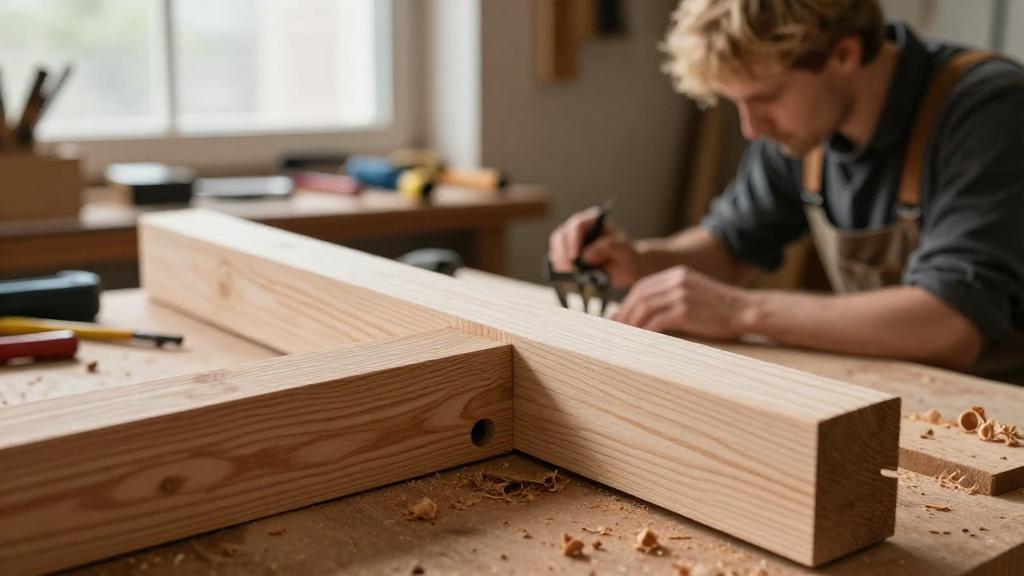
In woodworking, understanding the nuances of joints is essential for creating strong and durable structures. One such joint is the rabbet joint.
What Is a Rabbet Joint and Where Is It Used?
A rabbet joint is a type of joint that involves cutting a recess or groove into the edge of a piece of wood to create a convenient connection with another piece.
This technique is commonly used in cabinetry and furniture making.
Rabbet joints are especially useful for:
- Drawer construction
- Cabinet backs
- Picture frames
- Shelving units
The primary advantage of a rabbet joint is that it provides a larger surface area for gluing, which results in a more robust bond.
How to Create a Rabbet Joint?
Creating a rabbet joint requires careful planning and precise cutting. Here’s how to make one:
-
Gather Materials and Tools:
– Wood pieces to join
– Table saw or router
– Measuring tape
– Square
– Clamps
– Wood glue -
Measure and Mark:
– Decide the width and depth of your rabbet.
– Measure and mark the wood edge where you intend to cut. -
Set Up Your Saw or Router:
– For a table saw, adjust the blade height and fence to match your measurements.
– If using a router, attach the appropriate bit. -
Make the Cuts:
– Cut the rabbet along the marked edge, ensuring the wood is secure.
– Take multiple shallow passes if using a table saw for better control. -
Test the Fit:
– Join the two pieces of wood to check if they fit snugly.
– Make adjustments if necessary. -
Glue and Clamp:
– Apply wood glue to the rabbeted edge and assemble.
– Secure with clamps to hold while the glue dries.
It’s important to ensure precision in this process; inaccuracies can lead to weak joints.
What Are the Different Types of Rabbet Joints?
When discussing what is a rabbet joint, it’s worth noting that there are variations. The primary types include:
- Simple Rabbet Joint:
-
A straightforward and effective joint found in many woodworking projects.
-
Rabbet and Dado Joint:
-
Combines a rabbet joint with a dado, often used for shelving.
-
Lapped Rabbet Joint:
- Two pieces overlap and interlock, providing enhanced strength.
Each type serves specific needs and applications within woodworking.
What Are the Advantages of Using a Rabbet Joint?
Understanding the benefits of a rabbet joint can enhance the effectiveness of your woodworking:
- Increased Surface Area:
-
The wider area ensures better glue adhesion.
-
Easier Assembly:
-
Simplifies the process of joining two pieces together.
-
Alignment:
-
Helps in aligning edges perfectly, maintaining the integrity of the structure.
-
Versatile Design:
- Works well with various wood types and thicknesses.
Are There Disadvantages to a Rabbet Joint?
While discussing what is a rabbet joint, it’s crucial to address potential downsides:
- Complexity for Beginners:
-
It may seem challenging for novice woodworkers unfamiliar with cutting techniques.
-
Limited Strength in Certain Applications:
-
In some high-stress situations, it may not provide enough strength alone.
-
Requires Precise Measurements:
- Small errors can result in poor fitting joints.
Despite these disadvantages, with practice and patience, the advantages often outweigh the negatives, especially for intermediate and advanced woodworkers.
What Tools Do You Need to Create a Rabbet Joint?
To effectively create a rabbet joint, consider the following tools:
- Table Saw:
-
Ideal for straight, precise cuts, especially for larger boards.
-
Router:
-
Excellent for fine-tuning edges and creating smooth rabbet cuts.
-
Hand Plane:
-
Useful for cleaning up edges after cutting.
-
Chisels:
-
Helpful for making tight corners in a rabbet joint.
-
Clamps:
- Essential for holding pieces together while the glue dries.
Each tool has its role in the creation process, and depending on your project, you may find certain tools more advantageous than others.
Where Can You Learn More About Rabbet Joints?
Becoming proficient at using rabbet joints requires both practice and knowledge.
Here are some ways to expand your understanding:
-
Online Tutorials:
– Websites like YouTube offer countless tutorials that demonstrate various techniques for creating rabbet joints. -
Woodworking Books:
– Look for books that cover joinery; many offer in-depth sections on rabbet joints. -
Woodworking Classes:
– Enroll in local woodworking workshops or online courses focused on joinery. -
Forums and Communities:
– Join woodworking forums where enthusiasts share their experiences and tips regarding rabbet joints and other techniques. -
Magazines:
– Subscribe to woodworking magazines which often feature articles and projects centered around joints.
Conclusion: Why Is the Rabbet Joint Worth Knowing?
In summary, understanding what is a rabbet joint is vital for anyone interested in woodworking.
With its wide range of applications, the rabbet joint proves to be a must-know technique.
Whether you’re constructing cabinets, making drawers, or even crafting picture frames, mastering this joint can elevate your woodworking projects.
By following the outlined steps and utilizing the right tools, you can successfully incorporate rabbet joints into your woodworking repertoire, leading to stronger, more aesthetically pleasing creations.
So, go ahead and explore the world of rabbet joints, and enjoy the benefits they bring to your woodworking endeavors!