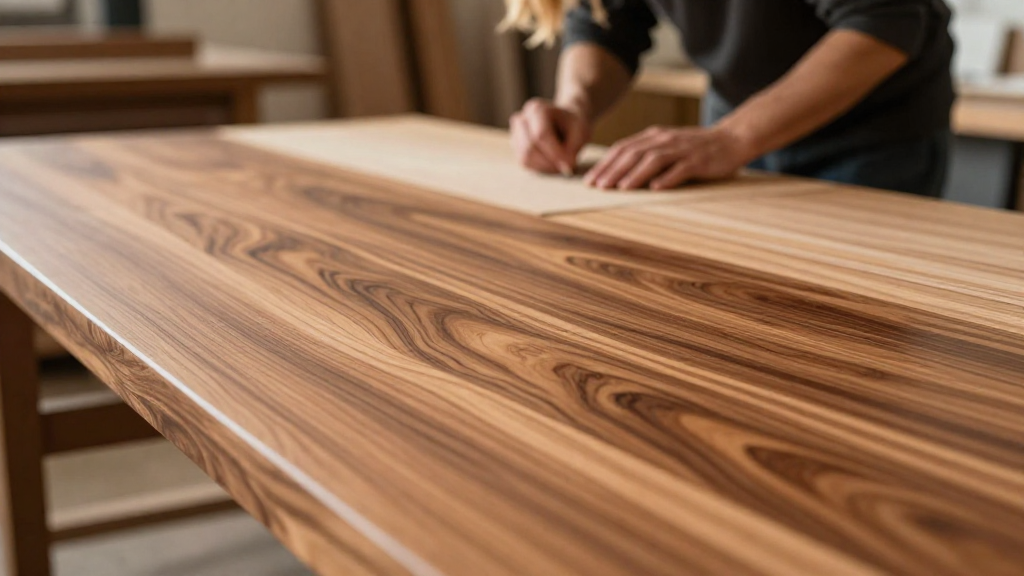
Have you ever wondered what is veneer wood and how it’s utilized in various applications? This article will dive into the fascinating world of veneer wood, exploring its definition, types, benefits, and common uses.
What Is Veneer Wood Exactly?
Veneer wood is a thin layer or slice of wood that is typically thinner than 3mm (1/8 inch).
It’s obtained by slicing or peeling logs, which allows us to create beautiful, wood-like surfaces without using massive quantities of solid timber.
This process not only maximizes the yield from timber but also offers an economical and sustainable approach to utilizing hardwood.
What Are the Different Types of Veneer Wood?
Veneer wood comes in various types, each offering unique aesthetics and properties. Here are the most popular types of veneers:
-
Natural Veneer
– Made from real wood species
– Offers a genuine wood grain appearance -
Reconstituted Veneer
– Crafted from engineered wood fibers dyed to replicate the patterns of natural wood
– Provides a consistent look and is often more sustainable -
Backed Veneer
– Features a backing material, usually paper or fabric
– Offers added stability and is easier to handle during application -
Wood Laminate
– Similar to veneer but made from synthetic materials rather than actual wood
– Often used in applications where cost is a primary concern
Why Use Veneer Wood?
The question arises, why should one consider using veneer wood? Here are several compelling reasons:
-
Cost-Effective: Using veneer can significantly reduce the expense compared to solid wood.
-
Sustainability: Veneer uses fewer trees, making it a more eco-friendly choice.
-
Variety: It allows for a range of wood species that would be too costly or scarce in solid form.
-
Aesthetic Appeal: Veneer can be crafted to achieve intricate patterns and designs that enhance the visual appeal of furniture and interiors.
Where Is Veneer Wood Commonly Used?
Veneer wood finds its applications in numerous domains. Here are some common uses:
-
Furniture Making
– Used for cabinets, tabletops, and chairs for an attractive, laminated appearance. -
Paneling
– Often found in wall paneling for homes and offices, providing a warm and inviting feel. -
Doors
– Used on interior doors for an elegant look while keeping production costs lower. -
Musical Instruments
– Certain musical instruments like guitars benefit from veneer for both aesthetics and acoustics. -
Architectural Details
– Used in traditionally styled or modern homes, veneer accents can elevate an interior design.
How Is Veneer Wood Manufactured?
To truly understand what is veneer wood, we also need to look at its manufacturing process, which typically includes the following steps:
-
Log Selection
– High-quality logs are selected based on the desired end product. -
Debarking
– The bark is removed to prepare the log for slicing. -
Slicing or Peeling
– The log is either sliced (cut into sheets) or peeled (rotated against a knife) to create thin layers of veneer. -
Drying
– The veneer sheets are dried to ensure that they do not warp or shrink. -
Finishing
– After drying, the veneer may be sanded and treated with finishes to enhance durability and aesthetics.
Can Veneer Wood Be Refinished or Repaired?
An important aspect to consider is whether veneer wood can be refinished or repaired.
The answer is yes, but with some limitations. Here are the details:
- Refinishing:
- Veneer can be refinished like solid wood.
-
Light sanding followed by staining or sealing is generally sufficient.
-
Repairing:
- Minor scratches can often be repaired using wood fillers or markers.
- Larger damage may require replacing the entire veneer sheet, but it’s usually a simple and cost-effective process.
What Are the Drawbacks of Veneer Wood?
Despite its numerous advantages, veneer wood does come with some drawbacks:
-
Less Durable: Veneer is not as durable as solid wood and can be damaged more easily.
-
Moisture Sensitivity: It can warp or delaminate when exposed to moisture.
-
Limited Refinishing Options: Aggressive sanding may damage the veneer, making excessive refinishing unfeasible.
How Can You Care for Veneer Wood?
To ensure that your veneer wood maintains its charm, here are some care tips:
-
Regular Dusting: Use a soft cloth to dust surfaces regularly.
-
Avoid Excess Moisture: Wipe spills immediately and avoid excessive moisture.
-
Use Proper Cleaners: Clean with pH-neutral cleaners and avoid abrasive materials.
Conclusion: Why Understanding Veneer Wood Matters
In conclusion, knowing what is veneer wood and its applications can help you make informed decisions, whether you’re an architect, designer, or a homeowner.
With its cost-saving efficiencies, sustainable use of resources, and stylish appearances, veneer wood continues to be a favored choice in both contemporary and classic designs.
Final Thoughts
Veneer wood is more than just a layer of wood; it’s a symbol of innovation in the woodworking industry.
Understanding its benefits and limitations can guide you in effective applications, ensuring you enjoy its beauty for years to come.
So, next time you come across a beautifully designed veneer piece, you’ll know the thought and craftsmanship that went into its creation!