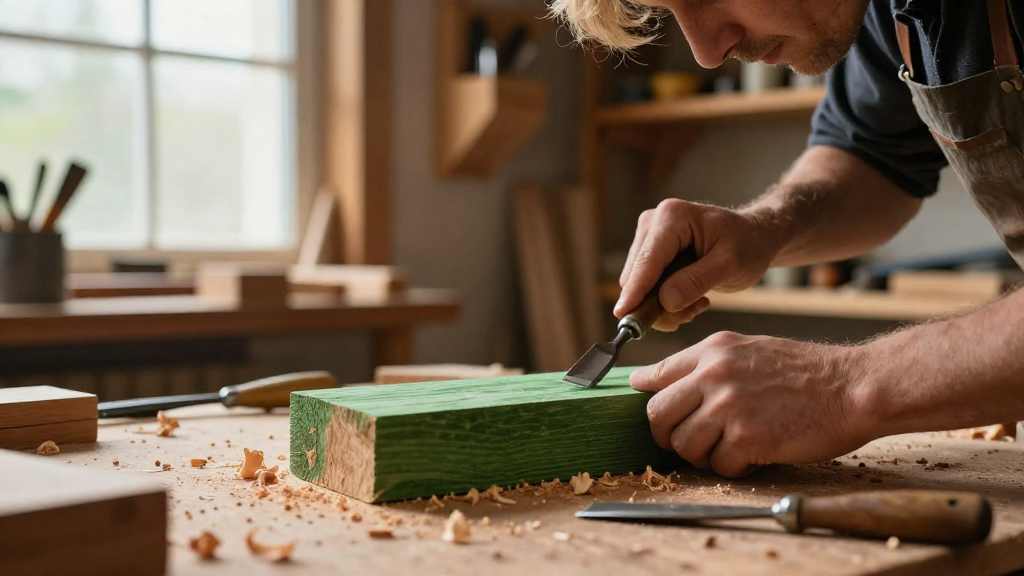
Working with green wood can be a rewarding experience, but it does come with its own set of challenges.
In this article, we will discuss essential tips for working with green wood effectively while ensuring the best results for your woodworking projects.
What is Green Wood and Why Use It?
Green wood is freshly cut timber that has not been dried or seasoned.
Many woodworkers prefer working with green wood for several reasons:
- Ease of Manipulation: Green wood is softer and easier to carve or shape than seasoned wood.
- Unique Aesthetic: The natural moisture in green wood can enhance the wood’s colors and grain patterns.
- Availability: Freshly cut wood is often more readily available and less expensive than dried lumber.
However, working with green wood requires careful consideration due to its moisture content.
What Are the Challenges of Working with Green Wood?
When working with green wood, there are several challenges you may encounter:
- Warping and Cracking: As green wood dries, it may warp or crack due to uneven moisture loss.
- Dimensional Changes: Green wood is likely to change in size and shape as it dries, impacting joints and fitting.
- Difficulty in Finishing: Applying finishes prematurely can lead to adhesion problems.
Understanding these challenges can help you minimize issues and maximize your results.
How Do You Prepare Green Wood for Work?
The preparation process is crucial when you start working with green wood. Follow these tips:
-
Select Quality Wood:
– Look for straight, healthy logs without large knots or defects.
– Make sure to choose wood that suits your project. -
Cut to Size:
– Cut your green wood into manageable pieces to reduce the risk of drying issues.
– Keeping pieces uniform in size helps maintain even drying. -
Seal Ends:
– Use a specialized wood sealer or even wax on the cut ends to slow moisture loss.
– This simple step can greatly reduce splitting and cracking. -
Air Dry:
– Store your green wood in a shaded and well-ventilated area to begin the drying process.
– Avoid stacking too tightly to allow airflow around each piece.
What Woodworking Techniques Work Best with Green Wood?
When working with green wood, certain techniques can yield the best results. Here are a few:
- Sculpting and Carving: Use sharp tools to sculpt and carve, taking advantage of the softer texture.
- Green Wood Joinery: Techniques like mortise and tenon can work well, but be prepared for adjustments as the wood dries.
- Bending Wood:
- Soak the wood before bending it to enhance flexibility.
- A steam box can also be an effective method for bending green wood.
What Tools Should You Use?
Choosing the right tools is essential when working with green wood. Here are some tools to consider:
- Sharp Hand Tools:
- Chisels, knives, and hand saws are effective for shaping.
-
Planes with sharp blades will allow for smooth finishes.
-
Power Tools:
-
Routers and jigsaws can speed up the process but be cautious of potential tearing in wet wood.
-
Clamps:
- Use strong clamps to hold joints while the wood dries to retain shape.
Investing in quality tools can significantly improve your experience when working with green wood.
How Do You Finish Green Wood Safely?
Finishing green wood can be tricky. Here are some tips to ensure a successful result:
-
Wait Until It’s Dried:
– If possible, allow the wood to dry for a while before applying any finishes.
– Monitor the moisture content to avoid problems. -
Use Suitable Finishes:
– Consider using natural oils or other flexible finishes that can accommodate movement.
– Avoid polyurethane or hard finishes until the wood is fully seasoned. -
Test Application:
– Always do a test application on a scrap piece first.
– Look for any adverse reactions or poor adhesion.
By following these guidelines, you can achieve beautiful finishes while working with green wood.
How Can You Prevent Common Problems?
Preventing issues during your project is crucial. Here are some helpful strategies:
-
Monitor Moisture:
– Invest in a moisture meter to gauge the moisture content frequently.
– This will help you understand when to move to the next steps. -
Humid Environment:
– Work in an area with a consistent temperature and humidity to help control drying rates.
– Avoid working in extremely dry or humid conditions to minimize stress on the wood. -
Acclimatize Your Wood:
– Allow your green wood to adjust to your workshop environment before working.
– This minimizes sudden changes that can lead to warping. -
Joinery Flexibility:
– Design joints that allow for movement.
– Loose tenons, for example, will help accommodate the natural expansion and contraction of green wood.
By staying aware and proactive, you can openly address challenges that arise while working with green wood.
Conclusion: Why is it Worth Learning to Work with Green Wood?
Learning the tips and techniques for working with green wood can open up new possibilities in your woodworking journey.
The unique characteristics of green wood make it a joy to work with, and the skills you develop will enhance your craftsmanship.
It’s important to respect the material by understanding its properties and challenges.
By arming yourself with knowledge and the right tools, you can create stunning, long-lasting pieces from this natural resource.
So, gear up and embrace the adventure of working with green wood!