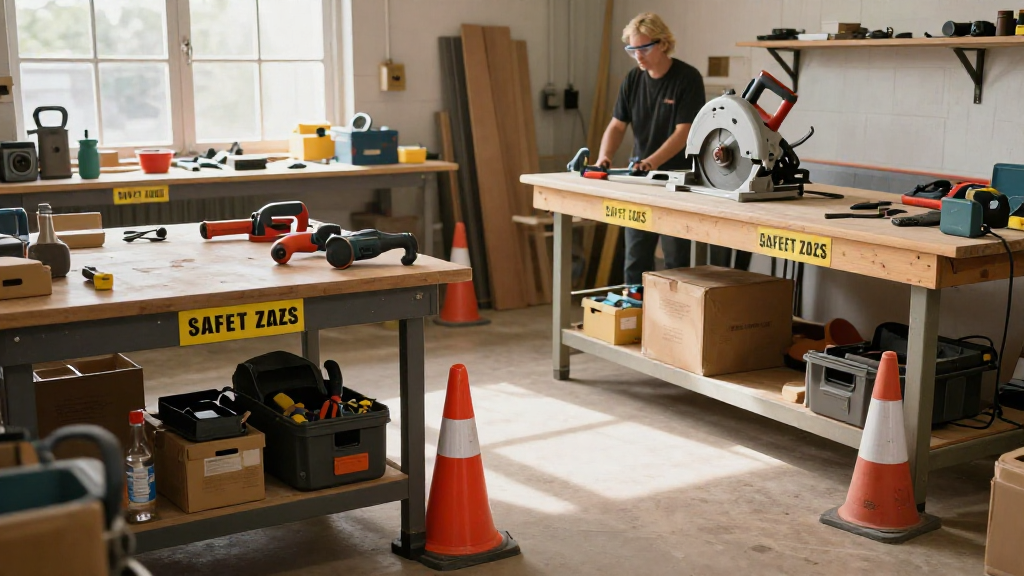
Creating a workshop environment that prioritizes safety is essential, and understanding how to set up workshop power tool safety zones is a critical step.
What Are Workshop Power Tool Safety Zones?
Workshop power tool safety zones are designated spaces that help manage the safe use of power tools in your workspace.
These zones not only protect you from potential hazards but also enhance productivity by allowing you to focus clearly on specific tasks.
Whether you’re a novice DIY enthusiast or a seasoned woodworker, establishing safety zones in your workshop is vital for accident prevention.
Why Do You Need Safety Zones?
Safety zones are crucial for several reasons:
-
Collision Prevention: Safety zones reduce the likelihood of accidents by ensuring that areas for different activities are clearly defined.
-
Focused Environment: By having dedicated areas for specific tools and tasks, you can enhance concentration and minimize distractions.
-
Easy Access: Safety zones organize your workspace, making tools and materials easier to locate and access.
-
Emergency Preparedness: In case of an accident, clear zones can help you quickly identify emergency exits or the nearest first-aid kit.
How Can You Establish Power Tool Safety Zones?
1. Identify Tool Categories
The first step in establishing workshop power tool safety zones is to categorize your tools.
Split your tools into distinct categories such as:
- Cutting Tools: Saws, routers, and chisels.
- Drilling Tools: Drills, impact drivers, and drill presses.
- Finishing Tools: Sanders, polishers, and spray guns.
- Measurement Tools: Tape measures, squares, and levels.
Identifying tool categories helps you visualize the layout of your workspace.
2. Designate Specific Areas
Once you’ve categorized your tools, it’s time to designate specific areas in your workshop for each category.
Consider these factors for your layout:
-
Space Requirement: Ensure each area has sufficient space for safe operation.
-
Access: Position tools to minimize the distance from one area to another while maintaining safety.
-
Ventilation: For tools that create dust or fumes, ensure the designated area is well-ventilated.
For instance, you might create a Cutting Zone on the right side of your workshop and a separate Drilling Zone on the left.
3. Use Physical Barriers
Implementing physical barriers can enhance the safety of your workshop power tool safety zones.
Consider the following options:
-
Tape or Paint: Mark areas with bright-colored tape or paint on the floor to visually separate zones.
-
Benches or Tables: Use dedicated workbenches clearly assigned for specific tasks to avoid cross-contamination.
-
Shelving Units: Install shelving units or cabinets to store related tools within their respective zones, reducing clutter.
4. Implement Proper Tool Storage
Proper storage is crucial in preventing accidents.
Store power tools according to their categories and ensure they are easily accessible. Consider these storage solutions:
-
Toolboxes: Invest in toolboxes that can divide your tools based on functionality.
-
Wall Storage: Use pegboards or wall-mounted shelving to keep your tools visible and off the work surface.
-
Drawer Systems: Design a drawer system that aligns with your tool categories for efficient organization.
5. Define “No Go” Zones
In addition to your safety zones, designate “No Go” zones around your workshop.
These areas are crucial for maintaining a clear path and avoiding accidents.
-
Marked Paths: Outline clear paths between different zones to prevent people from straying into unnecessary areas.
-
Equipment Storage: Avoid placing tools or materials that are not in use in high-traffic zones.
6. Train Your Team
If you have multiple people working in your workshop, training is essential.
Ensure everyone understands the layout of the workshop power tool safety zones and the reason behind them.
Hold safety meetings regularly to reinforce awareness and maintain safety standards.
-
Rules and Regulations: Train your team on the specific rules for each zone, emphasizing tool use safety.
-
Emergency Protocols: Include emergency protocols in your training to prepare them for any unforeseen incidents.
7. Continually Assess and Adjust
As you work, keep an eye on how effective your workshop power tool safety zones are.
Changes may be necessary as your project needs evolve or as you acquire new tools.
-
Feedback: Gather feedback often from other workshop users to identify areas for improvement.
-
Adapt Layout: Be ready to adapt your layout if you notice areas becoming crowded or unsafe.
What Safety Gear Should You Use?
No matter how well you set up your workshop power tool safety zones, remember that personal protection is essential.
Always wear appropriate safety gear, including:
- Safety Glasses: To protect your eyes from debris.
- Ear Protection: To shield your hearing from loud machinery.
- Respirators: To filter out harmful dust or fumes.
- Gloves: To prevent cuts and abrasions while working.
Why Is Maintenance Important?
Maintaining your workshop power tool safety zones goes hand-in-hand with their establishment.
Regular maintenance will ensure your environment continues to be safe and productive.
-
Clean Regularly: Keep all areas free from dust and debris that can create hazards.
-
Inspect Tools: Routinely check your tools for damage and perform necessary repairs.
-
Rotate Equipment: If you have tools that frequently change locations, rotate them to avoid wear and keep safety measures fresh.
Conclusion
Setting up effective workshop power tool safety zones is vital for ensuring a safe and productive environment.
By categorizing your tools, designating specific areas, establishing physical barriers, and implementing proper storage, you can significantly reduce accident risks.
Maintain awareness through training and regular assessments, and remember to prioritize personal safety gear for everyone in the workshop.
With these steps, you’ll not only create a safe workspace but also enjoy the satisfaction of a well-organized workshop.
So roll up your sleeves and get started on making your workshop a secure and productive haven!