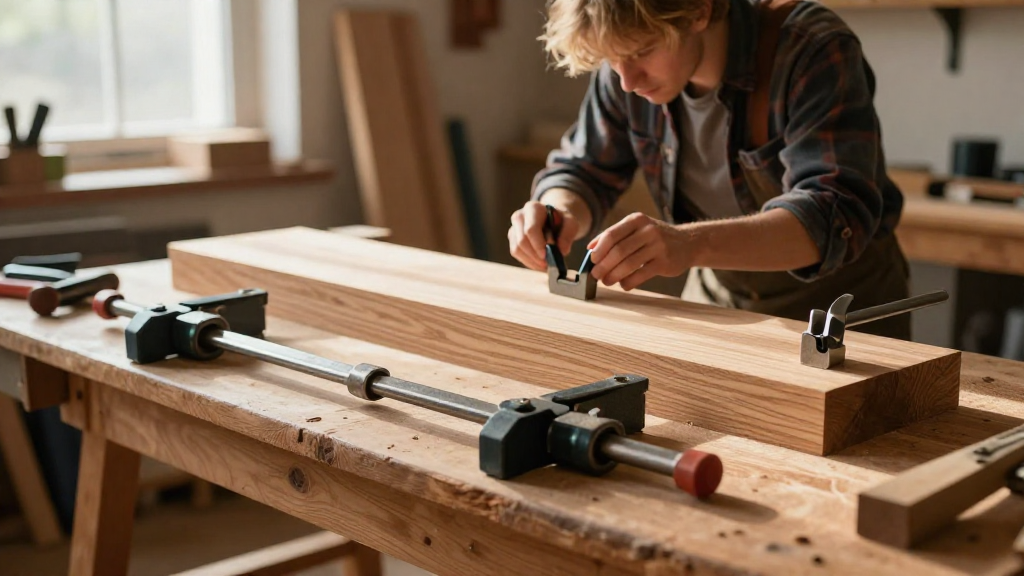
When it comes to woodworking, mastering effective clamping techniques in woodworking is crucial for achieving perfect joints and ensuring your projects are both strong and aesthetically pleasing.
What Are Clamping Techniques in Woodworking?
Clamping techniques in woodworking refer to various methods used to hold pieces of wood together during the glue-up stage or while working on projects.
These techniques ensure that the wood is held in place, allowing for seamless fittings and durable bond formation. Let’s explore the different types of clamping techniques that every woodworker should be familiar with.
Why Are Clamping Techniques Essential?
Clamping is more than just a way to hold materials together.
It ensures:
- Precision: Accurate alignment of wood pieces.
- Strength: A stronger bond between glued surfaces.
- Efficiency: Speeding up workflow with the right clamps.
- Finish Quality: Reducing potential defects.
Understanding these benefits will enhance your work quality and streamline your process.
What Types of Clamps Are Commonly Used?
In woodworking, various clamps serve specific purposes. Here’s a breakdown of the most popular types of clamps and their uses:
1. Bar Clamps
- Function: These clamps are versatile and often used for edge gluing boards together.
- Benefits: They apply even pressure across the joint, making them ideal for larger projects.
2. Pipe Clamps
- Function: Similar to bar clamps but can be extended using pipes for larger workpieces.
- Benefits: Cost-effective and adjustable for various sizes.
3. C-Clamps
- Function: Perfect for smaller applications and securing pieces at tighter spots.
- Benefits: Easily portable and available in various sizes.
4. Spring Clamps
- Function: Quick and easy to use for light-duty holding.
- Benefits: They can be engaged and released with one hand, making them perfect for temporary setups.
5. Corner Clamps
- Function: Used to hold pieces at right angles.
- Benefits: Ensures perfect corners in frame assemblies and casework.
6. Web Clamps
- Function: Excellent for clamping curved or irregular shapes.
- Benefits: Flexible and gentle on surfaces, minimizing any damage.
By familiarizing yourself with these clamps, you can select the right one to suit your project needs.
How to Properly Utilize Clamping Techniques in Woodworking?
The effectiveness of clamping techniques in woodworking not only depends on the type of clamps used but also on proper usage. Here are some tips that can help:
1. Apply the Right Amount of Pressure
- Utilize equal pressure to avoid distortion.
- Avoid overtightening to prevent damage to the wood or joint.
2. Use Protective Pads
- Employ cloth or rubber pads between the clamp and wood to prevent dents and marks.
- Pads distribute pressure evenly and protect the wood.
3. Align Your Joints
- Before tightening the clamps, ensure all pieces are perfectly aligned.
- Double-check for gaps or misalignment to avoid issues later in your project.
4. Space Your Clamps Correctly
- Place clamps approximately 12-18 inches apart depending on the project size.
- Too few clamps can lead to weak joints, while too many can apply excessive pressure.
5. Use Stop Blocks for Repetitive Tasks
- If you’re making multiple, identical cuts or glue-ups, use stop blocks and clamping techniques for consistent results.
- This ensures speed and accuracy in repetitive workflows.
What Are Some Advanced Clamping Techniques?
Once you’re comfortable with basic clamping techniques in woodworking, here are some advanced strategies to enhance your projects:
1. Bundle Clamping
- How It Works: This involves clamping multiple boards together in a bundle to ensure a flat surface.
- When to Use: Ideal for laminated projects or when gluing multiple boards at once.
2. Masking Tape Technique
- How It Works: Use masking tape to aid in alignment.
- When to Use: This technique is great for miters or when working with angled cuts.
3. Clamping Jigs
- How It Works: Create custom jigs that hold workpieces in place.
- When to Use: Perfect for repeatable angles or specific cuts.
How Can Clamping Techniques Enhance Your Woodworking Skills?
The proper use of clamping techniques in woodworking not only leads to stronger bonds but also enhances your overall woodworking skills through:
- Increased Attention to Detail: Understanding how to clamp properly promotes a meticulous work ethic.
- Problem-Solving: Figuring out the best clamping method enhances critical thinking and adaptability.
- Confident Project Execution: With reliable clamping, you can tackle more complex projects.
Here are a few suggestions for practicing:
- Experiment with different clamps and techniques within your projects.
- Participate in workshops and community events focusing on woodworking craftsmanship.
- Seek feedback from more experienced woodworkers to refine your skills.
Conclusion: Mastering Clamping Techniques is Key
In summary, understanding and mastering clamping techniques in woodworking is essential for any woodworker aiming for high-quality results.
By incorporating different types of clamps and employing effective clamping methods, you can improve your joinery and the overall durability of your projects.
Remember:
- Precision and accuracy are paramount.
- Always utilize the right clamps for the job.
- Practice makes perfect—allow yourself time to hone your clamping skills.
As you advance in your woodwork, these techniques will become second nature, and your creations will reflect the quality and craftsmanship you possess. Embrace the art of clamping, and enhance every woodworking project you undertake!