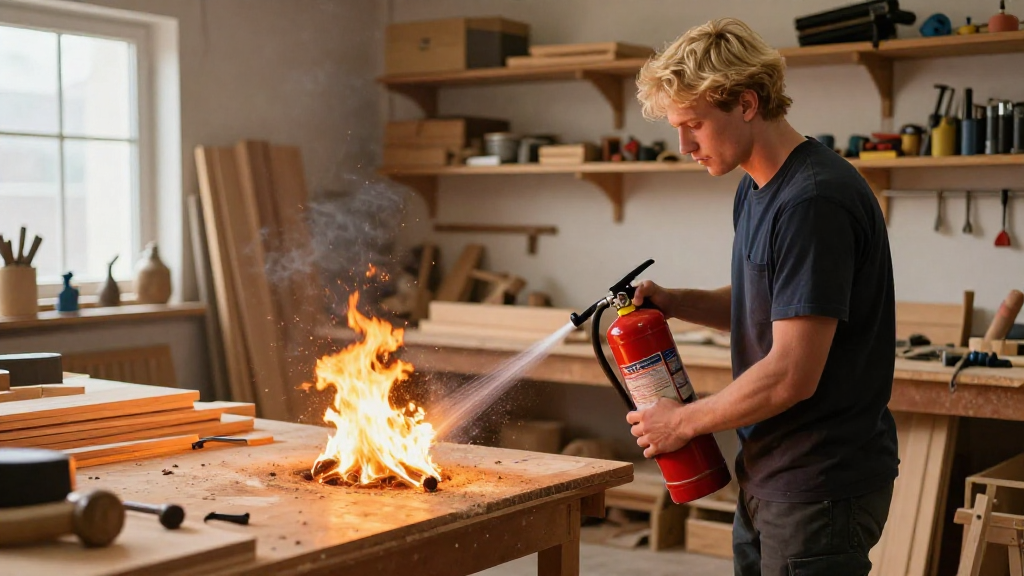
Fire safety is a critical consideration for anyone involved in woodworking or operating a woodshop.
Understanding how to properly use a fire extinguisher in a woodshop can save lives and prevent extensive property damage.
Why Is Fire Safety Important in a Woodshop?
Workshops often involve the use of flammable materials like wood, adhesives, and finishes.
These materials, when combined with heat sources like saws, sanders, and torches, create a potential fire hazard.
Statistics show that workshop fires can escalate quickly, making it essential to establish proper fire safety protocols.
What Are the Common Causes of Fires in Woodshops?
Several factors can lead to fires in a woodshop, including:
- Flammable Materials: Sawdust, wood shavings, and oils can ignite easily.
- Electrical Faults: Overloaded circuits or improper wiring can cause sparks.
- Heat Sources: Tools that generate heat can ignite nearby materials.
- Negligence: Leaving equipment unattended or failing to store materials properly increases risk.
How to Properly Use a Fire Extinguisher in a Woodshop
Knowing how to use a fire extinguisher in a woodshop is crucial for ensuring safety.
Here’s a simple step-by-step guide:
-
Check the Type of Fire Extinguisher
Ensure you have the right type of fire extinguisher.
In woodshops, a Class A extinguisher is typically required, as it is designed for flammable solids like wood. -
Pull the Pin
This allows you to operate the extinguisher. -
Aim Low
Point the nozzle at the base of the fire, not the flames.
This will help extinguish the source of the fire. -
Squeeze the Handle
This will release the extinguishing agent. -
Sweep Side to Side
Move the nozzle from side to side at the base of the fire until it appears to be out. -
Watch for Reignition
Be vigilant and ready to reapply if necessary.
Why Should You Have Multiple Fire Extinguishers?
In a workshop setting, having multiple fire extinguishers is advisable for several reasons:
- Accessibility: Having extinguishers located near exits and workstations ensures they are quickly reachable.
- Coverage: Different areas of the workshop may have different hazards, requiring various extinguisher types.
- Redundant Safety: In the event of a large fire, having multiple extinguishers can help in mitigating the risk of total loss.
What Fire Safety Equipment Should You Have?
In addition to knowing how to use a fire extinguisher in a woodshop, you should consider other safety equipment:
- Smoke Alarms: Install smoke detectors around the workspace to provide early warnings.
- Fire Blankets: These can be effective for smothering small fires or personal flames.
- First Aid Kits: Their availability ensures you can handle minor injuries promptly.
- Sprinkler Systems: These are essential in larger workshops for automatic responses to fire.
How Can You Prevent Fires in Your Woodshop?
Prevention is better than cure. Here are steps to minimize fire hazards:
-
Maintain a Clean Workspace
Regular cleaning reduces the buildup of flammable materials. -
Store Materials Properly
Store flammable liquids and materials in approved containers and away from heat sources. -
Inspect Tools Regularly
Check that all electrical tools are in good condition to prevent electrical fires. -
Install Proper Ventilation
Adequate airflow decreases the concentration of flammable dust and fumes. -
Practice Etiquette
Never leave tools running unattended, and ensure to switch off equipment after use.
What Should You Do in Case of a Fire?
In the unfortunate event of a fire, follow these steps:
- Stay Calm: Panic can lead to poor decisions and increased danger.
- Evacuate Immediately: Ensure all personnel know the fastest escape routes.
- Call Emergency Services: Alert local fire services as soon as possible.
- Use the Fire Extinguisher if Safe: Only attempt to extinguish a fire if it is small and manageable.
- Do Not Return Inside: Once out, do not risk re-entering the building for any reason.
Why Is Training Essential for Fire Safety in a Woodshop?
Training on using a fire extinguisher in a woodshop is crucial for everyone working in the facility.
Here’s why training matters:
- Awareness: Understanding potential hazards helps employees take precautions.
- Confidence: Familiarity with emergency protocols empowers personnel to act decisively.
- Team Coordination: Training promotes teamwork during emergencies, ensuring everyone’s safety.
How Often Should You Review Fire Safety Protocols?
Fire safety is not a one-time effort. Regularly reviewing your protocols can help keep workers aware and prepared.
It is recommended to hold fire drills and reviews at least:
- Annually: For comprehensive reviews of procedures.
- Bi-Annually: For tool and equipment checks.
- Quarterly: For refresher training sessions.
Final Thoughts on Fire Safety in Your Workshop
Fire safety in the workshop cannot be overlooked.
Knowing how to maximize safety through proper procedures, training, and equipment is vital.
Adhering to guidelines for using a fire extinguisher in a woodshop will not only protect lives but also save your investment in tools and materials.
Remember, a small moment of preparation can prevent a catastrophic loss in your workshop, ensuring a safe and productive environment for everyone involved.
Stay alert, stay safe, and maintain a fire-ready workplace!