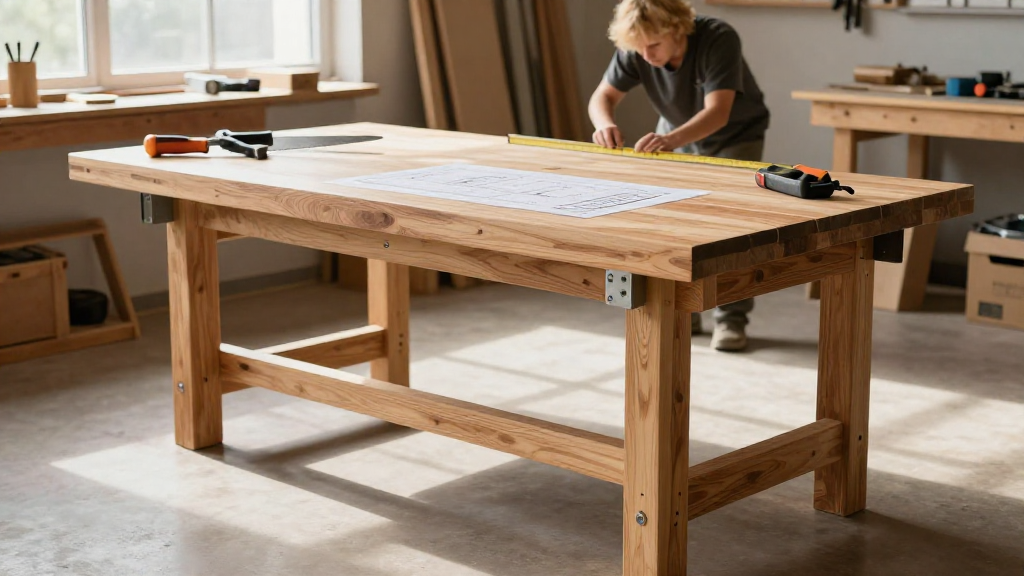
Are you looking for how to build a workbench from a template?
In this guide, we’ll walk you through the steps to create a sturdy, heavy-duty workbench using a convenient printable template. This project is not only functional but also a fantastic way to enhance your workspace, ensuring you have a reliable surface for all your DIY projects.
Why Should You Build a Workbench?
Before diving into the specifics of how to build a workbench from a template, let’s explore a few compelling reasons to construct your own workbench:
- Customization: You can design it to fit your space and specific needs.
- Cost-Effective: Building a workbench can save you money compared to purchasing a pre-made one.
- Quality Control: You can choose high-quality materials to ensure durability.
What Materials Do You Need?
To build a heavy-duty workbench using your printable template, you’ll need several materials. Here’s a straightforward list:
- Plywood or MDF for the top: Choose a piece that is at least 3/4 inch thick.
- 2×4 lumber for the frame: These will provide strong support.
- Wood screws: To assemble your workbench securely.
- Wood glue: For additional strength in your joints.
- Sandpaper: To smooth out any rough edges.
- Clamps: To hold pieces in place during assembly.
- Paint or varnish (optional): For finishing touches and protection.
How Do You Prepare the Template?
Using a printable template is an excellent way to streamline your workbench-building process. Here’s how to get started:
-
Download and Print:
– Find a suitable heavy-duty workbench template online.
– Make sure it is to scale when printed. -
Follow the Measurements:
– Measure your space to ensure the workbench fits.
– Transfer any necessary adjustments to the template. -
Cutting the Template:
– Cut out the template pieces from the paper.
– Be precise, as these will guide your cuts on the actual materials.
How to Cut Your Materials?
Once you have your template ready, it’s time to cut your materials accordingly. Here’s how:
- Transfer the Template to Plywood and Lumber:
- Use the template pieces to trace onto your chosen materials.
-
Ensure accuracy for a better fit.
-
Utilize the Right Tools:
- A circular saw is ideal for cutting plywood.
-
A miter saw will help with precise cuts on the lumber.
-
Safety First:
- Wear safety goggles and a dust mask.
- Follow all safety guidelines when using power tools.
How Do You Assemble the Workbench?
With all your materials cut, it’s time to assemble your workbench. Follow these steps to ensure a robust construction:
-
Build the Frame:
– Use your 2×4 lumber to create a rectangular frame.
– Secure the corners with wood screws and wood glue.
– Add additional support beams as needed. -
Attach the Top:
– Position the plywood or MDF piece over the frame.
– Use clamps to hold it in place.
– Secure the top to the frame with wood screws.
– Ensure to drill pilot holes to prevent splitting the wood. -
Add Additional Support:
– For extra stability, consider adding diagonal braces underneath the table.
– This will prevent wobbling and extend the lifespan of the workbench.
What Finishing Touches Do You Need?
Once your workbench is assembled, it’s time for some finishing touches.
- Sanding:
-
Smooth any rough edges with sandpaper to prevent splinters.
-
Protective Coatings:
- Apply a coat of varnish, paint, or sealer for durability.
-
Not only does this enhance appearance, but it also protects the wood.
-
Adding Accessories:
- Consider adding drawers or shelves underneath for additional storage.
- Tool hooks on the sides can help organize your work area.
How to Ensure Your Workbench Is Heavy-Duty?
To ensure your workbench is built to last, focus on a few key elements:
- Material Quality:
-
Choose high-grade plywood and sturdy lumber for construction.
-
Solid Connections:
-
Use wood glue and screws to ensure every joint is strong.
-
Weight Distribution:
- Avoid overloading any single section to maintain balance and stability.
How Do You Maintain Your Workbench?
Once you have built your workbench, maintenance is crucial to keep it in top condition. Here are some simple tips:
- Regular Inspections:
-
Periodically check screws and joints for any signs of wear.
-
Cleaning:
-
Keep the surface clear of dust and debris productively.
-
Reapply Finish:
- As the coating wears away, consider reapplying varnish or paint annually.
Conclusion: Are You Ready to Build?
Building a heavy-duty workbench is a rewarding project that enhances your workspace significantly.
Now that you know how to build a workbench from a template, it’s time to gather your materials and get started.
With careful planning, attention to detail, and a commitment to quality, you’ll have a workbench that serves you well for years to come.
If you have any additional questions or need further guidance while building your workbench, don’t hesitate to seek help or consult DIY forums and resources. Happy building!