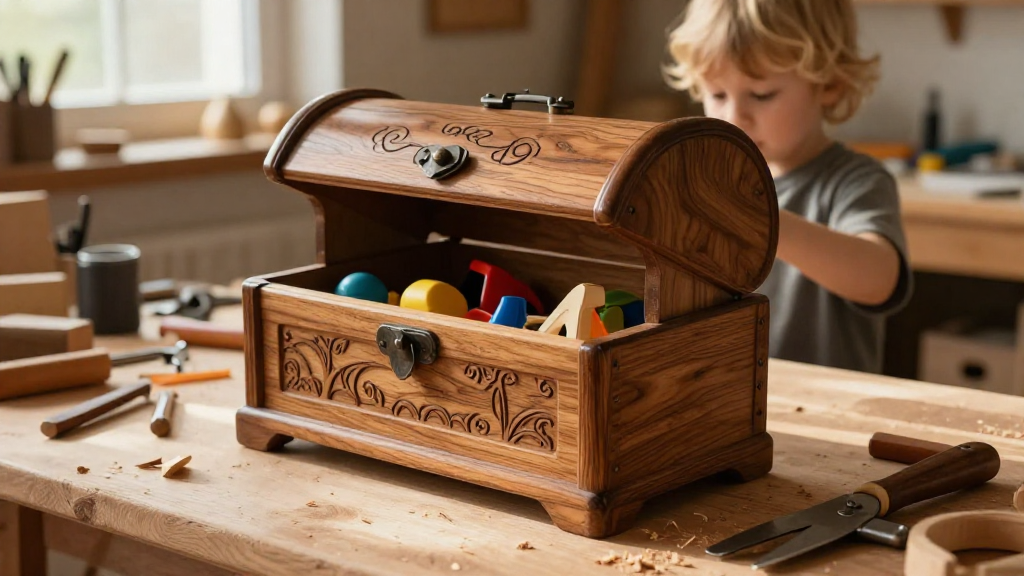
Building a toy chest woodworking plan is an enjoyable project that not only enhances your woodworking skills but also creates a functional piece of furniture for your child’s room.
What Do You Need to Start Building a Toy Chest?
Before diving into the building process, let’s gather the necessary materials and tools.
Materials:
- Wood:
- You will need plywood or solid wood, such as pine or oak.
-
Dimensions: Two 1×10 boards at 4 feet long for sides, one 1×10 board at 3 feet long for the front, one for the back, and one for the bottom.
-
Wood Glue: Strong adhesive to bond the pieces together.
-
Wood Screws: For added strength and sturdiness.
-
Sandpaper: For smoothing out rough edges.
-
Wood Finish: Paint, stain, or sealant to protect and enhance the wood.
Tools:
-
Circular Saw or Hand Saw: For cutting the wood to size.
-
Drill and Drill Bits: For making holes and securing screws.
-
Clamps: To hold pieces together while the glue dries.
-
Tape Measure: For measuring lengths accurately.
-
Square: To ensure your cuts are precise and angles are squared.
How Do You Create a Building a Toy Chest Woodworking Plan?
Creating your own building a toy chest woodworking plan involves a few simple steps. Here’s a step-by-step breakdown:
-
Design Your Toy Chest:
– Start by sketching out what you want your toy chest to look like.
– Consider dimensions that will suit your space. -
Measure and Cut The Wood:
– Use your tape measure to mark the necessary cuts on the wooden boards.
– Cut the boards using a saw according to your measurements. -
Build the Box Frame:
– Assemble the sides, front, back, and bottom using wood glue and screws.
– Use clamps to hold the pieces in place as you work. -
Attach the Lid:
– Cut a larger piece of wood for the lid, ensuring it has an overhang if desired.
– Attach it to the back using hinges. -
Sand the Edges:
– Use sandpaper to smooth all the edges and surfaces.
– This not only makes it visually appealing but also safe for kids. -
Finish Your Toy Chest:
– Apply your chosen wood finish, allowing it to dry thoroughly.
Why Is It Essential to Follow Safety Precautions?
When working with tools and materials, always prioritize safety.
Here are some key safety tips:
-
Wear Safety Gear: Always use goggles to protect your eyes from sawdust and lung protection to avoid inhaling particles.
-
Handle Tools with Care: Be cautious and use tools as instructed.
-
Keep Your Workspace Clean: A tidy workspace minimizes accidents and enhances efficiency.
What Are Some Customization Ideas for Your Toy Chest?
A plain wooden toy chest can be transformed into a creative masterpiece with just a few tweaks.
-
Painting Styles: Use chalk paint or spray paint to give your toy chest a vibrant color.
-
Decals and Stencils: Add fun patterns or your child’s favorite characters for a personalized touch.
-
Fabric Liners: Consider lining the inside with fabric for an added softness and decoration.
How Can You Ensure Longevity and Durability?
To ensure that your toy chest lasts for years, implement these practices:
-
Quality Materials: Always choose high-quality wood and finishes.
-
Proper Ventilation: Drill air holes to prevent moisture build-up, which can lead to mold.
-
Regular Maintenance: Periodically check the chest for stability and wear, reapplying finishes as needed.
Where Can You Find Inspiration for Your Project?
Looking for inspiration is an essential part of building a toy chest woodworking plan.
-
DIY Websites: Websites like Instructables or DIY Networks offer free plans and ideas.
-
Pinterest: An excellent platform for collecting varied designs and styles.
-
Woodworking Books: Libraries and bookstores offer many resources with comprehensive projects tailored for all skill levels.
How to Make Your Wooden Toy Chest Kid-Friendly?
When it comes to making your toy chest safe for children, consider the following enhancements:
-
Soft-Close Hinges: To prevent fingers from getting caught, use soft-close hinges that retract slowly.
-
Rounded Edges: Sand the edges down to eliminate sharp points.
-
Stable Base: Ensure that your chest has a sturdy base to prevent tipping.
Conclusion: Ready to Start Building a Toy Chest?
Building a toy chest woodworking plan is not just a fulfilling task; it provides a valuable storage solution that can be passed down through generations.
By following the step-by-step guide above and incorporating your personal touches, you’ll not only create a piece of furniture but also a cherished memory.
Embrace your creativity, gather your materials, and let the woodworking journey begin!
Final Words of Encouragement
Remember, patience and practice are key. Every expert was once a beginner.
With determination and the right building a toy chest woodworking plan, you’ll soon have a beautiful toy chest that not only functions well but also adds charm to your home. Happy building!