Choosing the right cable cutter can make brake and shift-cable replacement faster, cleaner, and less frustrating. The best tools slice through housing without flattening it and leave cable ends ready for caps or crimps.
This roundup compares 10 options for home mechanics, commuters, and busy bicycle workshops, including purpose-built bike cutters and versatile wire-rope tools.
Best 10 Cable Cutters for Bicycle Cables Picks for 2026
Professional Pick
Park Tool CN-10 Cable & Housing Cutter

- Precision-ground jaws for clean cuts
- Built-in crimper and housing-forming hole
- Forged steel handles with limited lifetime warranty
Best For: Frequent cable and housing work
Comfort Choice

- Heat-treated tool steel construction
- High-leverage design with cushioned grip
- Cuts cables, housing, and other wires
Best For: Comfortable routine bike repairs
Versatile DIY Option

- Cuts cable up to 5/32 inch (4 mm)
- Hardened CR-V blade for clean cuts
- Safety lock and ergonomic one-hand design
Best For: Bicycle and wire-rope DIY projects
Compact Steel Cutter
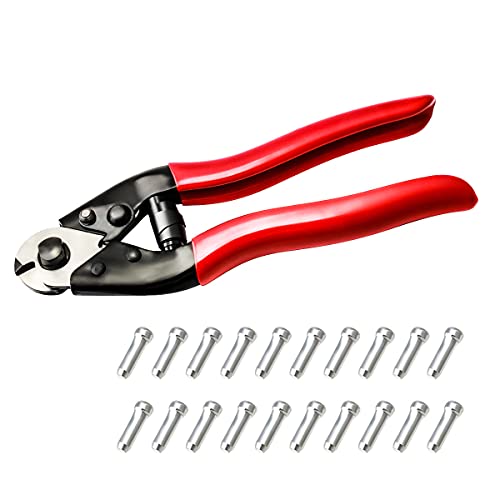
- Cuts steel wire up to 5/32 inch
- Heat-treated, sharp cutting edges
- Lightweight 1.6-ounce design
Best For: Compact bicycle repair kits
Compact Crimper-Cutter

- Cuts bicycle cables up to 2.2 mm
- Built-in ratcheting end-cap crimper
- Cr-Mo steel with ergonomic grips
Best For: Bike repairs needing cutting and cable-end crimping
Heavy-Duty Cable Cutter
- Cuts cables up to 5/32 inch (4 mm)
- Hardened CR-V blade for clean cuts
- Safety lock and non-slip rubber grips
Best For: Bike repairs and thicker cable or wire-rope projects
Complete Cable Kit

- Includes cutter, cables, housings, and caps
- Cutter handles wire up to 5/32 inch
- Adds O-rings, guides, boots, and clips
Best For: Full brake and shift cable replacement projects
Heavy-Duty Ratcheting Pick

- 68 HRC blade for sharp shearing
- Ratcheting mechanism adds leverage
- Cuts cables up to 6 mm
Best For: Bicycle and multi-purpose wire-rope cutting
Precision Brake-Cable Choice

- Clean shear cuts help reduce fraying
- Chrome vanadium steel jaws
- Spring handle and safety lock
Best For: Bicycle brake cables and controlled DIY cutting
Compact Spring-Assist Option

- Cuts 1–5 mm soft and hard cable
- Spring-assisted one-hand operation
- TPR grip and safety lock
Best For: Routine bicycle brake and shift cable maintenance
Professional Pick – Park Tool CN-10 Cable & Housing Cutter
For cyclists who want purpose-built cable cutters for bicycle cables, the Park Tool CN-10 combines precision-ground jaws with features for finishing both cables and housing. Its forged, heat-treated steel handles are designed for repeated workshop use.
Best For: Home mechanics and bike workshops that regularly replace brake or derailleur cables and housing.
Pros:
- Precision-ground jaws make clean cable cuts.
- Built-in crimper handles cable end caps.
- Forming hole helps reshape housing ends and ferrules.
- Made in the USA with a limited lifetime warranty.
Cons:
- At 10 inches and 339 g, it is larger and heavier than basic snips.
- Its professional features may be more than occasional repairs require.
The CN-10 is the most feature-rich option here for complete cable-and-housing work. Choose it when clean results, crimping, and long-term workshop durability matter more than minimum size or weight.
Comfort Choice – Pedro's Bicycle Cable Cutter
Pedro’s Bicycle Cable Cutter is a straightforward choice among cable cutters for bicycle cables, with heat-treated tool steel, a high-leverage design, and cushioned grips. It is made to cut brake and derailleur cables, housing, and other wires cleanly.
Best For: Riders and home mechanics seeking comfortable, general-purpose cable and housing cutters.
Pros:
- Heat-treated tool steel supports strength and long-lasting performance.
- High-leverage design helps make cutting easier.
- Ergonomic cushioned grip improves handling comfort.
- Suitable for brake cables, derailleur cables, housing, and other wires.
Cons:
- The supplied notes do not mention a built-in crimper or housing-forming feature.
- The listed cutting width is 10 centimeters, so exact compatibility with unusually thick cable should be checked.
This is a practical middle-ground cutter for routine bicycle maintenance. Its comfort-focused handle and broad stated use make it appealing when you want dedicated bike-tool performance without extra finishing features.
Versatile DIY Option – Muzata CR12 Cable Cutter
The Muzata CR12 is a versatile pick for cable cutters for bicycle cables, especially if you also work with wire rope or cable railing. Its hardened chrome-vanadium steel blade is rated for cables up to 5/32 inch and is paired with a safety lock and non-slip grip.
Best For: DIY users who need one portable cutter for bicycle brake work and small wire-rope projects.
Pros:
- Rated to cut wire rope and cable up to 5/32 inch (4 mm).
- Hardened CR-V blade is designed for clean, non-fraying cuts.
- Safety lock helps prevent accidental opening.
- Lightweight, one-hand design has non-slip rubber grips.
Cons:
- It is not described as including a cable-end crimper or housing-forming feature.
- Its broader wire-rope focus may be unnecessary for bicycle-only maintenance.
The CR12 stands out for versatility and portability. It makes sense for a DIY toolkit that covers bicycle brake repair as well as cable railing, fencing, or similar projects, provided the cable diameter stays within its rating.
Compact Steel Cutter – ZFZ Cable and Housing Nippers
The ZFZ Stainless Steel Cable Cutter is a compact-looking option for cable cutters for bicycle cables, with hardened cutting edges intended to shear steel wire rope up to 5/32 inch. Its design focuses on clean cuts without fraying or split ends.
Best For: Bicycle repair and assembly tasks requiring a small, steel cable-focused cutting tool.
Pros:
- Designed for steel wire up to 5/32 inch.
- Heat-treated blade improves hardness and strength.
- Sharp edges are intended to produce clean, non-frayed cuts.
- Lightweight at 1.6 ounces.
Cons:
- The supplied notes do not mention a handle grip material or locking mechanism.
- No built-in crimper or housing-forming feature is listed.
ZFZ keeps the feature set focused on cutting. Its low listed weight may suit a compact repair kit, while the 5/32-inch capacity gives it useful range for bicycle wire and small cable applications.
Compact Crimper-Cutter – iCrimp Bike Cable Crimper
For shoppers comparing cable cutters for bicycle cables, the iCrimp combines cable cutting with end-cap crimping in a compact, ratcheting tool. It is designed for bicycle brake and derailleur cables and can also handle certain wire and sleeve applications up to its stated 2.2 mm capacity.
Best For: Bicycle maintenance jobs that require both clean cable cuts and aluminum end-cap crimping.
Pros:
- Built-in cutter handles brake, derailleur, copper wire, and wire rope up to 2.2 mm.
- Ratcheting mechanism helps hold sleeves during crimping.
- Cr-Mo steel construction, ergonomic grips, and a rust-resistant design.
- Precision-processed jaws are intended to improve fit and tolerance.
Cons:
- Its 2.2 mm maximum limits use with thicker cables.
- Its specialized crimper design may be more tool than needed for simple cutting.
The iCrimp is a practical choice when a bicycle toolkit needs one compact tool for both cable-end finishing and cutting. Its strongest advantage is versatility within the stated diameter range.
Heavy-Duty Cable Cutter – Muzata M015 Cable Cutter
The Muzata M015 is a straightforward option among cable cutters for bicycle cables, with a stated capacity of up to 5/32 inch, or 4 mm. Its hardened Chrome Vanadium blade is designed to make clean cuts, while the safety lock and rubber grips support controlled one-hand use.
Best For: Bicycle brake repairs and DIY work involving thicker wire rope or cable.
Pros:
- Cuts wire rope and cables up to 5/32 inch (4 mm).
- Hardened CR-V steel blade is designed to reduce fraying and crushing.
- Safety lock helps prevent accidental opening and cutting.
- Lightweight design, non-slip grips, and telescopic spring support portability.
Cons:
- It is a cutter rather than a combined crimping tool.
- The product is also oriented toward cable railing and other DIY applications, which may be unnecessary for basic bicycle work.
Choose the M015 if cutting capacity is the priority. Its 4 mm rating gives it broader cable versatility than tools limited to typical bicycle cable diameters, while the included cable donuts add repair convenience.
Complete Cable Kit – weideer 107PCS Bike Cable Kit
The weideer kit is more than a cutter: it bundles an 8-inch stainless steel cable cutter with brake and shift cables, housings, end caps, O-rings, and installation accessories. For anyone shopping for cable cutters for bicycle cables, this set is aimed at replacing and finishing a broad range of bike control cables in one purchase.
Best For: Riders or home mechanics who need replacement brake and shift cables, housing, and small installation parts together.
Pros:
- Includes a stainless steel cutter rated for wire up to 5/32 inch.
- Provides brake cables, shift cables, brake and shifter housing, and multiple end caps.
- Safety lock supports storage and carrying.
- Includes O-rings, cable guides, boots, clips, and other bike-specific accessories.
Cons:
- The large 107-piece kit may be excessive if only a cutter is needed.
- Included cable and housing sizes may not suit every bicycle setup.
- The notes do not specify a dedicated crimping function.
This is the convenience-focused option in the group. It makes sense for a complete cable replacement or workshop restock, whereas buyers who already have cables and housing may prefer a standalone cutter.
Heavy-Duty Ratcheting Pick – iCrimp CWR60 Cable Cutter
For shoppers comparing cable cutters for bicycle cables, the iCrimp CWR60 stands out for its ratcheting design and 6 mm cutting capacity. Its hardened blade is suited to bicycle, copper, piano, marine, fence, and aircraft cables.
Best For: Buyers who want a ratcheting cutter for bicycle cables and other wire-rope applications.
Pros:
- 68 HRC cutting blade is designed for sharp shearing.
- Ratcheting mechanism helps maintain grip and apply more cutting force.
- Cr-MO steel construction offers rust resistance, while the TPR grip improves comfort.
Cons:
- Its 6 mm capacity may be more than needed for basic bicycle cable work.
- The ratcheting design may be less straightforward than simple cable cutters.
The CWR60 is a strong choice when you want extra leverage and a durable build for repeated cutting tasks, not just occasional bicycle maintenance.
Precision Brake-Cable Choice – SHALL 7.5-Inch Cable Cutter
The SHALL 7.5-inch cutter is a practical option among cable cutters for bicycle cables, especially for brake and shift cable work. Its hardened shear-cut jaws are designed to make clean cuts without fraying or crushing cable ends.
Best For: Bicycle brake cable jobs, DIY projects, and users who prefer a safety lock and spring-assisted handles.
Pros:
- Cuts stainless steel wire rope up to 5/32 inch and aluminum or copper cable up to 3/16 inch.
- Forged chrome vanadium steel jaws are heat-treated for durability.
- Spring-open handles, non-slip grips, and a safety lock support controlled operation.
Cons:
- The listed cutting capacity is smaller than some heavier-duty cable cutters.
- Its 7.5-inch size may be less compact than a dedicated bicycle tool.
With clean-cut shear blades and useful handling features, this is a well-rounded pick for bicycle cable replacement and general home cable work.
Compact Spring-Assist Option – 8-Inch Bicycle Cable Pliers
This 8-inch cutter is a versatile choice for cable cutters for bicycle cables, handling inner and outer brake or shift cables along with other soft and hard steel wire. It is rated for cable sizes from 1 to 5 mm, with a maximum listed diameter of 3/16 inch.
Best For: Bicycle repairs and DIY users who want spring-assisted, one-hand cable cutting.
Pros:
- Hardened #55 forged steel blade is designed for precise, clean cuts.
- Labor-saving spring supports one-hand operation.
- TPR ergonomic grip and safety-lock snap improve handling and storage.
Cons:
- It should not be used on cables larger than the stated 3/16-inch capacity.
- The notes do not specify a ratcheting mechanism for especially tough cuts.
This cutter balances broad cable compatibility with convenient handling, making it a sensible everyday tool for bicycle maintenance and light-to-moderate DIY work.
How We Picked the Best Cable Cutters for Bicycle Cables
We focused on the features that matter during real brake and derailleur-cable work: cutting capacity, jaw design, leverage, handle comfort, durability, and the ability to cut both inner cable and outer housing cleanly. Bike-specific cutters received particular attention because standard diagonal cutters often crush housing or leave ragged ends.
We also included several general-purpose wire-rope cutters for shoppers who need more capacity or want one tool for bicycle maintenance and other household projects. However, a larger capacity rating does not automatically mean a better bicycle tool; clean, controlled cuts are usually more important than maximum force.
Quick Comparison
Park Tool and Pedro’s are the most directly aimed at bicycle service. Compact stainless-steel and specialty cutters can suit occasional repairs, while ratcheting or heavy-duty models are better for thicker cables and repeated work. Complete kits add convenience but may trade some cutter quality for the included accessories.
Key Buying Factors
Cutting Capacity and Jaw Shape
Check whether the cutter is rated for bicycle inner cables, housing, or both. A suitable jaw should sever braided cable cleanly while supporting housing to reduce crushing. If you service larger stainless or wire-rope cables, choose a model with an appropriate capacity rather than forcing a small bike cutter.
Leverage and Handle Comfort
Longer handles generally provide more leverage, but compact handles are easier to store and control on a work stand. Cushioned or dual-density grips help when cutting several cables in one session. Ratcheting mechanisms can reduce hand effort on thicker material, though they are usually bulkier.
Crimping and Cable-End Features
Some bicycle cutters include crimping jaws for securing ferrules or cable end caps. This can save bench space, but inspect the crimper’s size range and shape before relying on it for a particular cap. A dedicated crimper may still provide more consistent results for frequent workshop use.
Build Quality and Maintenance
Look for hardened steel or stainless components, a firm pivot, and blades that close evenly. Keep the cutting edges clean, avoid using them on material beyond their rating, and add a small amount of pivot lubricant periodically.
Who Should Buy Which Cable Cutters for Bicycle Cables?
Choose a bike-specific cutter if you mainly replace brake and shift cables and want predictable housing cuts. A compact model is practical for roadside kits or occasional home repairs. Heavy-duty stainless or wire-rope cutters make more sense for mechanics who also work on cable railing, outdoor equipment, or thicker cable.
Buy a cutter-and-crimper combination if you value convenience and perform complete cable installations. A multi-piece bicycle cable kit is best for beginners who need replacement cables and accessories immediately. For frequent professional use, prioritize the cleanest cut, strongest pivot, and most comfortable handles over the lowest price.