Choosing among hydraulic cable cutters means balancing cutting capacity, portability, power source, and the types of cable or reinforcement you handle. The right tool can make demanding copper, aluminum, armored cable, wire rope, or ACSR cuts faster and more consistent.
We compare 10 options ranging from compact manual and cordless models to heavy-duty hydraulic cutters built for professional electrical and industrial work.
Best 10 Hydraulic Cable Cutters Picks for 2026
Best All-in-One Kit

- Cuts copper and aluminum cable up to 32 mm
- Includes 13 dies from 6 AWG to 600 MCM
- Comes with two 4.0Ah batteries
Best For: Contractors needing cordless crimping and cutting in one tool
Best Multi-Trade Tool

- Combines cable crimping, pipe crimping, and cutting
- Cuts steel wire and electrical cable up to 25/32 inch
- Supports cable sizes from 8 AWG to 600 MCM
Best For: Electrical and plumbing professionals needing one multifunctional tool
Best Straightforward Hydraulic Cutter

- Dedicated hydraulic cutter design
- Listed weight of 6 pounds
- Compact 15-by-4-by-7-inch dimensions
Best For: Buyers wanting a focused cutter and planning to verify capacity
Best Heavy-Duty Capacity

- 60KN cutting force for demanding jobs
- Cuts cable, ACSR, and wire rope up to 32 mm
- Handles rebar up to 12 mm
Best For: Field users cutting large cable, ACSR, wire rope, and rebar
Industrial Power Pick
SWANSOFT 2-Inch Electric Hydraulic Cable Cutter

- Cuts up to 1000 MCM copper and 1250 MCM aluminum
- Includes two 18V 4Ah batteries and fast charger
- Not for ACSR, steel wire, rope, chain, or live wires
Best For: Industrial electricians cutting large compatible power cables
Large-Capacity Open-Head Choice
CPC-105C 105MM Hydraulic Cable Cutter

- Handles copper, aluminum, and armored cables up to 105 mm
- Open head and guide block aid cable positioning
- Requires a compatible hydraulic power source
Best For: Large cable jobs requiring open-head access and 360-degree operation
Portable Smart-Kit Option
ZUPPER 18V Cordless Hydraulic Cable Cutter
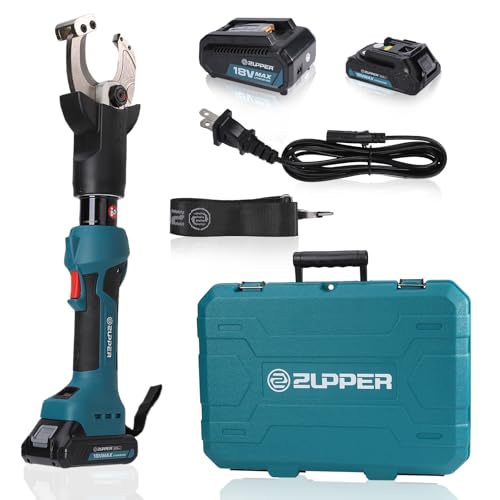
- Battery-powered 18V design for mobile work
- Includes two 18V 2Ah batteries and carrying case
- Monitoring features track temperature, battery, and circuit status
Best For: Construction-site work and emergency repairs requiring cordless mobility
Best Heavy-Duty Manual Cutter

- 60KN force with alloy steel blade
- 180° head and flexible positioning
- Includes case; blade is replaceable
Best For: Heavy-duty field cutting of compatible cable and wire rope
Best 2-in-1 Electric Kit
Automatic Cable Cutter and Lug Crimper

- Electric cutter and crimper combination
- 14 dies for 8 AWG–600 kcmil
- Includes two batteries and carrying case
Best For: Repetitive electrical cutting and lug-crimping work
Best Compact Manual Option
6t Rotatable-Head Cable Cutter

- 6-ton manual hydraulic cutting force
- 180° adjustable head and insulated grip
- Hook head with safety pressure valve
Best For: Routine manual cutting of compatible cable and wire rope
Best All-in-One Kit – 18V Crimper and Cable Cutter
If you need hydraulic cable cutters that can also handle heavy-duty terminal work, this cordless kit combines cutting and crimping in one tool. It cuts copper and aluminum cable up to 32 mm and includes 13 dies for sizes from 6 AWG through 600 MCM.
Best For: Electrical contractors and industrial users who want a portable crimper-cutter combination with broad cable-size coverage.
Pros:
- Interchangeable cutter and crimper functions reduce the need for separate tools.
- 13 included dies support common 6 AWG to 600 MCM cable sizes.
- Two 18V 4.0Ah batteries support extended cordless work.
- Hydraulic operation completes high-strength crimping tasks in about nine seconds.
Cons:
- At 9 pounds, it is relatively substantial for overhead or extended handheld work.
- Its cutting capacity is specified for copper and aluminum cable, so other materials are not confirmed.
This is a versatile choice when cable cutting and hexagonal crimping are both part of the job. Its wide die selection and backup battery make it particularly practical for demanding remote or jobsite applications.
Best Multi-Trade Tool – 3-in-1 Hydraulic Cable Cutter
This 3-in-1 hydraulic cable cutter is designed for users who move between electrical and plumbing tasks. Along with cutting steel wire and thick electrical cable up to 25/32 inch, it crimps cable terminals from 8 AWG to 600 MCM and copper pipe in three Pro Press sizes.
Best For: Professionals handling electrical, plumbing, and HVAC work who want one 18V tool for multiple applications.
Pros:
- Combines cable crimping, copper pipe crimping, and hydraulic cutting.
- Supports 1/2-inch, 3/4-inch, and 1-inch copper pipe crimping.
- Handles cable-terminal sizes from 8 AWG through 600 MCM.
- Temperature sensing and ventilation are intended to help manage heat during extended use.
Cons:
- The 25/32-inch cutting specification is narrower than the 32 mm capacity of some alternatives.
- Only the KZ-300C component is listed among the included components, so accessory details may be limited.
Its main advantage is workflow flexibility rather than specialization. If your work regularly combines cable connections, pipe pressing, and wire cutting, this multifunctional design can reduce the number of tools carried to the job.
Best Straightforward Hydraulic Cutter – HUSKIE TOOLS S-20
The HUSKIE TOOLS S-20 is a dedicated hydraulic cable cutter for buyers who prefer a focused tool rather than a multifunctional crimping kit. The supplied specifications identify a compact 15-by-4-by-7-inch body with a 6-pound weight.
Best For: Users seeking a dedicated hydraulic cutter from HUSKIE TOOLS with a relatively manageable listed weight.
Pros:
- Dedicated cutter design avoids the extra functions of combination tools.
- Listed weight of 6 pounds is lighter than several heavy-duty options in this roundup.
- Compact dimensions may be easier to store and transport.
Cons:
- The supplied notes do not state cutting capacity or compatible cable materials.
- No battery, pump, or accessory information is provided in the available details.
- Its capabilities are harder to compare with the explicitly rated alternatives.
The S-20 may suit buyers who already know the capacity they need and want a dedicated hydraulic cutter. Because the supplied specifications omit key cutting ratings, confirm compatibility before purchasing.
Best Heavy-Duty Capacity – NEWTRY 60KN Cable Cutter
For demanding cutting jobs, this NEWTRY hydraulic cable cutter provides a 60KN cutting force and handles steel wire rope, ACSR, and cable up to 32 mm, plus rebar up to 12 mm. Its open, rotating cutter head is designed to make positioning easier in difficult work areas.
Best For: Heavy-duty field work involving steel wire rope, ACSR, large cable, or moderate-size rebar.
Pros:
- Handles steel wire rope, ACSR, and cable up to 32 mm in diameter.
- Also cuts rebar up to 12 mm.
- 60KN cutting force supports demanding materials.
- Rotating 180-degree buckle hook-knife head and 360-degree operation improve positioning flexibility.
Cons:
- At 13.12 pounds, it is substantially heavier than the HUSKIE S-20.
- The supplied details do not mention cordless battery operation.
- Its larger package may be less convenient for routine light-duty cable work.
This is the strongest fit in the group when material range and cutting force matter most. The articulated head and flexible working angles are useful advantages for elevated or awkward jobsite cutting.
Industrial Power Pick – SWANSOFT 2-Inch Electric Hydraulic Cable Cutter
For demanding hydraulic cable cutter work, the SWANSOFT combines electric-hydraulic operation with a 2-inch cutting width. It is designed for up to 1000 MCM copper, 1250 MCM aluminum, and armored cable up to 50 mm, with cuts reportedly completed in 3–5 seconds.
Best For: Industrial electricians handling large copper, aluminum, and compatible armored cables.
Pros:
- Includes two 18V 4Ah batteries and a fast charger.
- Brushless motor and hardened steel blades support repeated use.
- Carrying case, manual, and one-year warranty are included.
- Battery setup is rated for more than 150 continuous cuts.
Cons:
- Not suitable for ACSR, steel wire, wire rope, iron chain, or fuel line.
- Should not be used on live wires.
- At 9 pounds, it may be tiring for extended overhead work.
This is a substantial, ready-to-use kit for power-system installation and maintenance. Its capacity and included batteries make it a strong choice when productivity matters, provided the cable type falls within its stated limitations.
Large-Capacity Open-Head Choice – CPC-105C 105MM Hydraulic Cable Cutter
The CPC-105C is a heavy-duty hydraulic cable cutter for copper, aluminum, and armored cables from 0 to 105 mm. Its open-head design and guide block are intended to simplify cable positioning while helping keep the blade aligned.
Best For: Users who need a large 105 mm cutting capacity and flexible positioning around substantial cables.
Pros:
- Open head supports easier placement of large cables.
- Heat-treated alloy steel blade is built for durability.
- 360-degree operation supports work at varied angles.
- Ergonomic non-slip handle and pressure relief switch improve handling.
Cons:
- The notes do not specify included batteries or a power source.
- At 20.5 inches long, it may be less convenient in tight spaces.
- Its 105 mm capacity may be more than needed for smaller cable work.
Choose this model when maximum stated capacity and open-head access are priorities. The threaded ZG3/8-inch quick connector adds setup flexibility, but buyers should confirm the compatible hydraulic power source before purchasing.
Portable Smart-Kit Option – ZUPPER 18V Cordless Hydraulic Cable Cutter
The ZUPPER cordless hydraulic cable cutter pairs an 18V battery-powered design with a compact, portable format. It is intended for large copper and aluminum cables and includes two 18V 2Ah batteries plus a carrying case for work on construction sites or during repairs.
Best For: Mobile workers who value cordless portability, included spare power, and monitoring features.
Pros:
- Includes two 18V 2Ah batteries and a durable carrying case.
- Lightweight design is intended for frequent site transitions.
- High-hardness blades are designed for copper and aluminum cable cutting.
- Monitoring features track circuit status, battery level, and tool temperature.
Cons:
- The supplied notes do not state a specific maximum cable size.
- The listed package weight is 19.8 pounds, which may limit portability.
- Battery capacity is lower per battery than some heavy-duty kits.
This model is appealing when cordless convenience and built-in status monitoring matter more than a published capacity rating. Confirm the cable size and application compatibility before relying on it for particularly large installations.
Best Heavy-Duty Manual Cutter – 60KN Hydraulic Cable Cutter
For demanding cable-cutting jobs, this hydraulic cable cutter combines a 60KN cutting force with a high-carbon alloy steel blade. Its hook-style head, rotatable design, and included carrying case make it a practical choice for field work involving copper, aluminum, armored cable, ACSR, and wire rope.
Best For: Heavy-duty manual cutting of compatible copper, aluminum, ACSR, and wire-rope cables in field or elevated work areas.
Pros:
- 60KN hydraulic force and high-carbon alloy steel blade
- 180° rotating head supports flexible positioning
- Replaceable blade and insulated ring-style grip
- Includes a shockproof plastic carrying case
Cons:
- Not suitable for submarine cable, threaded rebar, iron chain, or aircraft cable
- At 8.75 pounds, it is relatively heavy for extended handheld use
Choose this model when cutting strength and broad cable compatibility matter more than compact weight. Verify the stated diameter limits before purchase, especially for wire rope and ACSR applications.
Best 2-in-1 Electric Kit – Automatic Cable Cutter and Lug Crimper
This hydraulic cable cutter is part of an electric 2-in-1 system that also crimps cable lugs. Automatic return operation, a 360° rotating head, OLED status display, and two batteries make it suited to repetitive electrical work where reducing tool changes can save time.
Best For: Electrical installers and technicians working with cable cutting and lug crimping from 8 AWG through 600 kcmil.
Pros:
- Combines cable cutting and hydraulic crimping in one system
- Automatic hydraulic return helps reduce manual effort
- Includes 14 hex dies covering 8 AWG to 600 kcmil
- Comes with two 18V batteries, charger, cutter head, and case
Cons:
- More equipment to carry than a dedicated manual cutter
- Its cutting specifications are not detailed in the supplied notes
This is the most versatile option of the three for electrical connection work, particularly when crimping is as important as cutting. Confirm the cutter-head capacity for your specific cable types before ordering.
Best Compact Manual Option – 6t Rotatable-Head Cable Cutter
For users who want a straightforward manual tool, this 6-ton hydraulic cable cutter offers a high-carbon alloy blade, insulated rubber handle, and 180° rotatable head. The hook-style knife head and safety valve are designed to simplify cable placement and pressure release.
Best For: Manual cutting of compatible copper and aluminum cable, armored cable, wire rope, and steel strand.
Pros:
- 6-ton hydraulic cutting force with high-carbon alloy blade
- 180° rotatable head improves working-angle adjustment
- Hook-style head makes cable placement convenient
- Safety valve supports controlled pressure release
Cons:
- Manual operation requires more effort than an electric hydraulic tool
- Supplied notes do not specify maximum cutting diameters
This cutter is a sensible fit for routine cable and wire-rope work when you prefer a manual hydraulic design. Because capacity details are not provided, check the manufacturer’s specifications against your cable diameter before buying.
How We Picked These Hydraulic Cable Cutters
We focused on the specifications that matter in real cutting work: maximum cable diameter, rated cutting force, compatibility with copper and aluminum conductors, performance on armored cable or reinforced materials, head design, portability, and operating method. We also considered whether a tool is cutting-only or combines cutting with hydraulic crimping.
Battery-powered models can improve productivity on job sites without convenient power, while manual hydraulic tools may be preferable for occasional use or locations where charging is impractical. Product claims should always be checked against the manufacturer’s cutting tables before purchase.
Quick Comparison
- Best for cordless versatility: Choose an electric hydraulic cutter or combination crimper-cutter with a suitable battery platform.
- Best for large conductors: Look for a high-force, open-head design with a diameter rating matched to your cable.
- Best for reinforced materials: Select a model specifically rated for ACSR, steel strand, armored cable, or wire rope.
- Best for occasional jobs: A manual hydraulic cutter can provide substantial force without batteries or electronic controls.
- Best for cutting and terminating: A 2-in-1 crimper-cutter may reduce the number of tools required on site.
Key Buying Factors for Hydraulic Cable Cutters
Cutting Capacity and Material Ratings
Diameter alone is not enough. A cutter rated for large copper cable may not be suitable for steel-reinforced conductors, wire rope, or armored cable. Confirm the exact material, construction, and maximum size listed by the manufacturer.
Hydraulic Force and Head Design
Higher force can help with tougher materials, but head geometry affects access and handling. Open-head designs are convenient when cables cannot be threaded through a closed jaw. Rotating heads can improve alignment in crowded panels or trenches.
Power, Batteries, and Runtime
Cordless tools are convenient for field work, but compare battery voltage, included battery count, charging time, runtime, and replacement-battery availability. Manual hydraulic models eliminate battery concerns but require more physical operation.
Safety and Maintenance
Look for guarded cutting areas, secure locks, reliable return mechanisms, and clear overload or pressure instructions. Keep blades clean and sharp, inspect hydraulic components regularly, and use eye and hand protection appropriate to the material being cut.
Who Should Buy Which Hydraulic Cable Cutters?
Electricians and installers will generally benefit from a compact cordless model, especially when working across multiple locations. Utility and industrial crews should prioritize force, large capacity, reinforced-material ratings, and durable construction over minimum weight. Contractors who both cut and terminate cables may save time with a combination crimper-cutter. Maintenance teams and occasional users may prefer a simpler manual hydraulic tool with fewer batteries and electronic components.
Before ordering, match the cutter’s published capacity to your largest routine cable, then leave reasonable margin for the material’s construction and working conditions. A tool that is slightly slower but correctly rated is safer and more useful than one selected solely by its headline diameter.