The best polymer clay sets for classrooms make it easier to manage shared supplies, introduce sculpting techniques, and keep creative projects affordable. This roundup compares 10 multi-color kits with different tool selections, piece counts, and beginner-focused features.
Before choosing, consider how many students will share each kit, whether your classroom can safely use an oven, and whether students need detailed sculpting tools or simply a broad color selection.
Best 10 Polymer Clay Sets for Classrooms Picks for 2026
Most Color Variety
Shuttle Art 117-Piece Polymer Clay Kit

- 95 unique colors plus extra basic-color clay
- Includes five tools and a beginner manual
- Non-toxic and designed for ages 12 and up
Best For: Color-rich classroom projects for older students
Most Complete Activity Kit
Artpar 92-Color Polymer Clay Kit

- Includes 92 colors, 19 tools, and 49 accessories
- Non-sticky clay for modeling and jewelry projects
- Supports creative and fine-motor skill activities
Best For: Accessory-rich group crafting and structured projects
Best Reusable Option
CiaraQ 100-Color Polymer Clay Kit

- 100 individually wrapped colors for easy distribution
- Stays soft until baked and can be reused
- Includes a tool and guide for beginner projects
Best For: Multi-session beginner projects and school activities
Best Shared Tool Pack
Pepy 35-Piece Clay Sculpting Tools
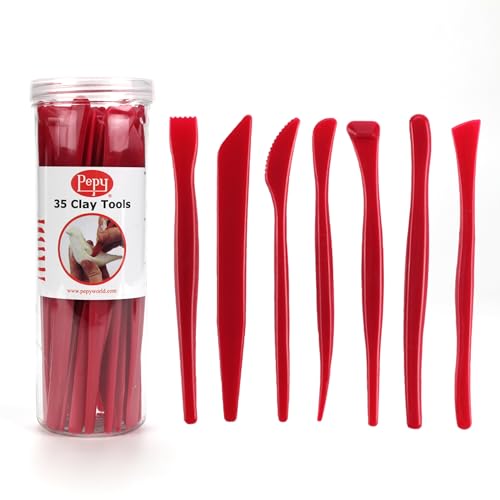
- 35 tools with five each of seven shapes
- Designed for groups and classroom use
- Works with several types of modeling clay
Best For: Expanding shared tools for classroom clay stations
Most Complete Accessory Kit
60-Color Polymer Clay Classroom Set

- 60 colors plus 20 tools and 49 accessories
- Reusable clay hardens when oven-baked
- Includes mold and project booklet
Best For: Accessory-focused classroom craft projects
Best Starter Kit
CiaraQ 50-Color Polymer Clay Set

- 50 individually wrapped 20g color blocks
- Includes 14 tools, guide, accessories, and case
- ASTM-certified and reusable until baked
Best For: Beginner classroom clay lessons
Best for Group Variety

- 60 colors with 14 tools and accessories
- Handles miniatures, ornaments, and figures
- Conforms to ASTM D-4236 and EN71
Best For: Varied classroom modeling projects
Most Colorful Starter Set

- 50 colors plus tools, mold, accessories, and tutorial book
- Individually wrapped pieces simplify classroom distribution
- ASTM D-4236 certified; reusable and oven-bakeable
Best For: Beginner classroom art projects and color-focused activities
Best for Variety and Storage

- 52 individually wrapped colors for broad project choice
- Includes tools, accessories, manual, and storage box
- Reusable, non-stick clay that can be oven-baked
Best For: Color-rich classroom modeling and jewelry activities
Best Value Classroom Basic

- 50 colors for modeling and color-matching lessons
- Includes storage box, tools, accessories, and manual
- Soft, non-sticky clay meets stated ASTM D-4236 standards
Best For: General beginner modeling and classroom art activities
Most Color Variety – Shuttle Art 117-Piece Polymer Clay Kit
For classrooms seeking polymer clay sets for classrooms with broad color coverage, the Shuttle Art kit offers 95 unique colors plus extra white, black, red, and yellow clay. Individually packed 10-gram blocks and five sculpting tools make it practical for small projects, miniatures, and beginner activities.
Best For: Classrooms working with students ages 12 and up that need extensive color variety for small sculptures and ornaments.
Pros:
- Includes 112 clay pieces in 95 unique colors, plus supplemental basic colors.
- Comes with five sculpting tools and a user manual.
- Non-toxic, fragrance-free, and listed as conforming to ASTM D-4236, ASTM F2923-20, and EN71 standards.
- Supports oven baking, with additional heating methods listed for suitable small pieces.
Cons:
- Small parts and sharp tools make it unsuitable for children under 12.
- Oven baking requires temperature and time control, and the clay should not be microwaved.
With nearly 100 colors and individually wrapped pieces, this is a strong choice when variety and organized distribution matter more than larger blocks of a few basic colors.
Most Complete Activity Kit – Artpar 92-Color Polymer Clay Kit
The Artpar kit is one of the more accessory-rich polymer clay sets for classrooms, combining 92 clay colors with 19 carving tools and 49 decorative accessories. Its smooth, non-sticky texture and project manual can support structured modeling, jewelry, and creative skill activities.
Best For: Group activities that benefit from both varied clay colors and a large selection of shared tools and embellishments.
Pros:
- Provides 92 colors, 19 carving tools, 49 decorative accessories, and a project manual.
- Designed for modeling, jewelry making, and creative exploration.
- Non-toxic, non-sticky, and described as free of wheat, nuts, and peanuts.
- Supports color recognition, dexterity, hand-eye coordination, and creative skill development.
Cons:
- The manufacturer recommends supervision for children under 6.
- Boiling is not effective; oven baking is recommended, and the clay should not be microwaved.
- The large accessory assortment may require classroom organization between sessions.
This kit stands out when a class needs more than clay alone, although teachers should plan for tool sharing and follow the included baking instructions.
Best Reusable Option – CiaraQ 100-Color Polymer Clay Kit
For classrooms that reuse materials across multiple lessons, the CiaraQ kit offers 100 individually wrapped colors in a non-hardening formula that stays soft until baked. The clay can be blended, reshaped, and used for school projects, ornaments, characters, and miniature work.
Best For: Beginner-focused classrooms and recurring activities where students need reusable clay in many colors.
Pros:
- Includes 100 colors with individually wrapped pieces for convenient distribution.
- Stays soft until baked and can be reused or blended for different shades.
- Includes a sculpting tool and instruction guide.
- Listed as non-sticky, free of wheat, nuts, and peanuts, and compliant with ASTM D-4236.
Cons:
- The notes specify ages 3 and up, but classroom supervision remains important during use and baking.
- Boiling is not effective; oven baking is recommended, and microwaving is not permitted.
- Only one sculpting tool is listed, which may limit simultaneous tool-based work.
Its soft-until-baked design makes it practical for projects completed over several sessions, while the 100-color assortment gives beginners plenty of room to experiment.
Best Shared Tool Pack – Pepy 35-Piece Clay Sculpting Tools
When a classroom already has clay but lacks enough tools, the Pepy set is a practical add-on to polymer clay sets for classrooms. It includes 35 plastic tools—five each of seven shapes—so multiple students can work on texturing, scoring, shaping, and smoothing at the same time.
Best For: Classes and groups that need a larger shared supply of sculpting tools for polymer, air-dry, pottery, or non-drying modeling clay.
Pros:
- Provides 35 tools in seven shapes, with five of each shape.
- Designed for group or classroom use.
- Works with polymer clay, air-dry clay, pottery clay, and plastilina.
- Sturdy plastic construction is intended for use with firm clays.
Cons:
- This is a tool set only and does not include polymer clay.
- The notes do not identify specific safety certifications or age guidance.
- Students may need instruction to match each shape to tasks such as scoring, smoothing, and texturing.
For teachers assembling a classroom clay station, the quantity and repeated tool shapes are more useful than a small starter-kit tool selection, especially when several students work simultaneously.
Most Complete Accessory Kit – 60-Color Polymer Clay Classroom Set
For classrooms seeking polymer clay sets for classrooms with plenty of project variety, this 60-color kit combines 20g blocks of clay with tools, a silicone mold, a project booklet, and 49 decorative accessories. It supports sculpting, color-mixing, and finished jewelry or keychain projects, though teachers should plan for small-part supervision.
Best For: Classroom activities that turn clay projects into accessories, ornaments, animals, or figures.
Pros:
- Includes 60 colors, 20 sculpting tools, a silicone mold, and 49 accessories.
- Clay stays reusable until oven-baked and is described as easy to shape, carve, and stretch.
- Supports color recognition, hand-eye coordination, and creative skill development.
- Meets ASTM D-4236 standards and contains no wheat, nuts, or peanuts.
Cons:
- Small accessories make the kit unsuitable for children under 3 and require classroom oversight.
- Finished pieces require heating in an oven.
Choose this set when the added findings and accessories are as important as the clay itself. Its broad contents can support varied classroom projects, but teachers will need a plan for distributing and storing many small components.
Best Starter Kit – CiaraQ 50-Color Polymer Clay Set
Among polymer clay sets for classrooms, this CiaraQ option is a straightforward starter kit for ages 4 and up. It provides 50 individually wrapped 20g colors, 14 tools, a tutorial book, accessories, and a storage case, making it practical for guided school projects and beginner sessions.
Best For: Beginner-friendly classroom lessons where organized materials and a moderate color range matter.
Pros:
- Includes 50 vibrant colors, 14 tools, a tutorial book, accessories, and a storage case.
- Individually wrapped blocks support grab-and-go material distribution.
- Clay stays soft until baked, can be blended, and is described as non-sticky.
- Meets ASTM D-4236 standards and contains no wheat, nuts, or peanuts.
Cons:
- It offers fewer colors and tools than some 60-color alternatives.
- Oven baking is the recommended hardening method; the clay does not air-dry.
- The listed age guidance begins at 4, so younger groups are not the intended audience.
This is a balanced choice for teachers introducing polymer clay without buying an especially large accessory assortment. The storage case and individually wrapped blocks may simplify setup, while the tutorial guide can help structure beginner activities.
Best for Group Variety – 60-Color Oven-Bake Clay Set
This 60-color set is a flexible pick for polymer clay sets for classrooms, with 20g blocks, 14 sculpting tools, accessories, and an instruction manual. Its stated uses range from school projects and miniatures to keychains, ornaments, and character figures, giving groups room to choose different project themes.
Best For: Mixed-ability classroom groups working on varied models, ornaments, and small craft projects.
Pros:
- Provides 60 colors, 14 tools, accessories, and an instruction guide.
- Clay is described as non-sticky, blendable, and capable of holding fine detail.
- Supports projects including miniatures, keychains, pendants, ornaments, animals, and characters.
- Conforms to ASTM D-4236 and EN71 standards and contains no wheat, nuts, or peanuts.
Cons:
- Accessories are described as random, so the exact selection may vary.
- Oven baking requires ventilation and following the included temperature and timing guidance.
- The set has 14 tools, fewer than the first 60-color kit.
Consider this set when color range and project flexibility take priority over a large assortment of specialized findings. The included instructions and multiple heating methods add versatility, though oven use and adult supervision remain important for classroom activities.
Most Colorful Starter Set – 50-Color Polymer Clay Kit
For classrooms seeking polymer clay sets for classrooms, this 50-color kit offers broad color variety, tools, molds, accessories, and a tutorial book in one storage box. Its individually wrapped clay pieces are designed for easy distribution and can be oven-baked when projects are complete.
Best For: Elementary art activities, color-recognition exercises, beginner sculpting, and supervised school projects.
Pros:
- Includes 50 colors, 20 clay tools, a silicone mold, accessories, and a tutorial book.
- Individually wrapped pieces support grab-and-go classroom use.
- ASTM D-4236 certified and free of wheat, nuts, and peanuts according to the supplied notes.
- Reusable clay supports repeated modeling before baking.
Cons:
- Small parts make it unsuitable for children under 3.
- Oven baking is recommended, so classroom projects require access to suitable equipment.
- The set is intended for ages 4 and up and still requires supervision.
With its extensive color range and generous accessory selection, this is a practical all-in-one option when a classroom needs varied materials for creative and skill-building projects.
Best for Variety and Storage – 52-Color Polymer Clay Kit
This 52-color option is one of the more comprehensive polymer clay sets for classrooms, combining individually packaged clay with sculpting tools, decorative accessories, an instruction manual, and a durable plastic storage box. The clay can be mixed and reused before curing.
Best For: Classrooms that want maximum color variety for modeling, jewelry projects, and mixed-age beginner activities.
Pros:
- Provides 52 colors in individually wrapped blocks.
- Includes sculpting tools, decorative accessories, an instruction manual, and storage.
- Non-stick, easy to shape, and reusable in its natural state.
- Listed as meeting ASTM D-4236 standards and suitable for ages 4 and up.
Cons:
- The clay is described as slightly oily and firm, which may require kneading before use.
- Oven curing is recommended; alternate heating methods are limited to small, thin creations.
- Small parts require supervision and are not suitable for children under 3.
The extra two colors and broad accessory selection make this a strong choice for teachers planning varied projects, though preparation and curing logistics should be considered.
Best Value Classroom Basic – 50-Color Modeling Clay Kit
For teachers comparing polymer clay sets for classrooms, this 50-color kit delivers a straightforward mix of colorful clay, modeling tools, accessories, and instructions. The two-layer storage box and individual PE packaging help keep supplies organized between lessons.
Best For: General classroom modeling, beginner art lessons, parent-child activities, and projects focused on shaping and color matching.
Pros:
- Includes 50 colors with rich color variety for creative assignments.
- Comes with a two-layer storage box, tools, accessories, and user manual.
- Soft, non-sticky clay is described as easy to shape and reusable.
- Made without wheat, nuts, or peanuts and stated to meet ASTM D-4236 standards.
Cons:
- The supplied details do not specify the exact number of sculpting tools or accessories.
- Oven baking is the recommended curing method; hair-dryer use is limited to small pieces.
- Small parts mean the kit is not for children under 3 and require classroom supervision.
This is a well-rounded basic set for teachers who want plentiful colors and organized storage without adding specialized classroom equipment beyond the recommended oven-curing process.
How We Picked the Best Polymer Clay Sets for Classrooms
We focused on kits that offer practical value for group art projects rather than judging them by color count alone. Our comparison considers the number of colors and pieces, included tools, beginner usability, stated material features, oven-baking requirements, and how easily supplies can be divided among students or workstations.
Because classroom needs vary, a kit with 100 colors is not automatically better than a smaller set with more useful tools or larger blocks. Teachers should also verify the manufacturer’s age guidance, conditioning instructions, baking temperature, and ventilation requirements before purchasing.
Quick Comparison
- Most color variety: Choose a 92-, 95-, or 100-color kit for projects requiring broad palettes and color-mixing practice.
- Balanced starter option: A 50- to 60-color kit can provide enough variety while taking up less storage space.
- Tool-focused choice: Select a kit with several sculpting tools when lessons include texture, carving, shaping, or fine details.
- Supplemental tool set: A standalone sculpting-tool pack can expand an existing clay supply without buying more clay.
Key Buying Factors for Polymer Clay Sets for Classrooms
Color Range and Portion Size
More colors can reduce waiting and simplify projects with multiple shades, but small blocks may run out quickly in a busy classroom. Check whether the listed piece count includes tools and accessories, and estimate how much clay each student needs per project.
Safety and Handling
Look for clearly stated material information, non-toxic claims where applicable, and age guidance. Polymer clay is generally intended to be cured in an oven, so students should not bake projects independently. An adult should handle ovens, follow the supplied temperature instructions, avoid overheating, and use a well-ventilated area.
Tools and Classroom Workflow
Included tools are useful for demonstrations and beginner activities, but one small tool set may not support an entire class. If students work in groups, plan shared stations or add inexpensive sculpting tools separately. Storage trays, labeled bags, and project cards can also prevent colors from being mixed or misplaced.
Storage and Cleanup
Choose kits that can be separated into individual color bags or containers. Keep unused clay sealed away from dust and heat, and establish cleanup procedures before projects begin. A wipeable surface and dedicated cutting tools help protect desks and reduce cross-contamination between colors.
Who Should Buy Which Polymer Clay Sets for Classrooms?
Teachers building a broad shared supply: High-count kits with 92 to 100 colors are useful for art rooms, craft clubs, and mixed-age classes where students need many options.
Elementary classrooms and beginner groups: A 50- to 60-color kit offers a more manageable starting point, especially when lessons focus on basic shapes, color mixing, and simple figures.
Detail-oriented projects: Choose a kit with multiple carving or sculpting tools, or pair a clay set with a separate tool pack for texture work and more advanced modeling.
Classrooms without reliable oven access: Confirm that supervised baking is available before buying. These are oven-bake materials, not air-dry clay, so unfinished projects may need a secure storage plan until they can be cured.