The best reciprocating saws for car repair help cut exhaust components, sheet metal, brackets, bolts, and other stubborn parts when access is limited. The right model balances cutting control, vibration, runtime, and portability.
This roundup compares 10 options, from compact cordless saws for mobile repairs to pneumatic body saws designed for frequent metal cutting. Use the guide below to match the saw to your workspace, power system, and typical automotive jobs.
Best 10 Reciprocating Saws for Car Repair Picks for 2026
Shop-Ready Precision

- 10,000 strokes per minute
- Adjustable guide for controlled cuts
- Includes six HSS blades
Best For: Pneumatic shop and garage cutting
Compact One-Handed Access

- Compact 12.5-inch design
- Brushless motor with LED
- Tool-free blade release
Best For: Tight-space cordless automotive work
Plug-In Cutting Power
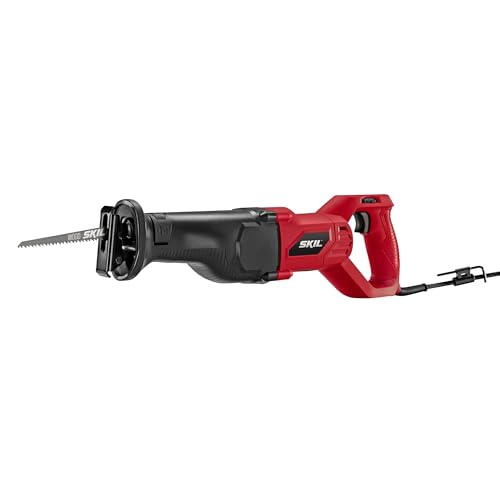
SKIL 9206-02 Reciprocating Saw
- 7.5-amp corded motor
- Metal gear housing
- Pivoting foot and counterbalance
Best For: Stationary garage cutting with outlet power
Tight-Space Control

- One-handed compact design
- Anti-vibration handle and LED
- Quick-lock blade clamp
Best For: M18 users working in confined spaces
Best Cordless Starter Kit
BLACK+DECKER 20V MAX Reciprocating Saw

- Includes 20V battery and charger
- Tool-free blade change and pivoting shoe
- Variable-speed trigger for added control
Best For: Portable DIY and light-duty repair work
Best for Auto Body Work
Pneumatic Air Reciprocating Saw

- 9,000-stroke-per-minute pneumatic operation
- Designed for auto repair and sheet metal up to 1.5 mm
- Includes six fine-tooth blades and air fittings
Best For: Auto body, exhaust, and sheet-metal work
Best Compact Premium Pick
DEWALT 20V MAX XR Compact Reciprocating Saw

- Compact 14.5-inch design for tight spaces
- Brushless motor with up to 2.5x more runtime
- Four-position clamp, LED, and variable speed
Best For: Frequent automotive repair and demanding cutting tasks
Best High-Speed Value Pick
RYOBI ONE+ 18V Reciprocating Saw

- 3,400 SPM variable-speed operation
- Lightweight 4.2-pound bare tool
- Works with the RYOBI ONE+ battery platform
Best For: Routine automotive cutting for existing ONE+ users
Best Comfortable Midrange Pick
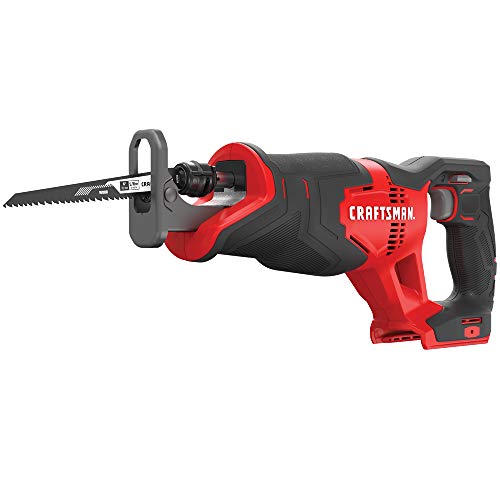
CRAFTSMAN V20 Reciprocating Saw
- Compact 14.5-inch design for confined areas
- Zero-to-3,000 RPM variable-speed trigger
- Comfortable handle and tool-free blade release
Best For: Home mechanics doing occasional garage repairs
Shop-Ready Precision – Ingersoll Rand 429 Air Saw
For technicians who already have a suitable compressor, the Ingersoll Rand 429 is a focused option among reciprocating saws for car repair. Its pneumatic design, 10,000 strokes per minute, adjustable blade guide, and low 1.3-pound weight suit controlled cuts through sheet metal, aluminum, plastic, and fiberglass.
Best For: Shop and garage users making precise cuts in automotive sheet materials and other hard-to-reach areas.
Pros:
- 10,000 strokes per minute for fast cutting.
- Adjustable blade guide and positive blade retainer support controlled cuts.
- Includes six high-speed steel blades and two hex wrenches.
- Lightweight inline configuration with reduced vibration and a lock-out lever.
Cons:
- Requires a pneumatic air supply.
- Its straight-edge format may be less convenient for users seeking a cordless tool.
The 429 is a specialized, lightweight air saw rather than an all-purpose demolition saw. It makes the most sense in a properly equipped automotive shop where precision and access matter.
Compact One-Handed Access – DEWALT ATOMIC 20V MAX Saw
DEWALT ATOMIC 20V MAX* Reciprocating Saw, One-Handed, Cordless, Tool Only (DCS369B)
Check Price On AmazonThe DEWALT ATOMIC DCS369B is a compact cordless choice among reciprocating saws for car repair, especially when working in cramped spaces. Its one-handed design, brushless motor, LED, variable-speed trigger, and pivoting shoe help with access and control, but the tool is sold without a battery or charger.
Best For: Battery-platform users handling light, controlled cuts in tight automotive work areas.
Pros:
- Compact 12.5-inch front-to-back design.
- One-handed form is 37% lighter than the DCS367 tool-only model.
- Brushless motor, variable-speed trigger, and pivoting shoe improve usability.
- Tool-free blade release and LED lighting simplify work.
Cons:
- Sold as a tool only, so a compatible 20V battery and charger are required.
- Supplied details identify wood as the surface recommendation, so blade selection is important for automotive materials.
This DEWALT favors maneuverability over maximum size and reach. It is a practical fit for users already invested in the 20V MAX system and needing one-handed control around a vehicle.
Plug-In Cutting Power – SKIL 9206-02 Reciprocating Saw
The SKIL 9206-02 delivers corded power for shoppers comparing reciprocating saws for car repair. Its 7.5-amp motor, variable-speed operation, pivoting foot, metal gear housing, and counterbalance offer a stable setup for demanding cutting jobs where an outlet is available.
Best For: Garage users who prefer consistent corded power and a rugged, full-size saw.
Pros:
- 7.5-amp motor provides substantial corded power.
- Heavy-duty metal gear housing supports durability.
- Counterbalance helps control vibration.
- Tool-less blade changes and a pivoting foot improve convenience and stability.
Cons:
- At 7.1 pounds, it is considerably heavier than the compact cordless and air options here.
- Requires access to a 120-volt outlet.
- Only one wood-cutting blade is included.
The SKIL is a straightforward, robust corded tool for a fixed garage workstation. Its weight and cord reduce portability, but the motor and metal housing favor sustained use near an outlet.
Tight-Space Control – Milwaukee M18 Hackzall
Milwaukee 2625-20 M18 18-Volt Lithium-Ion Cordless Hackzall Reciprocating Saw, Bare Tool
Check Price On AmazonThe Milwaukee 2625-20 M18 Hackzall is a compact one-handed option among reciprocating saws for car repair. Its anti-vibration handle, quick-lock blade clamp, LED light, and M18 battery compatibility make it well suited to controlled cutting where a standard full-size saw is awkward.
Best For: M18 users cutting in confined spaces or performing overhead work.
Pros:
- One-handed design improves control in tight conditions.
- Compact four-inch blade and lightweight format help with overhead work.
- QUICK-LOK clamp enables tool-free blade changes.
- Anti-vibration handle and built-in LED improve comfort and visibility.
Cons:
- Bare tool requires a compatible M18 battery and charger.
- Compact design may offer less reach than a standard reciprocating saw.
The Hackzall is a strong choice when access and handling matter more than full-size reach. It is especially convenient for existing Milwaukee M18 owners who need a dedicated one-handed saw.
Best Corded Value – 7A Variable-Speed Reciprocating Saw
For shoppers comparing reciprocating saws for car repair, this corded model offers an 850W motor, variable-speed control, and blades for metal, wood, and stainless steel. Its rotating handle may also help when approaching cuts from different angles.
Best For: Home workshops and occasional vehicle or furniture repair near a power outlet.
Pros:
- 850W, 7A motor with speeds from 0 to 2,800 RPM.
- Includes metal, woodworking, and stainless-steel blades.
- Quick-release blade mechanism and 360-degree rotating handle button.
Cons:
- Corded design requires access to a 120V outlet.
- Supplied blade selection is limited to the included sizes and tooth counts.
This is a practical general-purpose option when portability is less important than continuous corded power and broad material compatibility.
Best Cordless Starter Kit – BLACK+DECKER 20V MAX Reciprocating Saw
For reciprocating saws for car repair, the BLACK+DECKER BDCR20C is a convenient cordless choice when moving around a vehicle or working away from an outlet. The kit includes a 20V battery and charger, along with control-focused features for general cutting tasks.
Best For: DIY users who want a portable saw kit for light-duty vehicle and household projects.
Pros:
- Cordless 20V platform with battery and charger included.
- Tool-free blade changes simplify setup.
- Pivoting shoe and variable-speed trigger support cutting control.
Cons:
- Only one reciprocating blade is included.
- Battery operation requires charging and depends on the included battery.
- Supplied specifications recommend wood rather than specifically listing automotive materials.
Choose this model for mobility and straightforward DIY use; plan on obtaining additional blades if your repair work involves varied metals or other materials.
Best for Auto Body Work – Pneumatic Air Reciprocating Saw
For dedicated reciprocating saws for car repair, this pneumatic body saw is designed around automotive and sheet-metal work. It reaches up to 9,000 strokes per minute, includes multiple fine-tooth blades, and uses a compact aluminum-alloy body for work in tighter spaces.
Best For: Auto repair, exhaust work, and cutting sheet metal up to the stated 1.5 mm thickness with an air compressor.
Pros:
- 9,000 RPM pneumatic operation for fast sheet-metal cutting.
- Suitable for automobile repair, installation, exhaust work, and small spaces.
- Includes six 24T/32T blades, wrenches, and stainless-steel air nipples.
Cons:
- Requires connection to an air compressor.
- Blade changes require the included Allen wrench.
- Noise is specified at less than 96 dB, so hearing protection may be appropriate.
This is the most purpose-built option here for automotive sheet metal, provided your workspace already has a compatible compressor and air setup.
Best Compact Premium Pick – DEWALT 20V MAX XR Compact Reciprocating Saw
Among reciprocating saws for car repair, the DEWALT DCS367B stands out for combining a compact design with strong cutting control. Its 14.5-inch length and 5-pound tool-only weight make it easier to maneuver around tight automotive spaces, while the brushless motor, 1-1/8-inch stroke, and variable-speed trigger support demanding cutting tasks.
Best For: Automotive DIYers and professionals who need a compact, maneuverable saw for extended repair and metal-cutting work.
Pros:
- Compact 14.5-inch design fits more easily in tight work areas.
- Brushless motor provides up to 2.5 times more runtime, according to the supplied product notes.
- Four-position keyless blade clamp enables quick blade changes and flexible positioning.
- Variable speed up to 2,900 SPM, plus an LED light, improves control and visibility.
Cons:
- Battery and charger are not included with this tool-only model.
- The 5.4-pound listed item weight may still feel substantial during overhead work.
For car repair jobs that demand access, runtime, and control, this DEWALT is the most feature-rich option in the group. Its tool-only format is worth factoring into the total purchase cost.
Best High-Speed Value Pick – RYOBI ONE+ 18V Reciprocating Saw
The RYOBI ONE+ PCL515B is a practical choice among reciprocating saws for car repair when high speed and platform compatibility matter. Its variable-speed operation reaches 3,400 SPM, and the 1-inch stroke length provides a useful balance for general cutting tasks around a vehicle.
Best For: ONE+ users seeking a lightweight bare tool for general automotive cutting and maintenance work.
Pros:
- Variable speed reaches 3,400 SPM for fast cutting applications.
- Lightweight 4.2-pound design is easier to handle during extended use.
- One-inch stroke length offers a practical balance of speed and cutting action.
- Compatible batteries can be shared within the RYOBI ONE+ system.
Cons:
- Battery and charger are not included.
- The listed warranty is a 30-day limited warranty.
- Supplied notes provide fewer automotive-specific features than the DEWALT option.
This RYOBI is a sensible budget-friendly pick for users already invested in ONE+ batteries. Its high maximum speed and low listed weight make it well suited to routine cutting, though the shorter warranty deserves consideration.
Best Comfortable Midrange Pick – CRAFTSMAN V20 Reciprocating Saw
The CRAFTSMAN CMCS300B offers a straightforward combination of control, portability, and easy maintenance for reciprocating saws for car repair. Its 14.5-inch compact body helps with access in confined areas, while the variable-speed trigger and tool-free blade release simplify everyday repair work.
Best For: Home mechanics who want a compact cordless saw with comfortable handling and simple blade changes.
Pros:
- Compact 14.5-inch body is designed for cutting in tight spaces.
- Variable-speed trigger provides control from zero to 3,000 RPM.
- Tool-free blade release makes blade changes quick and easy.
- Contoured overmolded handle improves comfort during use.
Cons:
- Battery and charger are sold separately.
- The supplied notes list a 1-inch stroke, shorter than the DEWALT’s 1-1/8-inch stroke.
- It is a bare tool, so starting from scratch requires additional V20 components.
For occasional garage work, this CRAFTSMAN provides the essential features without an overly large body. Its comfortable handle and easy blade release make it especially approachable for routine automotive projects.
How We Picked the Best Reciprocating Saws for Car Repair
We evaluated these saws for the demands of automotive work rather than general demolition alone. Key considerations included cutting speed, variable-speed control, stroke length, tool size, vibration management, blade-change convenience, power source, and compatibility with metal-cutting blades. We also considered whether each tool is best suited to occasional garage repairs, professional shop use, exhaust work, bodywork, or tight-access cutting.
Because several selections are sold as bare tools, battery availability and total system cost matter. Pneumatic models also require an adequately sized compressor and suitable air fittings.
Quick Comparison
| Type | Best For | What to Watch |
|---|---|---|
| Compact cordless | Access around engine bays and underbody components | Shorter stroke or lower sustained power |
| Full-size cordless | Exhaust, suspension, and heavier repair work | Battery weight and added vibration |
| Corded electric | Long garage sessions | Requires an outlet and extension cord |
| Pneumatic | Bodywork and controlled sheet-metal cutting | Needs compressor capacity and air hose |
Key Buying Factors for Reciprocating Saws for Car Repair
Power Source
Cordless saws are convenient for driveways, salvage work, and vehicles without nearby power. Choose a platform you already own to reduce cost. Corded models provide consistent power for a shop bench, while pneumatic saws can be compact and smooth for sheet metal when paired with the right compressor.
Stroke, Speed, and Control
A longer stroke can remove material faster, but compact tools with moderate stroke lengths are often easier to control in confined spaces. Variable-speed triggers or speed settings help prevent grabbing thin panels and improve control around wiring, hoses, and finished surfaces.
Blade and Accessory Support
Use bi-metal blades for exhaust tubing and hardened fasteners, and fine-tooth blades for thinner automotive sheet metal. A tool-free blade clamp makes frequent blade changes faster. Check whether blades are included, but prioritize broad blade compatibility over a large starter assortment.
Ergonomics and Safety
Look for a comfortable grip, a stable shoe, manageable vibration, and a pivoting or adjustable head when working at awkward angles. Wear eye and hearing protection, secure the vehicle properly, disconnect batteries when appropriate, and inspect for fuel lines, brake lines, wiring, and airbags before cutting.
Who Should Buy Which Reciprocating Saws for Car Repair?
Choose a compact cordless saw if you regularly work in tight engine bays or under vehicles. Choose a full-size cordless model for faster cutting through exhaust, brackets, and heavier components. Choose a corded saw for frequent garage use where uninterrupted power matters. Choose a pneumatic body saw for controlled sheet-metal and panel work when your compressor can maintain the required airflow. For occasional repairs, a budget cordless or corded option may deliver the best value; professional technicians should prioritize durability, vibration control, and compatibility with their existing battery or air system.