Choosing among welding machines for car repair depends on the job: joining sheet metal, pulling dents, repairing plastic trim, or handling heavier repairs. The right machine can improve control, reduce rework, and make garage projects more manageable.
This roundup covers versatile welders and specialized auto-body tools, from dual-voltage MIG units to stud dent pullers, spot welders, and hot staplers. Use the guide below to match the machine to your vehicle repair needs, power setup, and experience level.
Best 10 Welding Machines for Car Repair Picks for 2026
Best Multi-Process Pick
ARCCAPTAIN MIG200 6-in-1 Welder

- Six processes for varied repair jobs
- 110V/220V dual-voltage operation
- Synergic controls and large LED display
Best For: Garage users needing one versatile welding machine
Best Beginner Garage Option
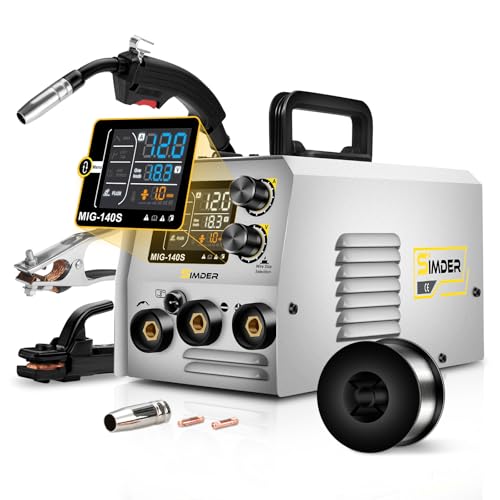
- Flux core, lift TIG, and stick modes
- Works on 110V or 220V power
- Lightweight with starter accessories included
Best For: Beginners repairing auto panels and garage projects
Best for Dent Pulling
VEVOR Stud Welder Dent Repair Kit

- Purpose-built for steel body-panel dents
- Seven modes with automatic and manual operation
- Includes multiple studs and a storage toolbox
Best For: Automotive dent removal in a workshop
Best Portable Stick Pick

- Compact 3.7-pound design
- 20–200A adjustable output
- Includes rods, gloves, and chip hammers
Best For: Portable stick-welding repairs and DIY projects
Plastic Repair Specialist

- Rapid 1–2 second staple heating
- 1,000 staples in six configurations
- Includes pliers and carrying case
Best For: Automotive plastic bumpers, dashboards, and trim
Metal Panel Performer
Stark USA Portable Spot Welder
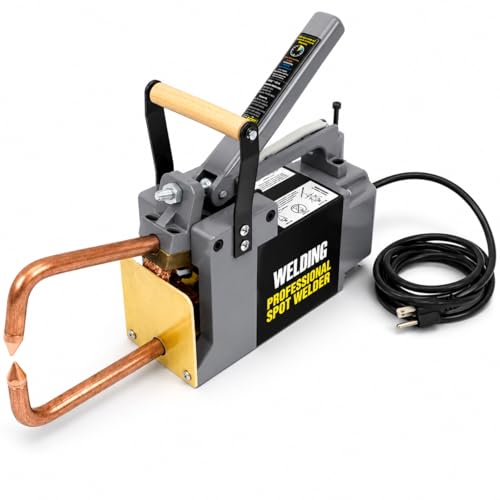
- Designed for metal-sheet spot welding
- 1.5KVA input and stated 5,500A output
- Handheld 110V design with 6-inch throat
Best For: Automotive body panels and metal fabrication
Versatile Plastic Repairer

- 220W rapid-heating, 110V design
- Uses staples and plastic welding rods
- Includes 1,002 staples and multi-plastic rods
Best For: Multi-material plastic bumper and trim repairs
Compact Sheet-Metal Specialist

- 2.5KVA input and up to 6750A output
- Replacement copper tips included
- Handheld design for auto body sheet metal
Best For: Auto body spot welding and sheet-metal repair
Dedicated Dent-Repair Kit

- Six modes for varied dent shapes
- Automatic contact-welding timing
- 16 accessory types in a toolbox
Best For: Automotive dent pulling and body-panel repair
Best Multi-Process Pick – ARCCAPTAIN MIG200 6-in-1 Welder
For shoppers comparing welding machines for car repair, the ARCCAPTAIN MIG200 stands out as a flexible multi-process option. It supports gas and gasless MIG, stick, spot welding, lift TIG, and an optional spool-gun connection, with 110V/220V operation for different shop setups.
Best For: Garage users and experienced DIY welders who want one machine for automotive work, maintenance, and varied metal projects.
Pros:
- Six welding functions cover MIG, flux core, stick, spot, and lift TIG work.
- Synergic controls automatically recommend current and wire speed based on wire and gas selections.
- Large LED display, preset storage, and included shoulder strap improve usability and portability.
- Built-in protection features and a two-year manufacturer warranty add reassurance.
Cons:
- TIG and spool guns are not included.
- Some .023-inch and .040-inch rollers must be purchased separately.
- Users must power the machine off before switching between 110V and 220V.
This is the most versatile choice in the group, particularly if your car repair work may include sheet metal, spot welding, and occasional heavier fabrication. Its broader feature set may be more than a beginner needs, but the synergic controls help reduce setup complexity.
Best Beginner Garage Option – SSimder 140A 3-in-1 Welder
The SSimder 140A is a compact choice for welding machines for car repair, especially when flux-core work is the priority. It combines flux-core MIG, lift TIG, and stick welding, runs on either 110V or 220V, and includes a starter spool of wire.
Best For: First-time users handling auto restoration, car body panels, garage repairs, and light farm or fabrication projects.
Pros:
- Three welding processes provide useful flexibility without buying separate machines.
- Dual-voltage operation works with a standard household outlet or 220V supply.
- Lightweight 7.7-pound design is easy to store or transport.
- Includes a MIG torch, flux-core wire, electrode holder, ground clamp, and conversion cord.
Cons:
- It does not weld aluminum.
- It is a DC flux-core and stick welder rather than a shielding-gas MIG setup.
- A WP17V TIG torch is sold separately.
For basic automotive body-panel repairs and general garage projects, this model offers a straightforward starting point with useful included accessories. Choose another machine if aluminum welding or gas-shielded MIG is essential.
Best for Dent Pulling – VEVOR Stud Welder Dent Repair Kit
Unlike general-purpose welding machines for car repair, the VEVOR Stud Welder is dedicated to steel auto-body dent removal. Its 1.8KW system offers automatic and manual welding modes, seven preset modes, and multiple stud types for different panel repairs.
Best For: Mechanics, bodywork specialists, and DIY users repairing dents in steel car or truck panels.
Pros:
- Designed specifically for controlled dent pulling on steel body panels.
- Manual mode supports precise spot placement, while automatic mode speeds larger repairs.
- Seven welding modes and five stud types accommodate varied dent sizes and shapes.
- Included toolbox and handle make the kit easier to organize and transport.
Cons:
- It is intended for dent repair rather than general MIG, TIG, or stick welding.
- The 43.2-pound weight is substantially heavier than the portable welders listed here.
- The supplied specifications list 220V operation, limiting use where that power is unavailable.
If your main automotive task is pulling dents from steel panels, this specialized kit is a more targeted option than a multiprocess welder. Its heavier design is best suited to a dedicated workshop rather than frequent mobile work.
Best Portable Stick Pick – Hpoouo 200A Mini Stick Welder
The Hpoouo 200A is a highly portable stick option among welding machines for car repair. Its 20–200A adjustable output, compact inverter design, and included rods make it suited to small repairs involving cast iron, mild steel, and compatible stainless-steel electrodes.
Best For: DIY users who need an inexpensive, portable stick welder for occasional garage, farm, or remote repairs.
Pros:
- Very compact 3.7-pound welder fits easily in a toolbox or backpack.
- Adjustable 20–200A output supports a range of repair tasks.
- Hot start, arc force, and anti-stick functions help stabilize the arc.
- Includes 20 rods, gloves, chip hammers, and an instruction manual.
Cons:
- Stick welding is less suited to thin automotive body panels than MIG or flux core.
- It operates on 110V only.
- Rod polarity must be changed appropriately for different electrode types.
This is the most convenient pick for portability and quick stick-welding repairs, but it is not the best match for smooth, low-spatter body-panel work. Consider it for brackets, thicker sections, and general metal repairs rather than cosmetic sheet-metal repairs.
Plastic Repair Specialist – ATOLS Plastic Welder Kit
For welding machines for car repair focused on plastic components, the ATOLS kit is designed for bumper, dashboard, lamp holder, radiator, spoiler, handle, and other automotive plastic repairs. It heats staples in about 1–2 seconds and includes multiple staple shapes for different repair points.
Best For: DIY users repairing cracked or broken automotive plastic parts, especially bumpers and dashboards.
Pros:
- Designed to repair at least 98% of plastics on the market, according to the supplied specifications.
- Includes 1,000 stainless steel staples in six types for varied repair needs.
- Ergonomic rubber handle, front light, pliers, and carrying case support convenient use.
Cons:
- This is a plastic repair tool rather than a metal spot welder.
- It is corded and requires an AC power source.
The ATOLS kit is a practical choice when your car repair work involves plastic cracks, splits, and reinforcement rather than sheet-metal welding. Its broad staple selection makes it flexible for common bumper and trim repairs.
Metal Panel Performer – Stark USA Portable Spot Welder
For welding machines for car repair involving metal sheet, the Stark USA portable spot welder provides a handheld 110V setup with a 6-inch throat depth. Its 1.5KVA rated input and stated 5,500A maximum output are suited to spot-welding applications in automotive and fabrication work.
Best For: Automotive bodywork and metal-sheet spot welding where a portable handheld design is useful.
Pros:
- Purpose-built for metal sheet spot welding and auto body applications.
- Handheld format with a 6-inch throat depth supports access to work areas.
- Copper welding tips are designed for durable, reliable performance.
- Simple lever-operated design can suit beginners and experienced users.
Cons:
- At 18.5 inches long, it may be less convenient in tight spaces.
- Its 110V AC/DC power requirements limit use where suitable electrical service is unavailable.
Unlike plastic hot-stapler kits, this Stark USA model is aimed at joining metal sheets. It is the more relevant option of these products for automotive body panels, provided its electrical requirements and handheld throat depth fit your project.
Versatile Plastic Repairer – 220W Hot Stapler Kit
For welding machines for car repair that handle different plastic types, this 220W kit combines hot-staple repair with plastic-rod welding. It includes 1,002 hot staples, 100 plastic rods, mesh, smoothing tips, and overheat protection for repairs on bumpers, fenders, dashboards, and other plastic components.
Best For: Car owners and repairers who want one kit for reinforced plastic cracks and rod-based repairs across several plastic materials.
Pros:
- 220W output is specified for faster heating through a 110V plug.
- Supports both hot staples and plastic welding rods.
- Includes rods for ABS, PP, PE, TPE, PC, PUR, PA, LDPE, and TPO repairs.
- Includes 1,002 staples, mesh, pliers, smoothing tips, and LED lighting.
Cons:
- This corded 110V kit is intended for use near a suitable outlet.
- It is designed for plastic repair, not metal body-panel welding.
- The large accessory assortment may be more than needed for occasional minor repairs.
The added plastic rods and mesh make this kit more versatile than a staple-only plastic welder. It is a strong fit for users handling several automotive plastics, while metal-panel repairs require a dedicated spot welder instead.
Compact Sheet-Metal Specialist – Portable Spot Welder
For welding machines for car repair focused on sheet metal, this Stark USA spot welder offers a straightforward handheld design. Its 2.5KVA capacity and maximum 6750A output are suited to spot-welding tasks on carbon steel and aluminum sheet, while the compact form makes it easier to move between work areas.
Best For: Auto body spot welding, sheet-metal fabrication, and users who want a portable corded machine.
Pros:
- Designed for metal-sheet and auto body welding applications.
- Provides 2.5KVA rated input capacity and up to 6750A output.
- Includes replacement copper welding tips and uses a simple lever operation.
Cons:
- Requires a 220V power source.
- At 28.9 pounds, it is portable but not especially lightweight.
- Its spot-welding format is less suited to general-purpose arc welding.
This is a practical choice when your car repair work centers on repeatable sheet-metal spot welds rather than broad welding versatility. The included spare tips add convenience for ongoing use.
Dedicated Dent-Repair Kit – VEVOR Stud Welder Dent Puller
Among welding machines for car repair, this VEVOR kit is built specifically for dent pulling and automotive bodywork. It combines six welding modes with automatic contact-welding timing, giving repairers a more task-focused setup for pointed shapes, curves, deep dents, and flat areas.
Best For: Car, truck, and motorcycle dent repair involving carbon steel, stainless steel, iron, or galvanized sheet metal.
Pros:
- Supports six functional modes for varied dent and panel shapes.
- Automatic welding timing helps simplify consistent repairs.
- Includes 16 types of accessories in a portable toolbox.
- Overheat protection activates at 203°F/95°C, with side vents for heat dissipation.
Cons:
- Its 50.6-pound weight may be cumbersome for frequent transport.
- Maximum single-side welding thickness is limited to 1.2mm.
- It is specialized for stud welding and dent repair rather than general welding.
This kit is the most targeted option here for automotive panel restoration. Its accessory selection and repair modes make it more suitable for dedicated dent work than for general fabrication.
Portable All-in-One ARC Kit – Handheld IGBT ARC Welder Kit
This handheld ARC welder is a flexible pick among welding machines for car repair when portability and included safety gear matter. At 3.3 pounds, it is designed for tight spaces and mobile repairs, with adjustable 20–120A output, IGBT inverter technology, and support for 3/32- to 1/8-inch rods.
Best For: DIY automotive fixes, mobile repair work, and users who need a compact stick-welding kit with goggles and accessories.
Pros:
- Lightweight 3.3-pound handheld design for tight or elevated work areas.
- Adjustable 20–120A output accommodates different materials and rod sizes.
- Includes auto-darkening goggles, helmet, gloves, rods, clamps, brush, and carrying case.
- IGBT inverter technology, anti-stick functionality, and cooling protection support smoother operation.
Cons:
- It is a 110V stick welder, not a dedicated spot or stud welder.
- Its stated rod range is limited to 3/32- to 1/8-inch electrodes.
- Supplied notes do not specify a maximum material thickness.
This kit offers the broadest portability and accessory package of the three, making it convenient for general repair tasks. Choose it for stick-welding flexibility rather than specialized auto-body dent pulling or spot welding.
How We Picked the Best Welding Machines for Car Repair
We organized these picks around the repair tasks most common in automotive work: sheet-metal joining, dent pulling, spot welding, frame and bracket repairs, and plastic component restoration. We also considered operating voltage, welding process, portability, control options, included accessories, and suitability for beginners or experienced fabricators.
Because no single tool handles every automotive repair equally well, this list includes both general-purpose welders and specialized equipment. A MIG or flux-core machine is usually more useful for joining metal, while stud welders and spot welders address specific bodywork needs. Plastic welders are intended for bumpers, brackets, tabs, and trim rather than metal panels.
Quick Comparison
| Tool type | Best suited to | Main advantage |
|---|---|---|
| MIG or multi-process welder | Sheet metal, brackets, general fabrication | Versatile and comparatively easy to control |
| Flux-core or stick welder | Basic steel repairs and outdoor work | Simple setup and no shielding gas required |
| Stud dent puller | Pulling shallow and moderate body dents | Designed for panel straightening |
| Spot welder | Overlapping sheet-metal joints | Fast, localized welds with limited visible work |
| Plastic hot stapler | Bumpers, tabs, and plastic trim | Reinforces cracked plastic from the rear |
Key Buying Factors for Welding Machines for Car Repair
Match the Process to the Repair
MIG welding is often the most practical choice for automotive sheet metal because it offers adjustable wire feed and relatively quick welds. Flux-core models can work without gas but may produce more spatter. Stick welders are better suited to thicker steel than thin body panels. For factory-style overlapping seams, a dedicated spot welder may be more appropriate.
Check Power and Control
Confirm whether your garage supplies 110V, 220V, or both. Dual-voltage equipment adds flexibility, while variable current, wire-speed adjustment, inductance control, and selectable modes make it easier to fine-tune heat. Thin panels require careful heat management to reduce burn-through and distortion.
Consider Access and Portability
Compact machines are easier to position around a vehicle, but cable length, torch reach, throat depth, and clamp design can matter just as much. A stud puller or spot welder must reach the damaged panel comfortably without forcing awkward angles.
Do Not Overlook Safety
Use a correctly shaded welding helmet, gloves, flame-resistant clothing, ventilation, and eye protection. Disconnect or protect sensitive vehicle electronics as appropriate, remove flammable materials, and follow the machine’s grounding and duty-cycle instructions.
Who Should Buy Which Welding Machines for Car Repair?
- For the most versatility: Choose a dual-voltage MIG or multi-process welder if you expect to handle sheet metal, brackets, and occasional heavier projects.
- For dent repair: Select a dedicated stud welder dent puller when straightening body panels is the main goal.
- For factory-style panel work: A handheld spot welder is better suited to overlapping metal seams where access allows proper electrode contact.
- For bumpers and plastic trim: Buy a plastic hot stapler with compatible staple shapes and plastic rods for reinforcement and cosmetic repairs.
- For occasional low-cost repairs: A compact stick or flux-core unit can be practical, provided its output and heat control match the material thickness.