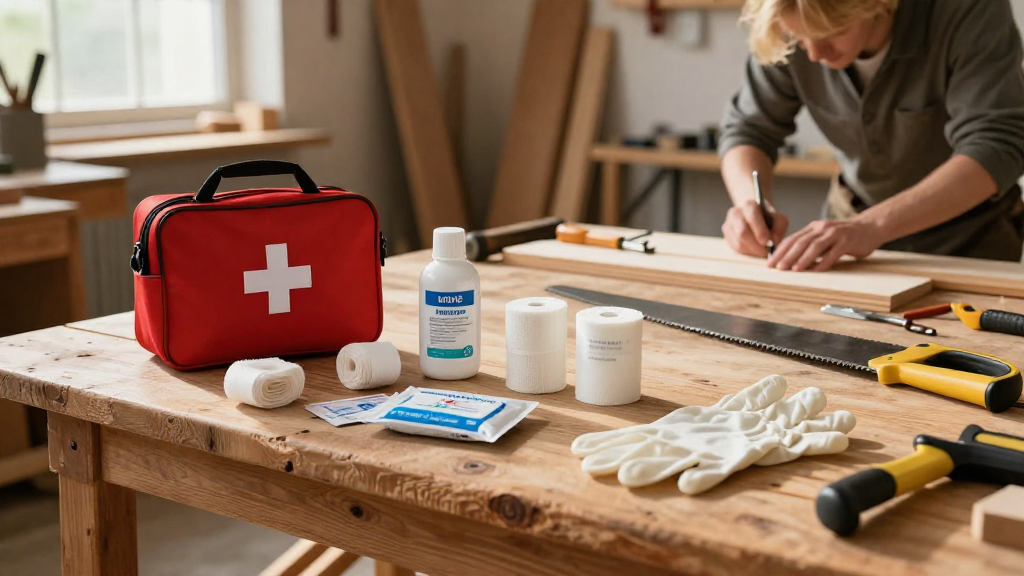
Creating beautiful woodwork can be a rewarding experience, but safety should always come first.
Having the right first aid essentials for woodworking can make a significant difference in case of an accident in your workshop.
In this article, we will explore the must-have items that should be part of your woodworking first aid kit.
What Are the First Aid Essentials for Woodworking?
Safety is paramount when working with sharp tools and heavy machinery.
Here are some essential first aid items you should always keep in your woodworking shop:
1. Adhesive Bandages
These are your first line of defense against minor cuts and scrapes.
- Sizes: Keep a variety of sizes to cover different wounds.
- Waterproof options: Consider waterproof adhesive bandages to maintain hygiene and protect the wound from moisture.
2. Antiseptic Wipes and Creams
Protect your cuts from infection with effective antiseptic options.
- Antiseptic wipes: Use these to clean the wound area thoroughly before applying any bandage.
- Antibiotic ointments: After cleaning the wound, applying a topical antibiotic can further reduce the risk of infection.
3. Sterile Gauze Pads and Adhesive Tape
Larger cuts may require more substantial protection.
- Gauze pads: Have various sizes of sterile gauze pads available.
- Adhesive tape: Useful for securing the gauze in place, preventing dirt and debris from entering the wound.
4. Tweezers
When working with wood, splinters are a common injury.
Keep a pair of sterilized tweezers handy for easy removal.
- Flat-tipped tweezers: They provide a better grip for splinters.
- Caution: Ensure your tweezers are accurately sterilized before use to avoid infections.
5. Scissors
You’ll need a good pair of scissors for a variety of tasks, from cutting tape to trimming bandages.
Choose a pair with a blunt tip to enhance safety in a workspace filled with sharp tools.
6. Splint or Rigid Support
Injuries to fingers or limbs may need immobilization.
Have a simple splint on hand to stabilize injuries until medical help can be sought.
- Purpose: Keeps the injured area from moving, reducing pain and preventing further injury.
7. Cold Packs
In case of swelling or bruising, cold packs provide immediate relief.
- Instant cold packs: Easy to use and store, instant cold packs can reduce inflammation effectively.
- Reusable cold packs: These are great for long-term use and help with various injuries over time.
8. Burn Cream or Gel
Working in woodworking often involves heat tools, which can lead to burns.
Having burn cream or gel on hand can soothe the affected area and promote healing.
- Look for ingredients that promote healing: Aloe vera and lidocaine are popular choices.
9. Pain Relief Medication
Minor injuries can result in discomfort.
Having over-the-counter pain relief medication like ibuprofen or acetaminophen in your kit can be very useful.
- Keep dosage instructions: Always follow recommended dosages and check for expiry dates.
10. Emergency Contact Information
Make sure to have an easy-to-access list of emergency contacts, including poison control, local hospitals, and family contacts.
11. First Aid Manual
Especially for a woodworking shop, having a first aid manual can provide you with guidance on handling specific injuries.
You should familiarize yourself with its contents for quick reference.
What Additional Items Should I Consider?
In addition to the primary items mentioned above, there are some other useful supplies you might want to add to your first aid essentials for woodworking kit:
- Elastic bandages: For wrapping sprains or strains.
- Safety goggles: While not a first aid item per se, having them on can prevent injuries in the first place.
- Face masks: Protect yourself from dust and debris, reducing irritation and injury to your respiratory system.
How Can I Store My First Aid Essentials for Woodworking?
Ensuring your kit is accessible and well organized is vital.
Best Practices for Storage:
-
Waterproof container: Use a sturdy, waterproof container to keep supplies protected.
-
Labeling: Clearly label compartments so you can quickly find what you need in an emergency.
-
Regular checks: Regularly check the contents and replace items that are expired or used.
What Are Some Safety Tips Beyond First Aid Essentials?
While having first aid essentials for woodworking is critical, implementing safety measures is equally important:
- Wear protective gear: Always wear proper safety gear, including gloves, goggles, and ear protection.
- Maintain equipment: Regularly check and maintain your tools and machinery to prevent accidents.
- Work in a clear area: Keep your workspace tidy to reduce the chances of accidents.
In Conclusion
Having the right first aid essentials for woodworking in your shop can provide peace of mind as you create wooden masterpieces.
By keeping your first aid kit stocked and practicing safety measures, you can minimize risks and be prepared for any unfortunate incidents.
Stay safe, create beautifully, and remember that being prepared can make all the difference in your woodworking experience.
Take Action
Make a checklist of these essential first aid items today and ensure your woodworking shop is equipped for safety.
Your creative journey starts with a secure and prepared environment.