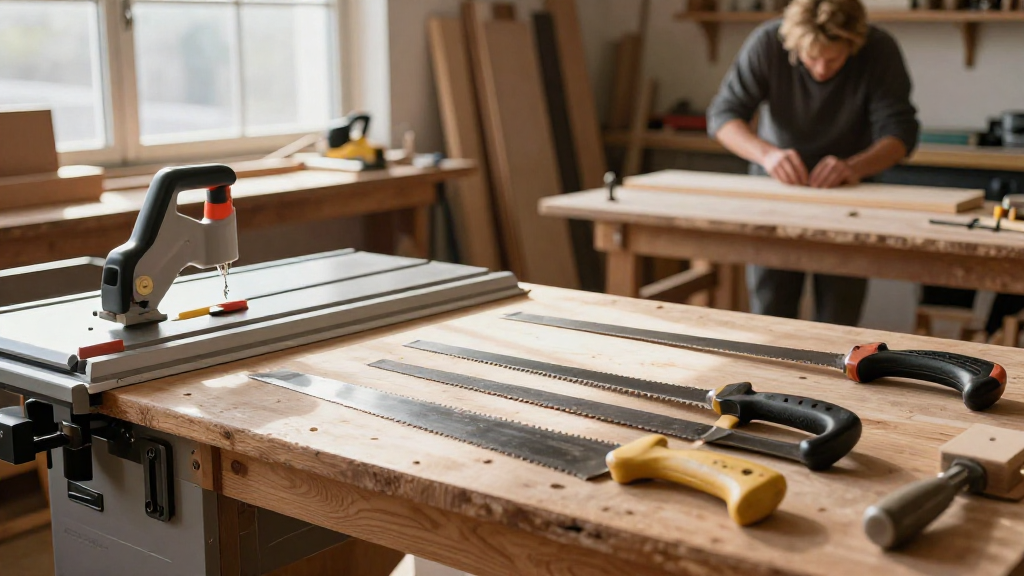
When it comes to woodworking, understanding the types of woodworking saws is essential for achieving precise cuts and creating beautiful projects.
What Are the Main Types of Woodworking Saws?
There are various types of woodworking saws, each designed for specific tasks.
Understanding these saws can significantly enhance your woodworking skills and project outcomes.
1. What Are the Basic Hand Saws?
Hand saws are traditional and widely used in woodworking.
Here are some common types of hand saws:
-
Panel Saw:
Designed for cutting large panels or sheet goods. Its long, straight blade makes it easy to perform straight cuts. -
Back Saw:
This saw has a reinforced back that keeps the blade rigid, making it ideal for fine, precise cuts, especially in joinery. -
Copings Saw:
Excellent for intricate shapes and curves, copings saws have a thin blade that can easily navigate tight corners. -
Dovetail Saw:
Similar to a back saw but smaller, the dovetail saw is perfect for cutting dovetail joints with precision.
2. What Are Power Saws and Their Uses?
Power saws bring speed and efficiency to woodworking projects.
Here’s a list of popular types of power saws:
-
Circular Saw:
Versatile and portable, a circular saw can cut through various materials and is perfect for straight cuts, crosscuts, and ripping lumber. -
Miter Saw:
Ideal for making angled cuts, a miter saw is perfect for framing and molding projects. It allows for accurate crosscuts and miter cuts. -
Table Saw:
Considered one of the most crucial tools in a woodworker’s shop, a table saw offers precision for ripping lumber and making repetitive cuts. -
Band Saw:
This saw features a continuous loop of blade material that can cut intricate curves and is used for resawing and cutting thicker pieces of wood.
3. Which Types of Woodworking Saws Are Best for Fine Cuts?
For jobs requiring intricate details, specific types of woodworking saws are more suited.
Here are a few saws that excel in fine woodworking:
-
Scroll Saw:
Perfect for delicate designs, the scroll saw allows for intricate curves and patterns, making it a favorite among those creating detailed wood art. -
Jigsaw:
A versatile tool for cutting curves and complex shapes, a jigsaw is portable and can handle various materials beyond wood, thanks to its wide range of blade options. -
Japanese Saw:
Known for their exceptional sharpness, Japanese saws are pull-saws that cut on the pull stroke, allowing for cleaner cuts and less effort.
4. When Should You Use Specialty Saws?
In addition to general-purpose saws, there are specialty types of woodworking saws designed for specific tasks.
These include:
-
Rip Saw:
As the name suggests, rip saws are designed for cutting along the grain of the wood. Their teeth are designed to remove material efficiently in a straight line. -
Crosscut Saw:
This saw is tailored for cutting across the grain and features teeth designed to create smooth cuts without tearing. -
Laminate Trim Saw:
Ideal for cutting laminate flooring, these saws ensure that edges remain clean and preventing chipping.
5. How Do You Choose the Right Saw for Your Project?
Choosing the right saw depends on several factors related to your project needs. Consider:
-
Type of Cut:
Determine whether you need to make crosscuts, rip cuts, or intricate shapes. -
Material Thickness:
Thicker materials may require powerful saws like a table or band saw, while thinner materials can be handled by hand saws or jigsaws. -
Precision:
For fine woodworking and joinery, choose saws like back saws or miter saws for their accuracy. -
Portability:
If you’re working on-site or need to transport your tools, consider using hand saws or compact power saws like circular saws or jigsaws.
6. What Are the Maintenance Tips for Woodworking Saws?
Proper maintenance of your saws ensures longevity and optimal performance. Here are some tips to keep your saws in top shape:
-
Clean After Each Use:
Remove sawdust and debris from your saw blades to prevent buildup, which can affect performance. -
Sharpen Blades:
Dull blades can lead to splintering and poor cuts. Regularly check the sharpness of your blades and sharpen them as needed. -
Lubricate Moving Parts:
For power saws, ensure that gears and moving parts are lubricated to prevent rust and maintain smooth operation. -
Store Properly:
Keep your saws in a dry place to avoid rust and use blade guards or sheaths for protection when storing.
Conclusion: Why Understanding Types of Woodworking Saws Matters
Understanding the types of woodworking saws is crucial for anyone interested in woodworking.
Each type of saw serves its purpose, allowing you to execute various cuts and craft intricate designs.
By knowing which saw to use for different applications, you can enhance your productivity, improve your skills, and achieve exceptional results in your woodworking projects.
Investing the time to learn about these saws will empower you to choose the right tools, thus elevating your woodworking journey!