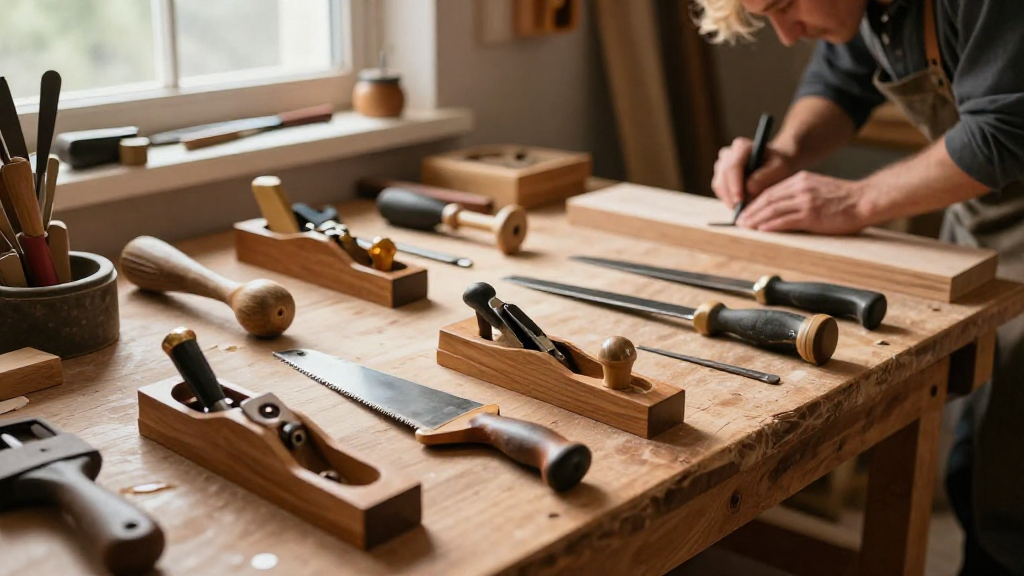
For anyone passionate about woodworking, having the right tools is crucial for turning your creative ideas into reality.
In this article, we’ll explore an essential woodworking hand tools list that every woodworker should consider.
What Are the Most Crucial Hand Tools for Woodworking?
When starting your woodworking journey, a well-rounded woodworking hand tools list can help ensure you have the essentials to tackle various projects. Let’s break down some must-have tools:
1. Hand Saw
A hand saw is one of the most versatile tools in a woodworker’s arsenal.
- Types: There are several types of hand saws, including crosscut saws, rip saws, and backsaws.
- Usage: Ideal for making straight cuts or trimming edges.
2. Chisels
Chisels are essential for detailing work and joinery.
- Types: Wide chisels are great for removing large sections of wood, while narrow ones are ideal for intricate details.
- Maintainence: Keep them sharp for the best results.
3. Hand Planes
Hand planes help create flat surfaces and smooth out rough edges.
- Common Types: Block planes, smoothing planes, and bench planes.
- Benefits: They can also adjust the thickness of wood.
4. Clamps
Clamps are crucial for holding your workpieces together during assembly.
- Types: Bar clamps, pipe clamps, and C-clamps are popular choices.
- Importance: They keep pieces aligned and secure as glue dries.
5. Square
A square is vital for ensuring accuracy in your cuts and joints.
- Types: Try squares and framing squares are the most common.
- Usage: Use it to check for right angles and layout your patterns.
6. Marking Tools
Marking tools are essential for precision work.
- Pencils: Regular pencils or marking gauges are common.
- Other Tools: For more accuracy, consider using a combination square or a marking knife.
7. Rasps and Files
Rasps and files allow woodworkers to shape and refine their projects.
- Usage: They can create contours and remove material from tight spaces.
- Varieties: Different shapes and coarseness can yield various finishes.
8. Utility Knife
A sharp utility knife is indispensable in any workshop.
- Usage: It’s perfect for trimming and cutting materials like veneer or paper.
- Tip: Always keep a fresh blade for cleaner cuts.
9. Mallet
A mallet is an excellent tool for driving chisels without damaging them.
- Materials: Wood or rubber mallets are common.
- Benefits: They provide controlled force and prevent excessive damage to your tools.
How Do You Choose the Right Tools?
Choosing the right tools for your woodworking hand tools list depends on several factors.
- Project Type: Identify the types of projects you’ll be undertaking.
- Budget: Set a budget for quality tools versus quantity.
- Ergonomics: Ensure tools are comfortable to use for extended periods.
Why Are Quality Tools Important?
Investing in quality hand tools can substantially impact your woodworking experience.
Advantages of Quality Tools:
- Durability: Higher-quality tools last longer and require less maintenance.
- Consistency: They often yield better results, making your work more enjoyable.
- Safety: Better-made tools tend to be safer and minimize the risk of accidents.
How Can You Maintain Your Hand Tools?
A well-maintained set of hand tools can serve you for years, if not decades.
Key Maintenance Tips:
- Clean After Use: Wipe off dust and debris.
- Sharpen Regularly: Keep blades and edges sharp for optimal performance.
- Store Properly: Use a tool belt or chest to prevent damage.
What Are Some Additional Tools to Consider?
Once you’ve got the basics down, you might want to expand your woodworking hand tools list.
Here are a few additional tools to consider:
- Dovetail saw: Ideal for intricate joinery.
- Japanese saw: Offers a unique cutting style that some woodworkers prefer.
- Screwdrivers: Essential for assembly work.
- Drill and Bits: For making precise holes.
- Wood Lathe: If you’re venturing into turning projects.
How Can You Find the Best Tools?
Finding the best hand tools for woodworking can be a daunting task.
Tips for Finding Quality Tools:
- Research: Look for reputable brands with positive reviews.
- Visit Local Shops: Handling tools before purchasing can help you gauge their quality.
- Online Marketplaces: Websites often provide options to compare tools and prices.
Are There Eco-Friendly Options Available?
If sustainability is important to you, there are eco-friendly options available.
Many brands focus on producing tools from sustainable materials or using eco-friendly manufacturing processes.
Considerations for Eco-Friendly Tools:
- Materials: Look for tools made from recycled or responsibly sourced materials.
- Lifetime Guarantees: Some brands offer lifetime warranties, which encourage tool longevity.
Conclusion: Crafting Your Ideal Woodworking Toolkit
Having the right woodworking hand tools list can dramatically affect your woodworking journey.
From hand saws to clamps, each tool plays a pivotal role in creating beautiful wooden projects.
Investing in quality tools and maintaining them properly will lead to more enjoyable and productive woodworking experiences.
Whether you’re a beginner or an experienced woodworker, make sure to equip yourself with these essential tools to unleash your creativity and craftsmanship.
Remember:
- Start with the basics and gradually expand your toolkit.
- Take time to consider each tool’s utility and quality.
- Enjoy the process of building and creating, as that’s what woodworking is all about.
With this woodworking hand tools list at your fingertips, you’re well on your way to becoming a skilled woodworker!