The best reciprocating saws with variable speed give you better control across wood, metal, plastic, pruning materials, and demolition work. Adjusting speed at the trigger can help you start cuts cleanly, reduce vibration, and match the tool to the material.
This roundup includes compact cordless models, corded high-power saws, and budget-friendly options. Use the buying guide below to compare power sources, stroke performance, handling, and compatibility before choosing.
Best 10 Reciprocating Saws with Variable Speed Picks for 2026
Best Compact Cordless Pick
DEWALT 20V MAX XR Compact Reciprocating Saw

- Compact 14.5-inch form fits tight work areas
- Variable-speed trigger reaches 2,900 SPM
- Four-position keyless blade clamp
Best For: Cordless cutting in confined spaces
Best Value Corded Option
SKIL 7.5-Amp Variable Speed Reciprocating Saw
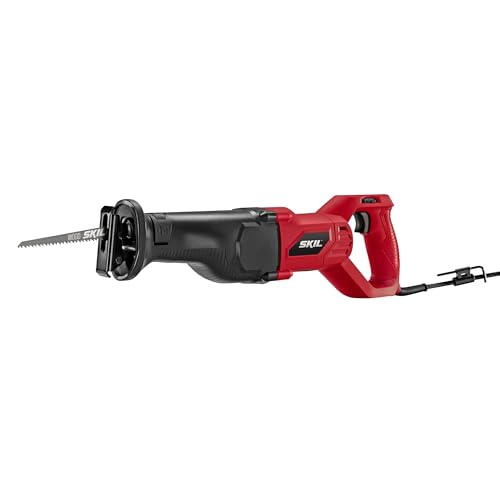
- 7.5-amp motor for consistent corded power
- Pivoting foot adds cutting stability
- Tool-less blade changes simplify setup
Best For: DIY wood-cutting tasks near an outlet
Best One-Handed Design
DEWALT ATOMIC 20V MAX One-Handed Saw

- Compact 12.5-inch front-to-back design
- Variable-speed trigger improves control
- Pivoting shoe and LED support confined-space work
Best For: One-handed cutting in tight areas
Best Adjustable Head
WEN 10-Amp 8-Position Variable Speed Saw
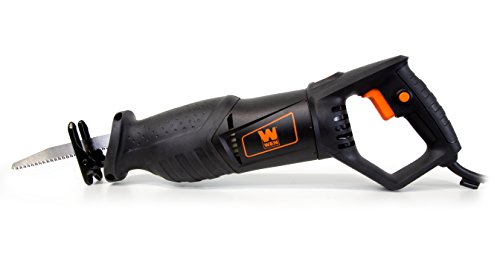
- 10-amp motor for wood and metal cutting
- Eight pivoting-head positions at 45-degree stops
- Pressure-sensitive trigger reaches 2,800 SPM
Best For: Corded cutting with adjustable positioning
Best Cordless Control
DEWALT 20V MAX Variable-Speed Reciprocating Saw

- 0–3,000 SPM variable-speed trigger
- Four-position clamp for flush cuts
- Adjustable shoe and rubber comfort grip
Best For: Portable cutting with precise speed control
Best Heavy-Duty Corded Pick
DEWALT 12-Amp Variable-Speed Reciprocating Saw

- 12-amp motor for heavy-duty applications
- 0–2,900 SPM variable-speed trigger
- Four-position clamp with keyless blade changes
Best For: Extended cutting with continuous corded power
Best High-Speed Value
RYOBI ONE+ 18V Variable-Speed Reciprocating Saw

- Up to 3,400 SPM variable speed
- Cordless 18V bare-tool design
- Listed for multiple surface types
Best For: ONE+ users wanting portable, fast cutting
Compact Precision Pick
DEWALT 20V MAX Variable-Speed Reciprocating Saw
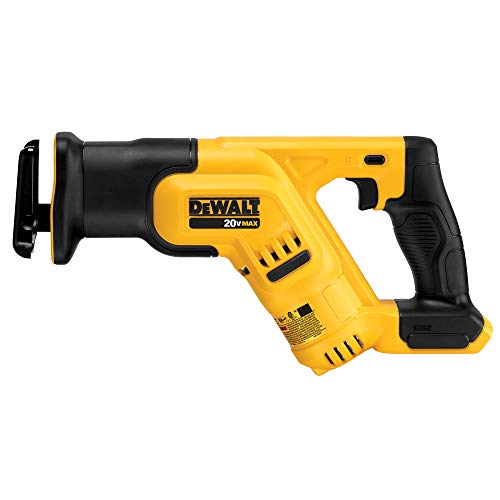
- Compact 14-inch design for tight spaces
- 0–2,900 SPM variable-speed trigger
- Four-position clamp and LED work light
Best For: Controlled cutting between studs and in confined areas
Complete Kit Value
Olmlmo Brushless Variable-Speed Reciprocating Saw

- 0–3,200 SPM brushless motor
- Two 4.0Ah batteries and charger included
- Eight blades for wood, plastic, metal, and more
Best For: Ready-to-use DIY and yard-work cutting projects
Platform-Friendly Choice
CRAFTSMAN V20 Variable-Speed Reciprocating Saw
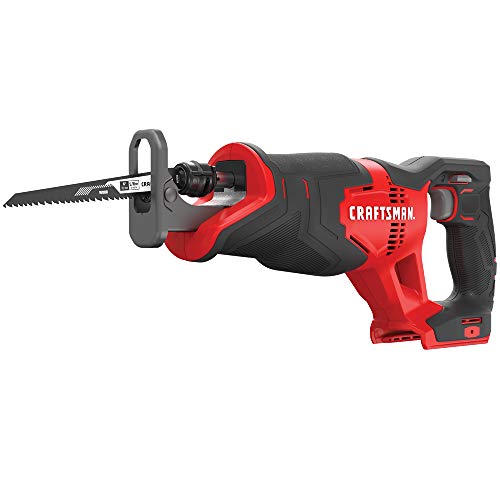
- 0–3,000 RPM variable-speed trigger
- Compact 14.5-inch body
- Tool-free blade release and comfortable overmolded handle
Best For: CRAFTSMAN V20 owners needing a compact bare tool
Best Compact Cordless Pick – DEWALT 20V MAX XR Compact Reciprocating Saw
Among reciprocating saws with variable speed, the DEWALT DCS367B stands out for compact cordless cutting. Its brushless motor, 1-1/8-inch stroke, and variable-speed trigger make it well suited to demanding work where maneuverability matters.
Best For: Professionals and DIY users cutting in tight spaces who already have compatible DEWALT 20V MAX batteries.
Pros:
- Compact 14.5-inch design and 5-pound tool-only weight improve maneuverability.
- Variable-speed trigger reaches up to 2,900 SPM for control across materials.
- Four-position keyless blade clamp supports fast, versatile blade changes.
- Brushless motor, LED light, pivoting head, and 1-1/8-inch stroke add practical cutting capability.
Cons:
- Battery and charger are not included.
- Its compact design may not suit users seeking a heavier corded saw.
The DCS367B is a strong choice when cordless convenience and access in confined areas are priorities. A three-year limited warranty adds reassurance for regular use.
Best Value Corded Option – SKIL 7.5-Amp Variable Speed Reciprocating Saw
The SKIL 9206-02 is a straightforward corded choice among reciprocating saws with variable speed. Its 7.5-amp motor provides consistent power, while the pivoting foot and counterbalance help maintain control during tougher cuts.
Best For: DIY users who want dependable corded power for wood-focused cutting and do not need battery portability.
Pros:
- 7.5-amp motor supplies ample power for general cutting tasks.
- Tool-less blade change simplifies blade swaps.
- Pivoting foot improves stability against the workpiece.
- Metal gear housing and counterbalance support durability and vibration control.
Cons:
- Corded operation limits mobility compared with cordless models.
- At 7.1 pounds, it is heavier than the compact DEWALT cordless options here.
Choose the SKIL when uninterrupted outlet-powered operation and a practical feature set matter more than portability. It includes a wood-cutting blade and hex key to get started.
Best One-Handed Design – DEWALT ATOMIC 20V MAX One-Handed Saw
DEWALT ATOMIC 20V MAX* Reciprocating Saw, One-Handed, Cordless, Tool Only (DCS369B)
Check Price On AmazonFor buyers comparing reciprocating saws with variable speed, the DEWALT ATOMIC DCS369B offers a notably compact one-handed format. Its brushless motor, variable-speed trigger, pivoting shoe, and 12.5-inch front-to-back length are designed for controlled work in confined areas.
Best For: Users who need one-handed operation and compact access for light-to-moderate cutting tasks.
Pros:
- Compact 12.5-inch design is suited to restricted workspaces.
- One-handed format and variable-speed trigger improve handling and speed control.
- Tool-free blade release enables quick changes.
- Pivoting shoe provides multiple contact points, while the LED helps illuminate dark areas.
Cons:
- Battery and charger are not included.
- The one-handed compact format may not replace a larger saw for every demanding application.
The DCS369B is a practical pick when reach, balance, and one-handed control are more important than maximum saw size. It includes two blades and a belt hook.
Best Adjustable Head – WEN 10-Amp 8-Position Variable Speed Saw
The WEN 3630 combines a powerful corded motor with unusually flexible positioning, making it a useful option among reciprocating saws with variable speed. Its pressure-sensitive trigger ranges from 0 to 2,800 SPM, and the pivoting head offers eight stops for different cutting angles.
Best For: DIYers and workshop users who want corded power, adjustable head positions, and wood-and-metal cutting flexibility.
Pros:
- 10-amp motor is rated to handle up to 4-1/2 inches of wood and 3/5 inches of metal.
- Pressure-sensitive trigger provides speed control from 0 to 2,800 SPM.
- Eight-position pivoting head adjusts in 45-degree increments.
- Twist-lock blade holder enables tool-free changes, and two blades are included.
Cons:
- Corded operation requires access to a power outlet.
- At 7.7 pounds, it is the heaviest model in this comparison.
With its adjustable head and 10-amp motor, the WEN 3630 favors versatility over portability. It is a compelling fit for users who expect to change cutting angles regularly and appreciate the included two-year warranty.
Best Cordless Control – DEWALT 20V MAX Variable-Speed Reciprocating Saw
For users comparing reciprocating saws with variable speed, the DEWALT DCS380B combines cordless portability with a 0–3,000 SPM trigger and a 1-1/8-inch stroke. Its adjustable shoe and four-position blade clamp add flexibility for cutting wood and working in tighter positions.
Best For: Cordless cutting where portability, trigger control, and flush-cutting versatility matter.
Pros:
- Variable-speed trigger provides control from 0 to 3,000 SPM.
- Four-position clamp supports flush cutting and tool-free blade changes.
- Pivoting adjustable shoe helps control cutting depth and extend blade life.
- Rubber overmolded grip and double oil-sealed shaft support comfort and durability.
Cons:
- Tool-only package requires a compatible battery.
- Listed for a 20V battery platform, which may add cost for new users.
The DCS380B is a practical choice for buyers already invested in DEWALT’s 20V system. Its trigger range and adjustable cutting features make it especially useful when control is as important as speed.
Best Heavy-Duty Corded Pick – DEWALT 12-Amp Variable-Speed Reciprocating Saw
The DEWALT DWE305 is a corded option for shoppers seeking reciprocating saws with variable speed and consistent power. Its 12-amp motor, 0–2,900 SPM trigger, and 1-1/8-inch stroke are suited to heavy-duty applications and efficient cutting.
Best For: Heavy-duty cutting when continuous corded power is more important than cordless mobility.
Pros:
- 12-amp motor is designed for heavy-duty applications.
- Variable-speed trigger allows immediate speed adjustment from 0 to 2,900 SPM.
- Four-position blade clamp supports flush cutting and positioning versatility.
- Lever-action keyless clamp enables quick blade changes.
Cons:
- Corded design limits mobility compared with battery-powered models.
- At 8 pounds, it is heavier than the listed cordless options.
Choose the DWE305 when you want a straightforward, powerful corded saw for demanding work. The variable-speed trigger adds control, while the corded 12-amp motor avoids battery-related interruptions.
Best High-Speed Value – RYOBI ONE+ 18V Variable-Speed Reciprocating Saw
The RYOBI PCL515B is a compact cordless choice among reciprocating saws with variable speed, offering up to 3,400 SPM and a 1-inch stroke. Its bare-tool format makes sense for existing ONE+ users who need a portable saw for multiple surfaces.
Best For: ONE+ users seeking a portable, high-speed saw for general multi-surface cutting.
Pros:
- Variable-speed operation reaches up to 3,400 SPM.
- Cordless 18V design supports portable use.
- Listed for multiple surface types rather than wood alone.
- Compact 16-inch length and 4.2-pound listed weight support handling.
Cons:
- Battery and charger are not included.
- Its 1-inch stroke is shorter than the 1-1/8-inch strokes of the DEWALT models.
- Listed warranty is a 30-day limited warranty.
The PCL515B is most attractive for buyers already equipped with compatible RYOBI ONE+ batteries. Its high maximum speed and multi-surface positioning offer useful flexibility, though the bare-tool package and shorter stroke should be considered.
Compact Precision Pick – DEWALT 20V MAX Variable-Speed Reciprocating Saw
For shoppers comparing reciprocating saws with variable speed, the DEWALT DCS387B stands out for its compact 14-inch design and controllable 0–2,900 SPM trigger. Its short profile is useful for fitting between studs and working in confined areas, while the four-position blade clamp adds cutting flexibility.
Best For: DIYers and tradespeople who need a compact bare-tool saw for controlled cuts in tight spaces.
Pros:
- Compact, lightweight design helps reach between studs and into confined spaces.
- Variable-speed trigger provides control from 0 to 2,900 SPM.
- Four-position clamp, pivoting shoe, LED, and tool-free blade changes improve versatility.
Cons:
- Bare-tool purchase does not include a battery or charger.
- Its 1-1/8-inch stroke is practical for general cutting but may not suit users seeking a longer-stroke model.
The DCS387B is a strong choice when maneuverability matters most. It also makes sense for shoppers already invested in DEWALT’s 20V battery platform, provided they have the required battery and charger.
Complete Kit Value – Olmlmo Brushless Variable-Speed Reciprocating Saw
This Olmlmo kit is a versatile option among reciprocating saws with variable speed, combining a brushless motor with a 0–3,200 SPM range and a 1.1-inch stroke. It includes two 4.0Ah batteries, eight blades, a charger, and a carrying case, making it ready for wood, plastic, metal, and other listed materials.
Best For: DIY users who want a complete cordless cutting kit for home projects, yard work, and light construction tasks.
Pros:
- Brushless 500W motor delivers variable speed up to 3,200 SPM.
- Two 4.0Ah batteries and charger provide a ready-to-use setup.
- Eight included blades and tool-free changes support multiple materials.
- Safety button, rotating shoe, and compact 3-pound design aid everyday handling.
Cons:
- The stated runtime is about 30 minutes or 60-plus cuts, depending on the task.
- Included blade selection is convenient, but users with specialized cutting needs may want additional blades.
With batteries, accessories, and a case included, this is the most immediately usable option in the group. Its broad kit contents suit occasional users who do not already own a compatible cordless platform.
Platform-Friendly Choice – CRAFTSMAN V20 Variable-Speed Reciprocating Saw
The CRAFTSMAN CMCS300B is a straightforward pick for shoppers seeking reciprocating saws with variable speed within the V20 cordless system. Its full variable-speed trigger reaches 3,000 RPM, and the 14.5-inch compact body is designed for cutting in tight spaces.
Best For: CRAFTSMAN V20 users who want a compact bare-tool saw for general cutting applications.
Pros:
- 0–3,000 RPM trigger helps adjust cutting speed across materials.
- Compact 14.5-inch size supports work in tight spaces.
- Tool-free blade release enables quick blade changes.
- Contoured overmolded handle is designed for added comfort.
Cons:
- Battery and charger are sold separately.
- Only one 6-inch reciprocating blade is included.
- The saw is most convenient for users already invested in the V20 system.
This model keeps the feature set practical and familiar, with variable-speed control, a compact form, and quick blade release. It is a sensible system addition, but new cordless-tool buyers should budget separately for the battery and charger.
How We Picked the Best Reciprocating Saws with Variable Speed
We compared these 10 models based on speed control, motor output, stroke performance, ergonomics, portability, blade-change convenience, and overall versatility. The selection includes corded and cordless saws, compact one-handed designs, full-size demolition tools, and options for buyers already invested in a battery platform.
Because tool-only listings do not include batteries or chargers, we also considered ownership costs and ecosystem compatibility. Stated specifications such as strokes per minute, amperage, stroke length, and blade-clamp design were weighed alongside practical features including pivoting shoes, LED lights, and tool-free blade changes.
Quick Comparison
- Best for maximum portability: Compact cordless models with 18V or 20V batteries.
- Best for extended heavy-duty work: High-amperage corded saws with consistent power.
- Best for battery-platform owners: Bare tools from DEWALT, RYOBI, or CRAFTSMAN.
- Best for controlled cutting: Models with responsive variable-speed triggers and manageable stroke rates.
- Best for occasional projects: Budget-friendly saws that include blades, batteries, or other accessories.
Key Buying Factors for Reciprocating Saws with Variable Speed
Power Source and Runtime
Corded saws deliver uninterrupted power and are useful near outlets or on demanding demolition jobs. Cordless saws are easier to carry and safer around unfinished sites, but runtime depends on battery capacity, material, and cutting pressure. Check whether a listing includes a battery and charger or only the bare tool.
Speed, Stroke Length, and Trigger Control
A higher strokes-per-minute rating can improve productivity, while a longer stroke may remove more material per cycle. However, maximum speed is not everything. A smooth variable-speed trigger is valuable for starting precise cuts and slowing down for metal, pipe, or delicate materials.
Blade Changes and Cutting Flexibility
Tool-free blade clamps save time when switching between wood, metal, and specialty blades. A pivoting shoe can improve contact with the workpiece, while adjustable or multi-position clamps may make flush cuts and awkward-angle work easier.
Size, Balance, and Vibration
Compact saws are more convenient in tight spaces and overhead work, but full-size models may provide greater cutting authority. Look for a balanced grip, comfortable trigger position, and features that help control vibration during longer jobs.
Who Should Buy Which Reciprocating Saws with Variable Speed?
Choose a compact cordless model for pruning, plumbing, remodeling, and work in confined spaces. Choose a full-size cordless saw if you need a portable general-purpose demolition tool and already own compatible batteries. Choose a corded model for long, demanding cuts where runtime matters more than mobility.
If you are building a tool collection, staying within one battery ecosystem can reduce the cost of future tools. For occasional use, compare the complete package rather than the tool price alone, including batteries, chargers, included blades, warranty coverage, and replacement-blade availability.